
By applying contraction theory, engineers have found a way to ensure that a robot stays on its intended path even while it is actively learning. The integration of machine learning into physical systems has long been hindered by the unpredictable nature of trial-and-error processes. While traditional reinforcement learning allows a machine to acquire complex behaviors through iterative interaction, it lacks the formal safety nets required for high-stakes environments. Researchers at the University of Illinois Urbana-Champaign have addressed this by developing Contraction-Aware Reinforcement Learning, or CARL. This framework provides a rigorous mathematical foundation that limits tracking errors during the learning phase. Unlike standard black-box algorithms that can result in erratic movements or mechanical failures when faced with new data, this method ensures that the system operates within defined bounds. This breakthrough effectively removes the fear of catastrophic instabilities, allowing for safer research and development.
The Mathematical Foundation: Contraction Theory and Learning
At the heart of the CARL framework lies the application of contraction theory, a mathematical discipline that analyzes the convergence of trajectories in nonlinear systems. In conventional robotics, maintaining stability often requires a rigid model of the environment, which is frequently unavailable in dynamic settings. By embedding contraction-based constraints into the reinforcement learning loop, the research team established specific mathematical bounds on how far a robot can deviate from its target trajectory. This means that even when the underlying neural network is exploring new strategies, the control system inherently pulls the robot back toward a stable state. This method provides a formal guarantee of stability that was previously elusive in deep learning applications. Engineers can now define a safety envelope within which the robot operates, ensuring that the learning process itself does not become a liability for the hardware or the immediate surroundings.
The synergy created by combining these two distinct fields solves a major dilemma in modern automation: the trade-off between flexibility and safety. Standard reinforcement learning is highly adaptable but often operates as a black box, making it difficult to predict how a robot will react to unprecedented sensor noise. On the other hand, traditional control theory offers stability but often lacks the ability to generalize across complex, non-linear tasks. The CARL framework bridges this gap by utilizing contraction theory to act as a governor for the learning process. It effectively filters the outputs of the reinforcement learning agent, ensuring that any command issued to the actuators conforms to stability requirements. This hybrid approach allows the system to learn from its environment while maintaining the structural integrity of a classical controller. Consequently, this innovation paves the way for more reliable autonomous systems that navigate safely in the real world.
Advancements in Robust Tracking: Diverse Robotic Applications
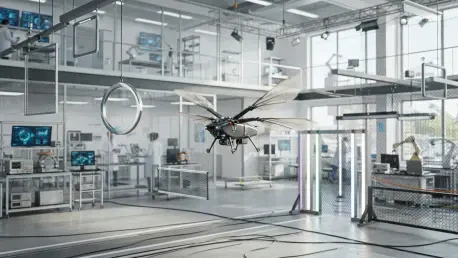
One of the most persistent hurdles in robotics is the sim-to-real gap, where a controller that performs perfectly in simulation fails when transitioned to the physical world. Real-world factors such as air density and surface friction can disrupt a model that has not been conditioned for uncertainty. The researchers behind the CARL framework specifically targeted this discrepancy by testing their algorithm against established baselines on diverse platforms like the TurboBot 3 Burger, a flapping drone, and the six-legged Jethexa robot. Their findings revealed that the contraction-aware approach outperformed standard reinforcement learning methods by up to 15% in tracking accuracy.