

What if the thrill of March Madness could be captured not just by the feats of the athletes on the court, but also by the accuracy of artificial intelligence making predictions? The NCAA Men’s Basketball Tournament is known for its unpredictability, with underdogs surprising favorites and
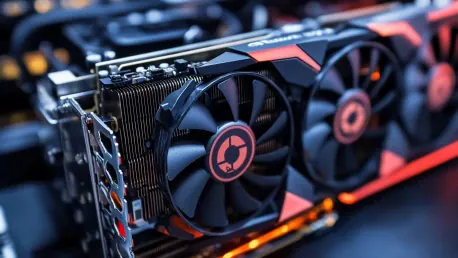
In a move poised to dramatically transform the landscape of artificial intelligence computing, Vultr has announced early access to NVIDIA’s HGX B200, a development set to elevate AI computing capabilities to unprecedented levels. Combining Vultr’s expansive cloud infrastructure with NVIDIA’s

Artificial intelligence (AI) is rapidly transforming industries and altering traditional roles in ways that are both exhilarating and challenging. As AI tools become increasingly prevalent in fields like technology, journalism, and design, questions arise regarding the nature of creativity and

The development of robotic systems has come a long way, particularly in the area of tactile capabilities. Researchers at the Technical University of Munich (TUM) have made significant strides in improving how robots are categorized and evaluated. This article delves into their innovative approach,

Artificial intelligence (AI) has made significant strides in recent years, tackling complex tasks such as writing essays and generating art. However, when it comes to interpreting basic time-related data, such as reading analog clocks and calendars, AI stumbles over what seem to be simple tasks.

High-performance computing (HPC) has long been dominated by companies that invest heavily in skilled programmers to develop optimized code for artificial intelligence systems and other high-stakes applications. For years, industry leaders like NVIDIA have set the gold standard, creating HPC