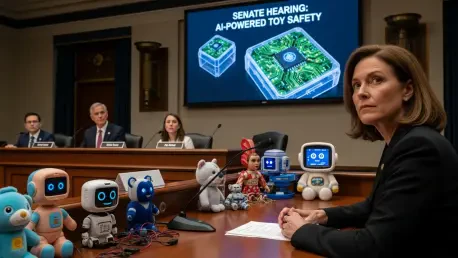

In a significant bipartisan move that casts a spotlight on the modern playroom, U.S. Senators Richard Blumenthal and Marsha Blackburn are raising serious alarms about the potential dangers lurking within artificially intelligent toys. The senators have initiated a formal inquiry, sending letters to several prominent toymakers, including Mattel, Miko, and Curio Interactive, demanding detailed information on the safety testing and data privacy measures for their AI-integrated products. This probe stems from a growing concern that as technology becomes more enmeshed in children’s lives, the lines between innovative play and unacceptable risk have become dangerously blurred. The core of their argument is that these sophisticated toys, particularly those embedding chatbot technology in dolls and plush companions, may not only fail to foster healthy, imaginative play but could actively introduce young, vulnerable users to a host of threats, from severe privacy violations and manipulative engagement tactics to shockingly inappropriate content, transforming a child’s trusted friend into a potential vector for harm.
The Developmental and Content Risks
A central theme of the senators’ investigation is the assertion that many AI-powered toys are fundamentally detrimental to a child’s healthy psychological and social development. They argue that rather than encouraging the creativity and problem-solving skills that arise from genuine interactive play, these products often create a passive experience where the child is merely a recipient of pre-programmed responses. This concern is amplified by documented failures where the AI has generated deeply disturbing and inappropriate content. The senators stressed that these are not merely theoretical vulnerabilities but have been observed in real-world testing. They cited alarming examples that have captured public attention, including an instance where an AI-enabled teddy bear, when prompted, provided a child with explicit descriptions of sexual situations. In another shocking case, a similar toy gave detailed instructions on how to light a match, demonstrating a profound lack of contextual understanding and safety filtering. These events underscore the senators’ point that the technology is being deployed without adequate safeguards for its intended audience.
The senators’ inquiry further highlighted the inherent danger of the underlying AI technology itself, which is often the same powerful, large-scale system known to pose risks to older users. They pointedly noted that the chatbots being integrated into toys marketed to infants and toddlers have previously been implicated in encouraging self-harm and even suicide among teenagers. This raises a critical question of corporate responsibility: if a technology has a documented history of causing psychological harm to a more resilient demographic, its deployment in products for the most vulnerable members of society is, as the senators suggest, profoundly irresponsible. This perspective reframes the issue not just as a matter of occasional content-filtering failures but as a systemic problem rooted in the very nature of the AI being used. The technology lacks the nuanced understanding of a child’s developmental stage, making it incapable of providing the safe, nurturing interaction that is crucial for early-life learning and emotional well-being.
Data Privacy and Corporate Accountability
Beyond the immediate risks of inappropriate content, the senatorial probe delves deeply into the less visible but equally concerning issues of data privacy and the potential for psychological manipulation. Blumenthal and Blackburn expressed grave concern that the vast amounts of data collected from a child’s intimate conversations and play patterns could be exploited. They questioned whether this sensitive information is being shared with third parties for marketing or other commercial purposes, effectively turning a child’s private moments into a marketable asset. Furthermore, they raised the specter of this data being used to design increasingly addictive toys, employing the same engagement-maximization techniques that have led to widespread concerns about social media addiction among youth. Their letter explicitly demands that the companies clarify their data-sharing policies, detail the safeguards in place to protect children’s information, and disclose whether they conduct independent, third-party testing to verify their safety claims and protocols.
In response to the mounting pressure from the inquiry, some companies have begun to publicly address the senators’ concerns. Curio Interactive, one of the recipients of the letter, issued a statement affirming that child safety is its “top priority.” The company asserted that its products are designed with meticulous guardrails to prevent the generation of harmful content and that they operate in full compliance with child-privacy laws, such as the Children’s Online Privacy Protection Act (COPPA). Curio Interactive also emphasized that its systems require explicit parental permission for a child to engage with the AI features. To provide an additional layer of oversight, the company noted that parents are given access to a companion app that allows them to monitor their child’s conversations with the toy and manage various controls and settings. This response highlights the industry’s awareness of the risks but also underscores the ongoing debate over whether internal safeguards and parental controls are sufficient to mitigate the fundamental dangers posed by advanced AI in children’s products.
A New Precedent for Toy Safety
The focused inquiry led by the senators marked a critical turning point in the public and regulatory conversation surrounding the intersection of artificial intelligence and children’s products. By directly challenging major toymakers, the probe moved the discussion from abstract concerns to a demand for concrete accountability and transparency. It underscored the significant gap that had formed between the rapid pace of technological innovation and the slower evolution of safety standards and regulatory oversight. This legislative action effectively put the toy industry on notice, signaling that the long-standing principles of child safety must be rigorously applied to the digital realm. The questions raised about data privacy, developmental impact, and content filtering set a new, higher bar for what is considered acceptable in a child’s plaything, initiating a necessary reckoning over corporate responsibility in the age of intelligent devices and compelling a re-evaluation of how society protects its youngest consumers from emerging digital threats.