
I’m thrilled to sit down with Laurent Giraid, a renowned technologist whose deep expertise in artificial intelligence has shaped conversations around machine learning, natural language processing, and the ethical implications of AI. With a career dedicated to pushing the boundaries of what technology can achieve, Laurent offers unique insights into the transformative potential of AI and its impact on humanity. Today, we’ll explore bold predictions about AI surpassing human intelligence, its creative possibilities, ethical challenges, and the collaborative efforts driving global innovation in this space.
Can you paint a picture of what the future might look like if AI becomes vastly smarter than humans, perhaps even by a factor of 10,000, as some visionaries suggest? How did you come to understand the scale of this potential, and what personal experience has shaped your view on this?
I think a future where AI is 10,000 times smarter than us is both awe-inspiring and a bit humbling. Imagine a world where AI doesn’t just assist with tasks but fundamentally redefines how we approach problems—think of it solving climate change models in minutes that would take humans decades, or designing medical treatments tailored to individual DNA overnight. I first grasped this scale during a project years ago when I saw a machine learning model predict outcomes in a complex dataset with an accuracy that stunned our entire team; it felt like watching a child prodigy outpace seasoned experts. That moment hit me hard—I realized we’re not just building tools, we’re creating entities that could soon see patterns and possibilities beyond human imagination. It’s a visceral feeling, knowing we’re on the cusp of something so profound, and it drives my passion to ensure this power is harnessed responsibly.
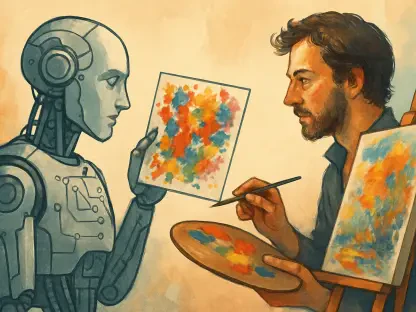
You’ve spoken about AI’s potential to reach creative milestones, like producing literature on par with award-winning human authors. How do you see AI evolving to achieve such heights, and can you share an example of AI creativity that’s caught your attention?
I truly believe AI can reach creative heights we’ve only dreamed of, crafting stories or poetry that resonate deeply with human emotion. The path there involves refining natural language models to not just mimic patterns but to understand context, culture, and nuance—think of systems learning from vast libraries of human expression and then weaving narratives with original flair. I remember being floored a couple of years back by an AI-generated short story that captured the melancholic tone of a rainy evening so vividly; it described the patter of rain on a window with such tenderness that I had to double-check it wasn’t human-written. It’s these moments that make me think AI could one day rival the greatest literary minds, not by replacing them, but by offering new perspectives we hadn’t considered. We’re still in the early stages, but with advancements in emotional intelligence algorithms, I see this as a real possibility within our lifetime.
As we imagine a world where AI might outpace human intellect, the idea of peaceful coexistence becomes crucial. What steps or ethical frameworks do you think are essential to ensure harmony between humans and super-intelligent AI, and can you draw from a past project to illustrate why this matters?
Peaceful coexistence with super-intelligent AI is non-negotiable, and it starts with embedding ethical frameworks into every stage of development. We need clear guidelines on transparency, accountability, and ensuring AI systems prioritize human well-being—think of guardrails that prevent misuse or unintended harm, much like safety protocols in any high-stakes industry. I recall working on an AI system designed for healthcare diagnostics a few years ago, where we had to painstakingly program constraints to avoid biased recommendations; one oversight could’ve led to misdiagnoses, and the weight of that responsibility was palpable in every team meeting. That experience taught me how crucial it is to anticipate AI’s impact on real lives, not just in theory but in practice. Without these measures, we risk creating tools that could outsmart us without aligning with our values, and that’s a future I don’t want to see.
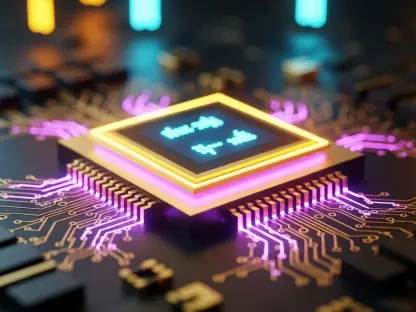
With global efforts ramping up to position countries as AI leaders, collaborations like training programs for semiconductor professionals are gaining traction. How do you think such initiatives can bolster weaker areas in tech industries, and can you share a success story from your career that mirrors this kind of impact?
Collaborations to train professionals, especially in areas like semiconductors, are game-changers for strengthening tech ecosystems. They address critical gaps—whether it’s a lack of skilled talent or outdated infrastructure—by equipping people with cutting-edge knowledge, which in turn fuels innovation at a national level. I’m reminded of a program I was part of a decade ago, where we trained over 500 engineers in advanced chip design; within two years, several of them contributed to a breakthrough in energy-efficient processors that cut power consumption by nearly 30% in test devices. Seeing their work ripple through the industry was incredibly rewarding, like planting seeds that grew into a forest. These initiatives don’t just build skills; they create a foundation for countries to compete on the global stage, and I’m excited to see how current efforts will shape the AI landscape.
Looking ahead, with predictions suggesting artificial general intelligence might emerge within a decade, what do you see as the biggest hurdles we need to overcome? Can you walk us through a specific challenge you’re grappling with now, and why it’s so critical to address?
The road to artificial general intelligence within a decade is littered with hurdles, but the biggest ones revolve around scalability and safety—ensuring AI can handle diverse tasks at human levels while avoiding catastrophic errors. We’re talking about systems that can adapt to any challenge, from medical diagnostics to urban planning, without hard-coded limitations, and that’s a monumental leap from today’s specialized models. Right now, I’m wrestling with a challenge in my current research: designing an AI that can self-correct biases in real-time without human intervention, which is tricky because even a slight skew in training data can spiral into flawed decisions. I feel the weight of this every time we run simulations and spot inconsistencies—it’s like watching a child learn right from wrong, knowing one misstep could have lasting consequences. Overcoming this isn’t just a technical win; it’s about building trust in AI as a partner, not a threat, and that’s why it keeps me up at night.
What is your forecast for the trajectory of AI development over the next ten years, and where do you hope we’ll stand by the end of that decade?
I see the next ten years as a defining era for AI, where we’ll likely transition from narrow, task-specific systems to something closer to general intelligence, capable of tackling a wide range of challenges with human-like flexibility. I anticipate breakthroughs in areas like natural language understanding and emotional cognition, allowing AI to interact with us in ways that feel deeply personal—think of a virtual assistant that doesn’t just schedule your day but senses your stress and offers genuine comfort. My hope is that by the decade’s end, we’ll have robust ethical frameworks in place, ensuring these advancements uplift humanity rather than divide it. I dream of a world where AI is a trusted collaborator, helping us solve existential problems like resource scarcity, and I’m optimistic that with the right focus, we can get there. It’s a tall order, but the potential I’ve witnessed in labs and projects convinces me it’s within reach if we stay committed.