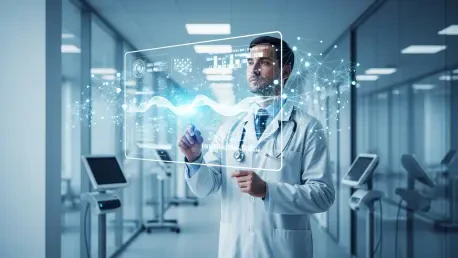

The pervasive belief that sophisticated algorithms can effortlessly dismantle the long-standing structural inefficiencies of modern healthcare has created a dangerous disconnect between digital innovation and clinical reality. As the medical industry moves through 2026, the promise of artificial intelligence remains a dominant narrative, often framed as a universal remedy for systemic bottlenecks and administrative burdens. This ideology, frequently described as techno-solutionism, suggests that complex human problems are merely technical glitches waiting for the right software update to arrive. However, this narrow focus overlooks the intricate social and organizational layers that define how medicine is actually practiced on the ground. When technology is developed in a vacuum, it fails to account for the fluid nature of patient care, where decisions are rarely binary. The rush to digitize every aspect of the hospital environment risks prioritizing theoretical speed over the quality of care.
Theoretical Superiority Versus Clinical Utility
Research originating from institutions like Durham University illustrates a widening gap between what machine learning can achieve in a controlled environment and how it functions within a chaotic emergency department. Algorithms designed to identify urgent cases often demonstrate statistical superiority over traditional paper-based triage methods, yet these metrics rarely reflect the lived experience of medical staff. By focusing solely on data throughput, developers inadvertently ignore the institutional context that shapes clinical outcomes. Government policies are increasingly being crafted based on these narrow algorithmic successes, which creates a significant risk of implementing tools that do not align with the actual needs of practitioners. The assumption that a faster categorization of patients leads to better health outcomes is a simplification that ignores the resource constraints and staffing dynamics present in every hospital. Without understanding social implications, these digital solutions may complicate the very workflows they intended to simplify.
The prevailing comparison between modern artificial intelligence and legacy paper protocols often relies on a fundamental false equivalence that undermines the credibility of technological assessments. In practice, seasoned healthcare providers do not follow paper-based guidelines with the blind rigidity of a machine; instead, they utilize these documents as flexible frameworks supplemented by years of clinical intuition. When an AI model is benchmarked against a static protocol, it appears more efficient simply because it is compared to a version of medicine that does not actually exist in the physical ward. This overlook of human agency means that the superiority of the algorithm is often a product of its inability to account for the nuances that a human nurse or physician handles instinctively. By treating medical care as a series of isolated data points, developers fail to capture the collaborative and interpretive efforts that prevent systemic failure daily. Real progress requires moving beyond these artificial comparisons toward a model that respects human expertise.
Environmental Attunement and the Role of Experience
Ethnographic research conducted in the Netherlands by experts like Chiara Carboni provides critical insight into why purely technical interventions often struggle within high-stakes environments like the intensive care unit. In these settings, nursing staff develop a unique form of environmental attunement, which allows them to filter the constant barrage of sensory information and distinguish between a critical emergency and routine background noise. This professional sensory perception is a cornerstone of effective care, yet it is nearly impossible to quantify or replicate within the current architecture of artificial intelligence. While a human provider can recognize the subtle changes in a patient’s demeanor that an alarm might miss, or ignore a technical glitch that the system flags as urgent, the technology lacks the context to make such distinctions. This disconnect reveals that healthcare is fundamentally a social practice rather than a sequence of algorithmic triggers, requiring a level of situational awareness that software has yet to master.
The inability of current automated systems to perceive environmental nuance often leads to significant operational inefficiencies, as every alert is treated with the same level of digital urgency. In a busy hospital setting, an AI that triggers constant high-priority notifications can quickly result in alarm fatigue, causing staff to become desensitized to truly life-threatening events. Because these systems lack the ability to prioritize based on the specific social and physical context of the room, they frequently override the professional judgment of the staff, demanding immediate attention for issues that a human would recognize as non-critical. This results in a paradox where the introduction of smart technology actually increases the cognitive load on healthcare workers rather than reducing it. Instead of acting as a seamless assistant, the technology becomes a rigid supervisor that must be managed, taking valuable time away from direct patient interaction. This friction highlights the necessity of designing tools that complement, rather than attempt to replace, the human capacity for contextual decision-making.
Cultivating a Holistic Approach to Medical Innovation
Refining the relationship between technology and medicine required a significant shift away from the belief that automation could simply bulldoze over existing social structures within the healthcare system. It became clear that the most effective implementations were those that prioritized the social organization of medical environments over the pursuit of raw algorithmic speed. Developers who took the time to observe the intricate dance of communication and intuition in clinical settings found that their tools were much more readily adopted when they supported, rather than disrupted, established workflows. Moving forward, the focus must remain on creating a symbiotic relationship where technology serves as an enhancement to the human element. Rather than seeking a quick fix for the fundamental challenges of modern care, the industry moved toward a more nuanced strategy that valued ethnographic insights as much as data points. This approach ensured that future innovations addressed the actual complexities of the hospital floor, leading to more resilient and effective healthcare delivery for all.