
Unlike traditional hyperscalers like Amazon Web Services or Google Cloud, neoclouds are built from the ground up for the primary purpose of leasing high-performance graphics processing units. These specialized entities represent a fundamental shift in the digital economy, moving away from general-purpose utility computing toward highly specialized, hardware-centric infrastructure designed specifically for the artificial intelligence era. By focusing exclusively on the compute-intensive needs of modern machine learning, these providers act as high-tech foundries optimized for training and running massive large language models. The architecture of these data centers is stripped of the legacy software layers that often bog down traditional clouds, providing a direct pipeline for developers to access raw silicon power. As the demand for processing capacity continues to outpace supply, these AI-first clouds have positioned themselves as the essential backbone of current technological progress. However, their survival depends on more than just providing fast chips in a shifting market.
Architectural Precision: Optimizing the Specialized Cloud
The Performance Advantage of Bare-Metal Systems
The technical superiority of a neocloud is not just about the volume of chips available but how those chips are integrated into a cohesive environment. Most traditional cloud environments rely heavily on virtualization, which creates a software abstraction layer between the hardware and the user to allow multiple virtual machines to run on a single physical server. While this is efficient for web hosting, it introduces a significant performance tax that is unacceptable for the trillions of calculations required in large language model training. Neoclouds solve this by providing bare-metal access, allowing code to run directly on the hardware with zero interference from hypervisors. This direct interaction ensures that every cycle of the graphics processing unit is dedicated to the task at hand, significantly reducing training times and improving the overall efficiency of the hardware investment. Consequently, engineers can squeeze more performance out of a single cluster than would ever be possible in a generalized environment.
Engineering High-Density Interconnects for Neural Networks
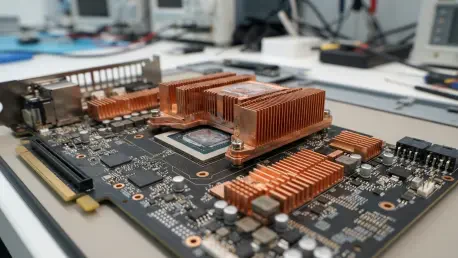
Beyond individual chip performance, the internal networking of a neocloud facility is designed to handle the unique data flow patterns of distributed machine learning workloads. In a standard data center, servers might communicate at speeds sufficient for database queries, but training a frontier model requires thousands of GPUs to work in perfect synchronization. Neoclouds utilize ultra-fast networking fabrics, such as InfiniBand, to create a low-latency mesh where data moves between nodes as if they were part of a single, giant processor. These facilities are often characterized by extreme hardware density, packing eight or more high-wattage GPUs into a single server rack and utilizing advanced liquid cooling systems to manage the intense thermal output. This level of physical engineering is what distinguishes a true neocloud from a simple server reseller, as the entire facility is fundamentally a single supercomputer optimized for the throughput demands of modern generative intelligence.
Economic Viability: Navigating the Impending Market Shakeout
The Structural Flaw in Debt-Fueled Hardware Acquisition
The business model of the neocloud is built on a foundation of massive capital expenditure that introduces a significant level of financial risk. These companies must take on billions of dollars in debt to secure the latest generations of high-demand chips, which serve as the primary collateral for their loans. However, this creates a dangerous race against time because the value of the hardware depreciates rapidly as newer, more efficient silicon hits the market every year. If a neocloud cannot maintain high utilization rates or if rental prices drop due to increased competition, they may find themselves unable to service the interest on their debt while their assets lose resale value. This depreciation trap is further complicated by the fact that the underlying technology is evolving so fast that a chip considered state-of-the-art today might be obsolete in twenty-four months. This reality forces these startups to operate with razor-thin margins and very little room for error in their financial projections or operational uptime.
Financial Moats and the Benefits of Revenue Diversification
The stark contrast between pure-play startups and diversified industrial giants like SpaceX has redefined the standards for survivability in the computing sector. While neocloud startups rely entirely on the margins generated from leasing graphics processing units, established conglomerates possess significant non-AI revenue buffers that protect them from market volatility. These entities utilize cash flows from satellite internet, aerospace manufacturing, or commercial services to fund their expansion into specialized computing. This internal subsidization allows them to continue investing in the latest technology even when the demand for AI training fluctuates or interest rates rise. Furthermore, these diversified players enjoy superior access to institutional credit, allowing them to secure low-interest debt that is simply unavailable to smaller firms. By leveraging their established credit profiles, they can acquire hardware at a lower total cost of ownership, making it nearly impossible for high-interest startups to compete on price.
Moving Beyond the Gold Rush toward Long-Term Sustainability
The evolution of neoclouds demonstrated that technical specialization was a powerful tool for rapid innovation but an insufficient strategy for long-term stability in a volatile market. As the industry moved through this period of consolidation, it became clear that the survivors were those who integrated their specialized computing power into broader, multi-faceted business ecosystems. Moving forward, market leaders emphasized the importance of securing diversified capital sources to protect against the volatility of specialized chip markets. Developers and enterprise clients were encouraged to prioritize providers with diverse revenue models and strong balance sheets to mitigate the risk of infrastructure disruption. It was also critical for the remaining players to focus on software-level value-added services rather than competing solely on the price of raw silicon. Ultimately, the successful organizations realized that hardware was merely a foundation and that true resilience required a combination of technical excellence and financial maturity.