
The Linux graphics landscape is undergoing a transformation at a blistering pace, driven by the relentless demands of artificial intelligence, gaming, and high-performance computing that require more power and efficiency than ever before. At the heart of this evolution is the kernel’s Direct Rendering Manager (DRM) subsystem, which is advancing so rapidly that changes for future versions are staged even before the current one is finalized, creating a development cycle of perpetual motion. This is not merely an effort to keep up with new hardware releases; it is a deliberate and strategic push to redefine the capabilities of the operating system. Through a combination of foundational architectural shifts, a relentless pace of iterative improvements, and an expanding scope that now fully embraces the AI revolution, the open-source community is actively positioning Linux as the premier platform for the most visually and computationally intensive workloads of today and tomorrow. This transformation is multifaceted, touching everything from core security principles to the very definition of what a graphics driver manages, signaling a new era for visual computing on the platform.
A Relentless Pace of Innovation
This revolution is fueled by a continuous, high-speed development process that operates on a timeline far ahead of official kernel releases. Even before a new kernel version enters its first release candidate phase, the staging branches for the next iteration are already accumulating patches and new features. This iterative cycle, powered by a synergistic collaboration between industry giants like Intel and AMD and a global community of independent developers, ensures the kernel is always prepared for upcoming hardware and evolving software demands. This is a structured, forward-looking approach that solidifies Linux’s role in both enterprise and consumer markets by anticipating, rather than simply reacting to, technological change. The constant churn within development branches like drm-misc-next is a testament to this proactive stance, where the goal is not just to support new devices but to build a robust, flexible, and high-performance foundation capable of handling the next generation of applications before they even arrive. This model of perpetual motion is essential for maintaining the kernel’s relevance in a landscape increasingly defined by complex graphical and computational challenges.
The tangible results of this rapid development pace manifest as a constant stream of enhancements that directly benefit the end-user experience. Iterative fixes and minor features that narrowly miss one merge window are quickly queued for the next, ensuring system stability and performance are always improving. For instance, recent updates to the Panfrost driver have delivered significant gains in power management and rendering efficiency for Arm Mali GPUs, a critical improvement for the embedded and mobile device markets where Linux is expanding its footprint. Simultaneously, the Nouveau driver for NVIDIA hardware has seen marked stability improvements on newer GPUs, a welcome development that signals a more cooperative relationship with the vendor. Beyond individual drivers, foundational tweaks to the core DRM infrastructure, such as improved handling of atomic operations and more precise display timing configurations, are enabling more reliable multi-monitor setups and flawless support for high-refresh-rate displays. These esoteric, low-level changes translate directly into a superior and more dependable experience for gamers, content creators, and professionals who demand flawless visual output from their systems.
Redefining Security with a Paradigm Shift
One of the most profound shifts driving this evolution is the formal adoption of Rust as a core language for kernel development, a landmark decision that represents a strategic pivot toward memory safety. For decades, the C language has been the bedrock of the kernel, but its manual memory management has been a persistent source of complex and severe security vulnerabilities. For the graphics subsystem, which manages intricate and historically error-prone operations like GPU memory buffer allocation and command submission, Rust’s compile-time safety guarantees promise to eliminate entire classes of security flaws by design. This move allows developers to build components, such as GPU schedulers and hardware interfaces, with a level of security that is far more difficult to achieve in C. By catching memory-related errors during compilation rather than allowing them to become runtime exploits, the integration of Rust is a fundamental enhancement to the security posture of the entire Linux graphics stack, paving the way for inherently more secure and robust drivers.
The integration of Rust is about more than just writing safer code; it represents a significant cultural evolution within the kernel development community. By lowering the barrier to entry for programmers who may be wary of C’s memory management complexities, the initiative aims to attract a new generation of talent and fresh perspectives to the world of kernel development. This forward momentum is paralleled by a broader community-wide effort to create a more modern and inclusive environment. A clear example of this cultural maturation is the recent removal of outdated and non-inclusive terminology from the kernel’s codebase, reflecting a commitment to professionalism and respect. This dual advancement—technical and cultural—shows that the Linux community is not only focused on building better technology but also on fostering a healthier and more sustainable ecosystem for the developers who build it. This holistic approach ensures that the kernel remains a vibrant and innovative project for years to come.
Expanding Horizons Beyond Traditional Graphics
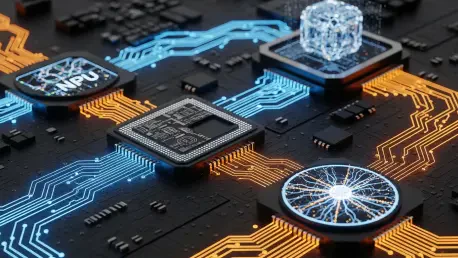
The scope of the Direct Rendering Manager subsystem is strategically expanding far beyond its traditional role in graphics rendering to become a unified framework for a diverse array of computational accelerators. A major focus of recent development has been the seamless integration of drivers for specialized hardware like AI accelerators and Neural Processing Units (NPUs). Significant refinements to drivers for devices such as Habana Labs AI accelerators and Imagination PowerVR components signify this pivotal shift. By bringing these accelerators under the DRM umbrella, the kernel is creating a more cohesive and efficient pipeline where graphics and AI compute tasks can be managed under a single, robust system. This move positions Linux as a premier platform for the entire spectrum of artificial intelligence and machine learning workloads, from large-scale model training in the data center to efficient inference on client devices. This architectural decision streamlines development and enhances performance by allowing different types of processing units to interact more seamlessly.
This unification of graphics and compute is especially critical for the rapidly growing field of edge computing. From autonomous vehicles processing sensor data in real time to industrial IoT devices performing predictive maintenance, Linux-powered systems increasingly rely on on-device NPUs for efficient machine learning tasks. By optimizing these specialized drivers within the DRM framework, kernel developers are directly addressing key challenges at the edge, such as power efficiency and low-latency performance. This work is further complemented by security enhancements at the hardware interconnect level, including improved support for PCIe link encryption. Such features are vital for protecting sensitive data during high-speed transfers between the CPU and AI accelerators, a critical requirement for deploying secure and trustworthy AI workloads in cloud environments and on edge devices. This forward-thinking integration ensures that Linux is not only a powerful platform for AI but also a secure one.
Balancing Innovation with Rock-Solid Stability
While relentlessly pushing the boundaries of innovation, the kernel development process maintains an unwavering commitment to the long-term stability and security that are hallmarks of the Linux platform. This is achieved through a carefully managed dual strategy: the mainline kernel advances at a rapid pace, introducing cutting-edge features and support for the latest hardware, while designated Long-Term Support (LTS) releases provide a hardened, predictable foundation for major operating systems and enterprise deployments. The designation of kernels like Linux 6.18 as an LTS release, with support extending to December 2027, offers a stable base for distributions like Ubuntu and Fedora. This approach allows businesses and large-scale deployments to rely on a platform that receives security updates and bug fixes for years, while the mainline community continues to pioneer the technologies of tomorrow. This balance ensures that Linux can serve both those who need bleeding-edge performance and those who prioritize unwavering reliability.
This commitment to reliability is demonstrated through constant vigilance and proactive support for a vast ecosystem of hardware. Developers actively patch security vulnerabilities as they are discovered, such as a recent memory leak in the AMDGPU driver identified as CVE-2023-53370, which could have been exploited for denial-of-service attacks. Beyond reactive patching, future updates include preventative measures, such as enhancements to memory and command submission mechanisms, designed to preemptively close potential exploit vectors. This focus extends to hardware compatibility, where developers work to ensure robust support for everything from next-generation Intel GPUs and AMD’s RDNA architecture to legacy systems still in production. This dual commitment, complemented by new APIs like the DRM Color Pipeline for enhanced professional color management, protects user investments and ensures that Linux remains a dependable and versatile choice for the widest possible range of hardware and use cases.
A Future Forged in Code
The cumulative effect of these strategic initiatives was profound. The deliberate integration of Rust fundamentally altered the security landscape, building a foundation where entire categories of memory-related vulnerabilities were engineered out of existence from the start. This move not only hardened the graphics stack but also attracted a new wave of developers, invigorating the community with fresh perspectives. At the same time, the strategic expansion of the Direct Rendering Manager to encompass AI accelerators reshaped its purpose, transforming it from a mere graphics subsystem into a unified compute framework. This foresight positioned Linux at the epicenter of the AI and edge computing revolutions. These transformative shifts, balanced by a disciplined commitment to long-term stability and broad hardware compatibility, forged a platform that was not only more powerful and secure but also more adaptable than ever before. The revolution was not a single event but a continuous process of innovation that had successfully prepared Linux for the complex computational demands of the modern era.