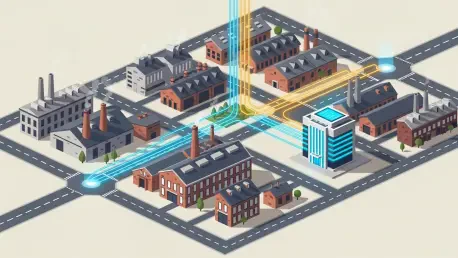

An Unlikely Nexus for the Digital Revolution
In the sprawling urban landscape of Southern California, a city with a notorious past is quietly becoming the bedrock for our digital future. Vernon, a small, heavily industrial enclave just south of downtown Los Angeles, is a place of stark contrasts. Historically known for its slaughterhouses, a minuscule residential population of just over 200, and a legacy of corruption so profound it inspired a season of HBO’s “True Detective,” it seems an improbable candidate for a high-tech renaissance. Yet, this rusty industrial town is rapidly transforming into a critical hub for the massive data centers powering the artificial intelligence boom. This article explores the unique and powerful confluence of factors—from independent utilities to a near-total absence of community opposition—that have positioned this unlikely city at the forefront of the AI infrastructure race, revealing how the future of superintelligence is being built on the foundations of the old industrial world.
From Industrial Grit to Digital Gold
To understand Vernon’s sudden ascent, one must first grasp the colossal infrastructural demand created by the global race toward AI. This technological gold rush is fundamentally reshaping the physical and economic landscape of communities across the nation. A recent Goldman Sachs report quantifies this tectonic shift, noting that tech giants like Google, Amazon, Microsoft, and Meta are investing a staggering $465 billion in computing and networking infrastructure in 2025 alone. The economic stakes are immense; one Harvard economist posits that without these substantial investments in data centers, America’s GDP growth could have faced a near standstill. Vernon’s story is a perfect microcosm of this national build-out, a compelling case study of how specific local conditions can attract a disproportionate share of this massive investment. The city’s ongoing transformation from a landscape of smokestacks to one of advanced AI chips symbolizes a broader economic pivot from old-world industry to the digital age.
The Pillars of Vernon’s Unprecedented Rise
Vernon’s appeal to the data center industry is not a matter of chance but the result of a powerful trifecta of strategic advantages. These core pillars—independent energy control, prime geographic positioning, and a development-friendly political climate—have created an almost perfect environment for the rapid deployment of capital-intensive AI infrastructure, setting it apart from nearly every other municipality in the region.
The Power Play: Independent Energy as a Decisive Advantage
The most critical factor in Vernon’s appeal is its control over its own power. The city operates a publicly owned utility that provides electricity, water, and fiber-optic internet directly to its industrial customers, granting it significant autonomy from regional providers. Crucially, the city possesses a surplus of power capacity, which it can offer to new data centers at rates as low as half of what Southern California’s major utilities charge. For the profoundly power-hungry AI industry, where electricity is a primary and punishing operational cost, this economic incentive is a game-changer. The scale of this demand is staggering; one data center in the city, LAX01, consumes enough electricity to power more than 26,400 homes for a year. In a world where AI’s thirst for energy is insatiable, Vernon’s ability to provide cheap, reliable power is its ultimate competitive edge.
Location, Location, Latency: The Strategic Pull of Proximity
Geography has dealt Vernon a winning hand. The city is situated just miles from the One Wilshire building in downtown Los Angeles, one of the world’s premier telecommunications hubs and the primary landing point for massive undersea fiber-optic cables connecting the United States to Asia. As this critical internet nexus has become increasingly saturated with data centers from streaming giants and cloud providers, companies have been forced to seek viable nearby alternatives. Vernon’s proximity offers the best of both worlds: it allows new data centers to maintain the low-latency connections essential for high-speed data processing while escaping the physical congestion and logistical headaches of the downtown core. This strategic location makes it an ideal satellite hub, perfectly positioned to tap into the internet’s most vital artery.
The NIMBYism Void: A Development-Friendly Oasis
Perhaps Vernon’s most unique advantage is something it lacks: a resident population with the will to protest. With only a little over 200 residents, there is virtually no community to mount a “Not In My Backyard” (NIMBY) campaign against the development of large-scale industrial facilities. This stands in stark contrast to the rest of the nation, where communities in both red and blue counties have successfully blocked billions of dollars in planned data center investments over concerns about excessive water use, noise pollution, and strain on local power grids. A proposed data center in nearby Monterey Park, for instance, has faced significant delays due to such opposition. Vernon’s municipal government, however, has capitalized on this silence, confirming it has received no community objections, creating a frictionless environment for developers to build quickly and at scale.
Navigating the Boom: Future Growth and Emerging Headwinds
The physical transformation of Vernon is well underway. Major developers like Prime Data Centers, Goodman Group, and Digital Realty are snapping up industrial properties and planning hundreds of megawatts of new data center capacity. This boom involves retrofitting old office buildings with advanced cooling systems and, in one symbolic project, converting a shuttered slaughterhouse into a state-of-the-art facility filled with AI processors. However, this rapid growth is not without challenges. Despite official assurances that the build-out will not affect utility prices, some analysts remain skeptical, pointing to a Bloomberg analysis that found electricity costs in areas near data centers have soared by as much as 267%. With California’s power consumption projected to hit record levels, the influx of data centers is forcing utilities to plan for tens of billions in grid upgrades. Developers must also navigate California’s onerous regulatory landscape, carefully designing facilities to stay just under the 49.9-megawatt threshold that triggers more complex licensing. Ultimately, analysts believe even Vernon’s substantial resources may soon reach their limit, a sign of the new reality where data center power needs are measured in megawatts, not kilowatts.
From Rust Belt to Tech Hub: A Blueprint for Unlikely Innovation
Vernon’s journey from a scandal-ridden industrial town to a critical AI infrastructure hub offers a powerful set of takeaways. The city’s success provides a blueprint built on three core pillars: the availability of cheap, independent power; strategic proximity to a major connectivity hub; and an environment free from community opposition. This trifecta creates an almost perfect storm for development, attracting billions in investment. For other post-industrial communities or forward-thinking municipalities, Vernon’s story provides an actionable strategy: identify and leverage unique local assets to meet the voracious demands of the digital economy. The key is to proactively align aging infrastructure, geographic advantages, and regulatory frameworks with the needs of tomorrow’s industries, turning historical liabilities into modern assets.
Vernon’s Legacy: The AI Revolution’s Physical Footprint
The unlikely rise of Vernon serves as a potent reminder that the AI revolution, for all its ethereal and digital promise, has a massive and deeply physical footprint. Its demand for land, power, and water is voracious, and it is actively reshaping the American landscape in real-time. Vernon’s improbable transformation from a symbol of industrial decay to a linchpin of the new tech economy illustrates a profound economic shift. As the race for computational supremacy accelerates, the search for power and space will continue to breathe new life into forgotten corners of the country, proving that the future of artificial intelligence may be found in the most unexpected of places.