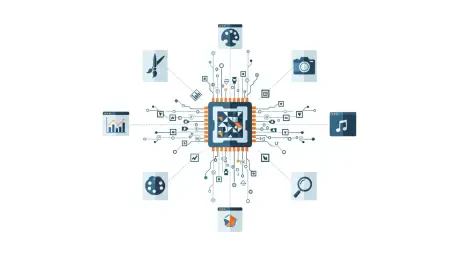

The rapid evolution of high-performance computing has reached a critical juncture where the reliance on massive data centers for artificial intelligence tasks is finally giving way to robust local hardware solutions that reside directly on the user’s desk. As the industry moves through 2026, the transition toward decentralized machine learning has placed an immense burden on traditional central processing units to handle more than just linear logic and basic multithreading. AMD’s upcoming Zen 6 architecture, internally codenamed Olympic Ridge, represents a fundamental shift in how silicon is designed to accommodate these burgeoning computational demands without sacrificing the power efficiency that has become a hallmark of the Ryzen brand. This transition is not merely a seasonal upgrade but a structural realignment of the x86 ecosystem, aiming to bridge the gap between specialized accelerators and general-purpose processors by embedding advanced neural processing units into the very fabric of the chiplet design.
Architectural Innovations: The Core of Olympic Ridge
Building on the successes of its predecessors, the Olympic Ridge architecture introduces a sophisticated 2nm manufacturing process that allows for significantly higher transistor density and improved thermal management across the die. Unlike earlier iterations that relied heavily on external accelerators for complex tensor operations, Zen 6 integrates a second-generation XDNA neural engine that operates with unprecedented efficiency. This dedicated silicon area is specifically tuned to handle low-latency inference tasks, such as real-time language translation and generative image refinement, which were previously relegated to discrete graphics cards. The inclusion of a revamped Infinity Fabric ensures that data travels between the core complex dies and the integrated memory controller with minimal bottlenecking, providing the massive throughput required for large language models to run natively on consumer-grade hardware. These refinements mark a departure from the incrementalism seen in earlier decades.
The shift toward local AI processing necessitates a major overhaul of the memory subsystem, leading AMD to introduce support for even faster DDR5 modules and enhanced cache hierarchies within the Olympic Ridge framework. By expanding the L3 cache and optimizing the branch prediction algorithms for AI-heavy workloads, Zen 6 effectively minimizes the stall cycles that traditionally plagued CPUs when dealing with non-linear data structures. This architectural foresight ensures that users can maintain high productivity in multi-tasking environments where background AI agents are constantly analyzing data or optimizing system resources in real-time. Furthermore, the commitment to the AM5 socket through 2027 provides a stable platform for enthusiasts and enterprise clients alike to transition into this new era of computing without requiring a total infrastructure overhaul. This balance of innovation and compatibility reflects a strategic effort to dominate the high-end desktop market by offering a clear path toward localized intelligence.
Strategic Integration: Reshaping the User Experience
A significant portion of the success for any hardware launch rests on the synergy between the silicon and the software developers who must optimize their applications to take full advantage of new instructions. Olympic Ridge introduces an expanded ISA specifically designed to accelerate matrix multiplications, which are the backbone of modern neural networks, thereby reducing the time required for model training and deployment on the desktop. Major software vendors have already begun integrating these capabilities into their development pipelines, ensuring that by the time Zen 6 reaches the retail market, a robust ecosystem of AI-enhanced tools will be ready for deployment. This proactive engagement with the developer community ensures that the hardware does not sit idle but instead becomes the foundation for a new wave of creative and analytical software. Consequently, the distinction between a standard home computer and a high-end AI workstation continues to blur as advanced features become standard.
Enterprise leaders who prioritized the deployment of Olympic Ridge hardware within their creative and analytical departments experienced a significant reduction in data latency and improved security for proprietary models. These organizations successfully navigated the transition by upgrading their internal infrastructure to support the increased thermal and power requirements of high-density AI processing. Users who optimized their local environments for Zen 6 found that hardware-level security features provided a much-needed layer of protection against emerging synthetic threats. These early adopters developed comprehensive training programs for their staff to leverage the specific neural capabilities of the Ryzen lineup, which facilitated a more seamless integration of automated workflows. By investing in these localized processing solutions, businesses managed to decouple their primary operations from the variability of third-party cloud costs. This strategic move ensured that their computational assets remained robust and capable of handling next-generation workloads.