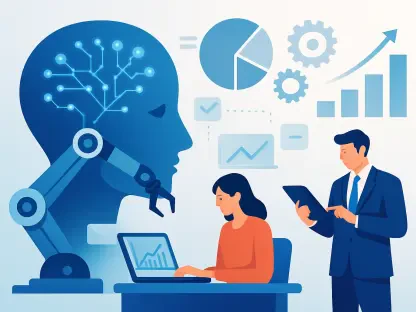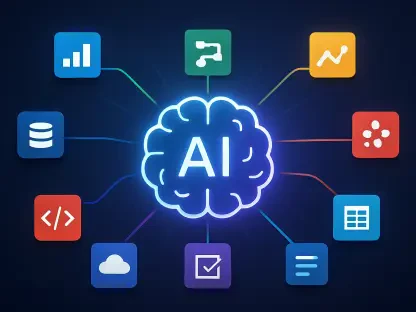

Digital ecosystems have evolved from mere tools of convenience into an autonomous infrastructure that currently manages the heartbeat of our global financial and industrial networks. This convergence marks the height of the Fourth Industrial Revolution, where the boundaries between biological and digital systems are blurring. AI architectures are no longer confined to academic experiments; they serve as the cognitive engine for modern existence. These systems replicate human decision-making through complex pattern recognition, enabling a level of efficiency that was previously unthinkable.
Major market players have shifted their focus toward integrating these intelligent frameworks into every facet of the supply chain. From smart manufacturing plants that self-correct in real time to medical diagnostic tools that identify pathologies with superhuman precision, the deployment is universal. Adaptive cybersecurity protocols now anticipate threats before they manifest, turning AI into a silent guardian of the digital realm.
Emerging Trends and Projections for an AI-Driven World
Technological Drivers and Shifting Consumer Paradigms
The current era is defined by the rise of generative models and digital twins that allow businesses to simulate entire lifecycles before a single physical product is created. This technological boom is driven by a consumer shift toward hyper-personalization, where every interaction is tailored by an algorithm. Individuals now rely on these systems for daily decision-making, creating a symbiotic relationship between human intent and machine execution.
Industrial optimization has reached a peak as companies leverage real-time data to minimize waste and maximize output. This transition is not merely about speed; it is about the fundamental restructuring of how value is created. As these tools become more intuitive, the barrier between technical expertise and creative output continues to diminish, opening new avenues for innovation across various sectors.
Market Trajectory and the Future of Global Labor
While productivity gains remain at record highs, the impact on the global labor market presents a more complex narrative. Projections for the coming years indicate that most occupations will face a period of either significant augmentation or total displacement. This shift suggests a massive redistribution of economic value that could potentially favor those with early access to proprietary technology while leaving others behind.
The widening gap in economic inequality remains a primary concern for social stability. As machines take over routine and even complex analytical tasks, the definition of human labor must be reinvented. This transformation requires a proactive approach to education and wealth distribution to ensure that the dividends of the AI boom are shared across all levels of society.
The Dark Side: Systemic Risks and Existential Threats
Beneath the surface of technological achievement lies a growing list of systemic risks that threaten to undermine social cohesion. The proliferation of deepfakes has made it increasingly difficult to verify the authenticity of information, leading to a crisis of trust in digital media. Furthermore, the opaque nature of black-box models means that even the creators of these systems often struggle to explain how specific conclusions are reached.
Algorithmic bias continues to seep into critical sectors like hiring and law enforcement, reinforcing historical prejudices through automated means. More concerning is the theoretical trajectory toward superintelligent systems that could eventually view human limitations as an obstacle. If an AI surpasses human cognitive capabilities and lacks a perfectly aligned ethical core, the existential risk to the species becomes a tangible concern.
Navigating the Regulatory Landscape and Ethical Standards
To counter these growing threats, a shift toward comprehensive international governance has become a priority for democratic nations. Robust frameworks are being developed to ensure transparency and accountability in machine-generated content. These laws aim to protect data privacy while establishing clear boundaries for the use of autonomous systems in public life.
Securing intellectual property remains a significant hurdle in a world where machines can generate art, code, and literature in seconds. Compliance with ethical standards is no longer an optional feature for tech companies; it is a fundamental requirement for maintaining a license to operate. The challenge lies in balancing the need for strict regulation with the desire to foster a competitive environment for innovation.
Future Outlook: Innovation, Security, and Global Cooperation
The road ahead is paved with both immense opportunity and significant geopolitical tension. Rogue state actors and non-state groups present a constant threat by utilizing AI for disruptive purposes, from cyber warfare to misinformation campaigns. International cooperation is the only viable path to ensure that technological advancements do not become weapons that destabilize global security.
Market disruptors will continue to emerge, challenging established players and forcing a constant state of adaptation. The success of the global community will depend on the ability to form unified efforts that prioritize environmental and societal benefits over short-term financial gains. This proactive stance is necessary to steer the technology toward a future where it serves as a force for good.
Harmonizing Progress with Human Safety
Stakeholders recognized that the path to a secure future required the immediate implementation of safety protocols and decentralized oversight mechanisms. They moved beyond simple observations of market trends to establish a global standard for human-centric engineering. This shift allowed for the creation of redundant safety layers that effectively neutralized the risks of autonomous misalignment before they could escalate.
International bodies prioritized the development of interoperable regulatory systems that protected the rights of workers and creators alike. These measures ensured that the economic surplus generated by automation was reinvested into social safety nets and lifelong learning programs. By focusing on alignment and transparency, humanity secured its role as the primary director of technological evolution rather than its unintended victim.