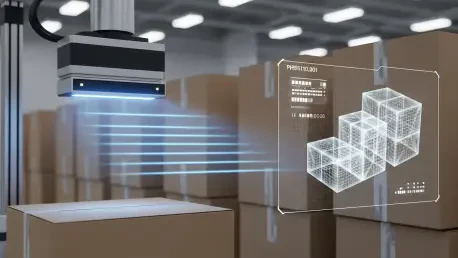

For decades, the primary constraint of robotic navigation has been the inability to perceive objects obscured by solid barriers, a limitation that traditional optical sensors and LiDAR have struggled to overcome. While cameras provide high-resolution data in well-lit, clear environments, they remain essentially useless when faced with opaque obstacles such as drywall, plastic sheeting, or even thick smoke. The transition toward wireless vision technology, specifically utilizing millimeter-wave (mmWave) frequencies, marks a fundamental change in how machines interact with the physical world. By moving beyond the visible spectrum, researchers have unlocked the ability for robots to maintain situational awareness in scenarios where human vision and conventional sensors fail entirely.
The core principle behind this evolution involves the use of surface-penetrating radio signals that behave differently than light. Unlike visible light, which is absorbed or scattered by common construction materials, mmWave signals can pass through barriers to reflect off the objects hidden behind them. This capability is not merely an incremental improvement; it is a paradigm shift that grants robots a form of “X-ray vision.” In a practical sense, this means a logistics robot could identify the contents of a sealed crate without opening it, or a search-and-rescue drone could locate a survivor buried under debris. This technology effectively bridges the gap between digital data and physical occlusion, providing a reliable stream of spatial information in chaotic or non-transparent environments.
Evolution of Wireless Vision and Sensory Perception
Traditional optical sensors operate on the premise of direct line-of-sight, which limits their utility in complex, indoor settings where furniture and walls create constant blind spots. The shift to millimeter-wave frequencies addresses this by leveraging the unique electromagnetic properties of the 30 GHz to 300 GHz band. These waves are short enough to provide decent resolution but long enough to navigate through materials that would stop a photon. This transition represents the modernization of sensory hardware, moving away from passive light collection toward active radio-frequency probing that ignores visual obstructions.
Furthermore, the relevance of this technology in the current landscape of autonomous systems cannot be overstated. As robots move from controlled factory floors into the unpredictable spaces of homes and construction sites, they require a level of perception that accounts for what is not immediately visible. By utilizing mmWave signals, these systems gain a layer of robustness that LiDAR cannot match, especially in environments filled with dust, steam, or low-light conditions. This evolution is the foundation for a more resilient form of machine intelligence that treats the environment as a transparent volume rather than a series of opaque surfaces.
Core Components and Technical Innovations
Millimeter-Wave Signals and the Specularity Challenge
Despite the potential of mmWave signals, they possess a significant physical limitation known as specularity. When these high-frequency waves hit a smooth, solid surface, they reflect like a mirror rather than scattering in all directions. This mirror-like behavior means that if the sensor is not at the exact right angle to catch the bounce, the signal is lost into the environment. This creates a massive data bottleneck where only fragments of an object are “seen,” leaving the system with a sparse and incomplete point cloud that lacks the detail necessary for complex object recognition or manipulation.
This specularity challenge makes it incredibly difficult to reconstruct three-dimensional shapes. A robot might detect the top edge of a hidden box but have no information regarding its depth, width, or the nature of its contents. This lack of data prevents machines from performing high-precision tasks behind walls. Solving this bottleneck required a move away from pure physics-based signal processing toward a more sophisticated, interpretive model that could handle missing information with a level of “intuition” previously unseen in radio-frequency systems.
Wave-Former: Generative AI for Signal Reconstruction
The introduction of the Wave-Former architecture represented a breakthrough in overcoming signal gaps. Unlike previous systems that simply reported the data they received, Wave-Former utilizes a generative AI model to hypothesize the missing segments of an object. It acts as a cognitive “gap-filler,” taking the scattered, sparse reflections from mmWave sensors and comparing them against a deep understanding of geometric forms. By analyzing the partial data, the model can predict the most likely full shape of the object, effectively reconstructing a complete 3D model from incomplete radio echoes.
To train this model without a pre-existing massive library of wireless scans, researchers employed a creative data-augmentation strategy. They utilized existing 3D computer vision datasets and mathematically simulated how those objects would appear if viewed through a flawed mmWave sensor. By “corrupting” clean 3D data with realistic signal noise and specularity patterns, they taught the AI to recognize the underlying structure of an object within the chaos of radio interference. This allows Wave-Former to deliver high-fidelity reconstructions of diverse items, from kitchen utensils to industrial tools, even when they are entirely hidden from view.
Emerging Trends in Environmental Mapping
The current trajectory of this field is moving from the identification of single objects toward the reconstruction of entire environments. A notable advancement is the development of systems like RISE, which leverage what were once considered “ghost signals.” In traditional wireless sensing, multipath reflections—signals that bounce off multiple surfaces before returning to the sensor—were treated as noise. However, by interpreting these secondary and tertiary bounces, RISE can map the dimensions of a room and the placement of furniture using a single, stationary sensor. This eliminates the need for a robot to physically move around a space to scan it, greatly increasing operational efficiency.
Moreover, there is a growing trend toward privacy-conscious sensing. Unlike cameras, which capture high-resolution images that can compromise occupant identity, mmWave signals focus on spatial geometry and movement. This makes wireless vision an ideal candidate for smart homes and healthcare facilities where monitoring is necessary but privacy is paramount. By providing situational awareness without the invasive nature of video feeds, these systems offer a middle ground that prioritizes the safety and dignity of individuals while still granting autonomous systems the data they need to function.
Real-World Applications and Sector Impact
In industrial settings, the impact of wireless vision is already being felt within the logistics and warehousing sectors. The ability to verify the contents of sealed packages ensures that shipping errors are caught before they leave the facility, streamlining quality control and reducing the environmental footprint of return shipments. This capability turns the warehouse into a fully transparent ecosystem where inventory management is no longer dependent on barcodes or manual inspections but on the continuous, non-invasive scanning of the environment.
The smart home and healthcare sectors also stand to benefit significantly, particularly in the realm of elderly care. Robots equipped with wireless vision can monitor a person’s location and posture through walls, allowing for immediate detection of falls or medical emergencies without the need for wearable devices or intrusive cameras. Similarly, in search-and-rescue operations, these systems can navigate through smoke-filled buildings or collapsed structures to find survivors, providing a level of clarity that was previously impossible. This technology transforms the robot from a simple tool into a perceptive guardian capable of seeing through the chaos of disaster.
Technical Hurdles and Regulatory Limitations
Despite the impressive progress, several hurdles remain, most notably the high computational cost associated with real-time 3D generative reconstruction. Processing complex radio signals into accurate 3D models requires significant onboard power, which can be a drain on mobile robotic platforms. Additionally, the field faces a shortage of diverse, real-world wireless signal datasets. While synthetic data augmentation has provided a strong starting point, the nuances of different building materials and signal interference in the real world require more comprehensive, empirical data to reach near-perfect accuracy.
Regulatory and market obstacles also play a role in the pace of adoption. Frequency allocation for high-bandwidth mmWave sensors is strictly controlled, and ensuring that these systems do not interfere with existing communication networks like 5G is a constant challenge. Furthermore, integrating these sophisticated sensors into existing robotic architectures requires a level of standardization that the industry has yet to fully achieve. Ongoing development is currently focused on mitigating signal interference and reducing the latency of the generative models to ensure that wireless vision can be deployed at scale.
Future Outlook and Foundation Models
The long-term vision for this technology involves the creation of “foundation models” specifically for wireless signals. Much like large language models have revolutionized text processing, a wireless foundation model would provide a universal framework for interpreting any radio reflection. This would allow a robot to enter a completely unknown environment and instantly understand its layout and contents without any prior training. Such a breakthrough would mark the transition from specialized tools to a generalized form of machine perception that rivals the adaptability of human sight.
In the future, we may see robots possessing a level of perception that exceeds human capabilities in every dimension. By combining the strengths of optical sensors with the penetrating power of mmWave vision, autonomous systems will operate with a total awareness of their surroundings. This will lead to a society where robots are more deeply integrated into our daily lives, performing tasks with a level of safety and precision that was once thought impossible. The potential for these systems to understand the world through barriers will redefine the boundaries of robotics and automation.
Assessment of Wireless Vision Progress
The review of wireless vision systems demonstrated that the integration of generative AI successfully bypassed the physical limitations of radio waves. It was found that architectures like Wave-Former provided a significant leap in 3D reconstruction by hypothesizing missing data rather than relying solely on imperfect reflections. The research indicated that these systems improved accuracy by 20 percent compared to earlier iterations, which established a new benchmark for the industry. This progress suggested that the reliance on visible light for robotic navigation was no longer an absolute requirement, as radio-frequency sensing matured into a viable alternative.
The assessment concluded that while computational costs remained a factor, the shift toward stationary environmental mapping via RISE provided a practical path for commercial adoption. The technology showed immense potential for transforming logistics, healthcare, and emergency response by offering a level of perception that functioned through solid obstacles. Ultimately, the development of wireless vision represented a decisive step toward creating truly autonomous machines capable of operating in the complex, non-transparent reality of the physical world. Future efforts were directed toward universal foundation models to solidify this sensory revolution.