
Walking into a contemporary office today feels less like entering a traditional place of business and more like stepping into a high-functioning laboratory where human intuition and algorithmic precision are locked in a complex, ongoing negotiation. This integration of Artificial Intelligence (AI) into the professional sphere has moved far beyond the novelty of simple chatbots; it now serves as the invisible backbone of decision-making and operational strategy. The current landscape is defined by a sophisticated blending of machine learning and natural language processing that aims to redefine the very nature of white-collar labor.
The purpose of this review is to dissect the current state of this integration, specifically examining the friction between technical capability and human psychological response. While the raw power of these tools is undeniable, their success is increasingly measured not just by flops or processing speed, but by how effectively they mesh with the existing social fabric of the workforce. Understanding this intersection is vital for any organization attempting to navigate the transition toward a more automated future without sacrificing the collective morale of its human assets.
Foundations of AI in the Modern Professional Environment
Artificial Intelligence in the workplace has transitioned from a backend utility to a front-facing operational partner, utilizing deep learning architectures to handle complex cognitive duties. This evolution represents a shift from “narrow AI,” which performed singular tasks like data entry, to generative ecosystems capable of drafting reports, coding software, and predicting market fluctuations with startling accuracy. These systems rely on vast neural networks that have been refined to understand context, making them significantly more versatile than the rigid algorithms of the previous decade.
At its core, the integration focuses on the optimization of “cognitive bandwidth,” allowing professionals to offload the mental tax of repetitive analysis. By automating the foundational layers of information processing, these tools ostensibly clear the path for higher-order creative thinking and strategic planning. However, the unique nature of this implementation lies in its ubiquity; it is no longer confined to IT departments but has permeated every level of the corporate hierarchy, from entry-level administrative roles to the executive suite.
Core Dimensions of AI Performance and Integration
Technical Efficiency and Productivity Gains
The immediate impact of AI adoption is most visible through the lens of sheer output volume and precision. Professionals across various sectors have reported that AI performs exceptionally well in areas requiring high-speed data synthesis and error reduction, with over 70% of the workforce acknowledging significant time savings. This efficiency is not merely about doing things faster; it is about the capability to perform analyses that were previously impossible due to the sheer volume of data involved, such as real-time global supply chain adjustments or individualized customer sentiment tracking at scale.
Moreover, this technical surge provides a distinct competitive advantage for early adopters. Unlike traditional software that requires manual updates, modern AI improves through use, creating a feedback loop where the system becomes more tailored to the specific nuances of a company’s workflow over time. This makes the technology a dynamic asset rather than a static tool. The result is a streamlined environment where the “manual burden” of information management is drastically lowered, theoretically giving employees more room to focus on the human-centric aspects of their roles.
The Social Dynamics of Human-AI Collaboration
Despite the technical triumphs, the transition of AI from a tool to a “teammate” has been remarkably uneven. There is a profound difference between a piece of software that calculates a spreadsheet and an entity that provides creative suggestions or strategic advice. Current metrics reveal that while workers appreciate the utility of AI, very few are ready to grant it the social status of a colleague. This creates a functional ceiling where the technology is used extensively but remains socially isolated within the team structure, preventing the kind of fluid, intuitive collaboration that defines high-performing human groups.
The lack of “human-like” qualities, such as empathy and shared context, remains the primary barrier to this collaborative ideal. Most professionals still view AI as a sophisticated enabler rather than a partner, largely because the communication interfaces, while improved, still lack the subtle cues of human interaction. This disconnect suggests that for AI to truly integrate into the social dynamics of an office, developers must look beyond processing power and toward the development of relational intelligence. Without this, AI remains a powerful but lonely engine sitting in the middle of a human circle.
Shifting Perceptions and Industry Trends
The current trend in AI integration is characterized by a “dual-reality” where technical enthusiasm is tempered by institutional caution. While the pace of innovation remains relentless, many sectors are moving away from a “growth at all costs” mentality toward a more structured, strategy-led approach. This shift is driven by the realization that haphazard implementation often leads to employee burnout or data mismanagement. Consequently, there is a rising demand for transparent governance and ethical frameworks that dictate exactly how and when an algorithm can intervene in human decision-making.
Furthermore, we are seeing a stabilization of public sentiment into distinct psychological archetypes. While roughly half of the modern workforce remains optimistic about the potential for automation to eliminate drudgery, a nearly equal portion has adopted a stance of watchful skepticism. This trend highlights a transition into a “second phase” of integration, where the focus is no longer on what the technology can do, but what it should do. Organizations are now prioritized by their ability to provide clear roadmaps that account for both the technical rollout and the psychological well-being of their staff.
Real-World Applications Across Global Sectors
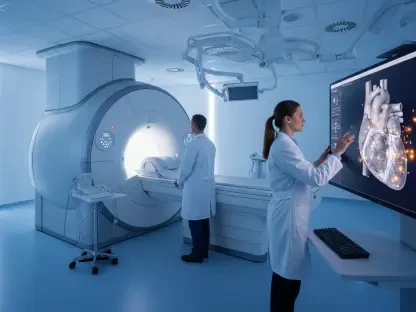
The deployment of AI has reached a level of maturity where it is producing tangible results in high-stakes environments like healthcare and finance. In medical settings, AI-driven diagnostics assist radiologists in identifying anomalies with a level of consistency that supplements human expertise, while in the financial sector, predictive models are used to detect fraudulent patterns in milliseconds. These applications demonstrate that AI is most effective when it acts as a “second pair of eyes,” providing a layer of verification that enhances the reliability of human professional judgment.
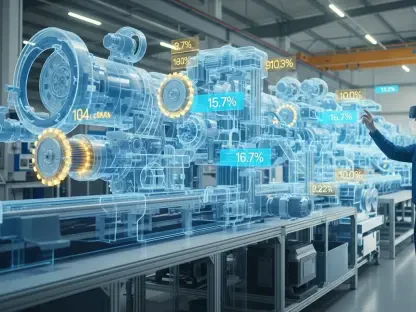
In the creative and manufacturing sectors, the technology is being used to bridge the gap between concept and execution. Generative design tools allow engineers to input specific parameters and receive thousands of optimized blueprints, which they can then refine. This specialized use of AI enables a “hyper-focus” on strategic goals, as the machine handles the iterative heavy lifting. By allowing professionals to operate at a more conceptual level, these tools are effectively shifting the value of human labor from “doing” to “curating” and “directing.”
Challenges and Barriers to Widespread Adoption
Technical Limitations and Institutional Trust
Perhaps the most formidable obstacle to total integration is the deep-seated crisis of trust regarding AI governance. Despite the high performance ratings of these tools, there is a significant gap between utilizing a service and trusting the institution that provides it. Concerns over cybersecurity, data privacy, and the potential for algorithmic bias remain prevalent, creating a sense of vulnerability among users. This is not just a technical hurdle; it is a foundational issue of institutional integrity that can stall adoption even when the software itself is functioning perfectly.
Additionally, the “social contract” between employer and employee feels increasingly fragile. Many workers interpret the aggressive push toward automation as an implicit threat to their job security and professional identity. When a company introduces a tool that can perform 40% of a person’s job, the immediate reaction is often fear rather than relief. Addressing these concerns requires more than just better encryption or more accurate models; it requires a fundamental restructuring of how companies value their human workforce in the age of the algorithm.
The Erosion of Personal Empowerment
A subtle but damaging side effect of AI expansion is the perceived loss of agency among experienced professionals. As AI systems take over more complex tasks, many employees report a sense of “professional de-skilling,” where they feel their unique expertise is being overshadowed by a black-box process they do not fully understand. This psychological impact can lead to a significant drop in engagement, as the “human element” of problem-solving—the part that provides satisfaction and a sense of accomplishment—is increasingly outsourced to a machine.
This erosion of empowerment is often exacerbated by poor organizational strategies that treat AI rollout as a top-down mandate rather than a collaborative evolution. When employees are not included in the integration process, they are more likely to view the technology as an adversary. Overcoming this barrier involves a shift in focus from the efficiency of the machine to the empowerment of the user. Without a strategy that prioritizes the professional growth of the human worker alongside the deployment of the AI, organizations risk creating a highly efficient but profoundly disaffected workforce.
Future Outlook and the Concept of Entanglement
The next phase of workplace evolution is moving toward a state of “entanglement,” where the distinction between human effort and technological support becomes increasingly blurred. Future developments are expected to focus heavily on AI literacy, transforming the workforce from passive users into “algorithmic supervisors.” This transition will likely involve the use of more interactive, accessible interfaces that demystify the internal logic of the AI, making it feel less like a mysterious oracle and more like a transparent, adjustable tool.
Long-term success will likely depend on the industry’s ability to foster “playful engagement” and continuous learning. As AI takes over more of the routine cognitive load, the human role will expand into areas of high-level ethics, complex empathy, and cross-disciplinary synthesis. The goal is a holistic integration where the technology serves as a foundation for human thriving rather than a replacement for it. In this future, the value of a professional will be measured by their ability to direct and refine the outputs of these powerful systems, ensuring they align with human values and organizational goals.
Summary of Findings and Assessment
The review of Artificial Intelligence integration in the professional landscape demonstrated a stark contrast between impressive technical performance and a persistent lack of institutional trust. While the technology significantly improved productivity and data accuracy across diverse sectors, it also introduced profound psychological tensions regarding job security and personal agency. The research indicated that the majority of the workforce valued the efficiency of AI but remained wary of its broader societal and ethical implications. Successful adoption appeared to be less a matter of software capability and more a reflection of how well an organization managed the human transition through literacy and transparent governance.
The path forward required a fundamental shift in how industries approached the “social contract” in an automated world. It was found that organizations which prioritized human well-being and creative empowerment alongside technological deployment achieved a more sustainable form of integration. Ultimately, the transition to an AI-augmented workplace was not a zero-sum game between man and machine, but a complex evolution that demanded a new level of digital fluency. The final verdict suggested that the future of work depended on bridging the gap between what the technology could do and what the human workforce felt comfortable allowing it to do.