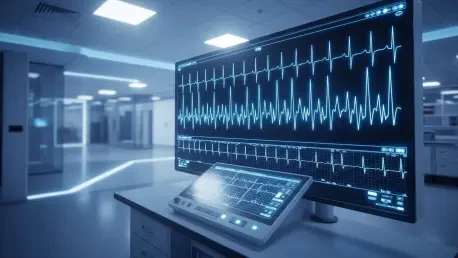

A routine clinical test once viewed as a static snapshot of the heart’s electrical activity now functions as a powerful foresight tool, capable of identifying life-threatening cardiac decline long before the first physical symptom emerges. In the high-stakes environment of cardiology, the difference between stability and a terminal crisis often hinges on timing. While traditional diagnostics focus on the present state of a patient, a new era of medical intelligence is emerging that treats the standard electrocardiogram (ECG) as a window into the future. By analyzing the subtle patterns within these heart rhythms, researchers have developed a way to anticipate the trajectory of heart failure with a level of precision that was previously unattainable through manual observation alone.
Could a Simple Heart Rhythm Test Hold the Key to Predicting a Patient’s Health Twelve Months Before a Crisis Occurs?
The prospect of predicting a cardiac emergency a full year in advance represents a fundamental shift in how chronic illness is managed. Standard medical practice typically relies on reacting to symptoms as they arise, such as shortness of breath or sudden weight gain from fluid retention. However, by the time these signs manifest, the underlying damage to the heart muscle is often extensive and difficult to reverse. This predictive capability allows clinicians to intervene during the silent phase of progression, potentially altering the course of the disease before a patient ever reaches the emergency room.
Beyond the clinical implications, this technology addresses the psychological burden of living with a chronic condition. For millions of individuals, the uncertainty of heart failure creates a constant state of anxiety regarding their next hospitalization. Providing a twelve-month outlook offers a sense of clarity, enabling both doctors and patients to make informed decisions about medication adjustments, lifestyle changes, or surgical interventions. This foresight transforms the ECG from a simple diagnostic check into a proactive roadmap for long-term health maintenance.
The Critical Gap: Managing a Growing Global Health Crisis
The reality of heart failure remains one of the most daunting challenges in modern medicine, with approximately 50 percent of diagnosed patients facing mortality within five years. Despite the existence of advanced pharmaceuticals and sophisticated pacemakers, the condition continues to place an immense strain on global healthcare infrastructure. The primary driver of this crisis is the cyclical nature of the illness, where patients frequently oscillate between periods of relative stability and acute episodes of fluid accumulation or sudden cardiac arrest. These emergencies require resource-intensive interventions that often overwhelm hospital capacity.
Furthermore, traditional monitoring methods are often too expensive or specialized for consistent use in every setting. While echocardiograms and ultrasounds provide detailed images of the heart’s structure, they require expensive equipment and trained technicians that many rural or low-resource clinics simply do not possess. This creates a dangerous diagnostic gap where patients in underserved areas receive less frequent monitoring, leading to delayed interventions. Moving away from reactive care toward a model of proactive surveillance is essential to bridging this divide and ensuring that high-quality cardiac management is accessible regardless of a facility’s budget.
PULSE-HF: Transforming ECGs into Predictive Crystal Balls
At the heart of this innovation is the PULSE-HF model, a sophisticated deep learning tool developed through a multidisciplinary collaboration between MIT, Harvard, and Mass General Brigham. The acronym, which stands for Predicting changes in left ventricULar Systolic function from ECGs, describes its primary objective: tracking the Left Ventricular Ejection Fraction (LVEF). LVEF is the benchmark for heart health, measuring the percentage of blood the heart pumps out with each contraction. When this figure drops below the 40 percent threshold, the patient enters a high-risk category where the heart can no longer meet the body’s demands, and the PULSE-HF model specifically forecasts this decline up to a year in advance.
What sets this artificial intelligence apart from previous tools is its remarkable versatility and statistical validation. While the model performs exceptionally well using a standard 10-electrode, 12-lead ECG, the researchers also successfully adapted it for single-lead data. This means that a device as simple as a handheld monitor or a wearable could potentially offer the same predictive power as hospital-grade equipment. With AUROC scores—a measure of predictive accuracy—ranging from 0.87 to 0.91, the model demonstrated an incredible ability to distinguish between stable patients and those on the verge of a significant cardiac downturn across diverse populations.
Overcoming the “Rabbit Hole” of Medical Data Integrity
The development of clinical AI is rarely a straightforward path, often involving an exhaustive process of data refinement known as the “never-ending rabbit hole.” One of the most significant hurdles in building PULSE-HF was the conversion of fragmented medical records into a format that a machine could actually understand. Many historical ECG records exist as PDF files, which, when parsed, often lose their structural integrity and become a jumble of nonsensical text. Ensuring that every data point correctly corresponded to a specific patient’s future health outcome required thousands of hours of meticulous cleaning and validation.
Technical obstacles were not limited to file formats; real-world data is inherently “messy” due to the nature of clinical environments. Signal artifacts caused by a patient moving their arm or a loose electrode often create “noise” that can confuse a standard algorithm. To make PULSE-HF effective in a live hospital setting, the team had to design a model robust enough to see through these imperfections. This humanistic drive to perfect the technology was fueled by the goal of reducing global suffering, acknowledging that for AI to be a true medical partner, it must be reliable even when the input data is less than perfect.
Strategies for Integrating AI Forecasting into Clinical Workflows
Integrating these AI predictions into the daily rhythm of a hospital requires a strategic shift in how patients are triaged and prioritized. By utilizing the forecasts provided by PULSE-HF, healthcare systems can implement a tiered monitoring system where patients identified as high-risk receive immediate and frequent follow-up care. This targeted approach ensures that specialized equipment, like echocardiography suites, is reserved for those who need it most, while patients predicted to remain stable can be monitored through less invasive means. Such a system optimizes resource allocation, preventing burnout among medical staff and reducing wait times for critical procedures.
This framework is particularly transformative for rural healthcare, where the shortage of specialized cardiologists is most acute. Because the model can operate on single-lead ECG data, local practitioners can conduct high-level cardiac assessments without needing an on-site imaging expert. This democratizes access to advanced heart failure management, allowing for a seamless transition from retrospective testing to real-time prospective care. The focus shifted toward building a sustainable infrastructure where predictive data guided every clinical decision, ensuring that no patient fell through the cracks of a fragmented system.
As the implementation phase progressed, the focus turned toward the long-term impact on patient survival and quality of life. Medical teams moved away from traditional “wait and see” methods, instead adopting the AI-driven forecasts to adjust medications months before a crisis occurred. The transition proved that the marriage of deep learning and standard diagnostics offered a viable solution to the global heart failure epidemic. By the time the research reached its clinical conclusion, the technology had already begun to redefine the standard of care, moving the medical community toward a future where cardiac decline was no longer an inevitability but a manageable risk.