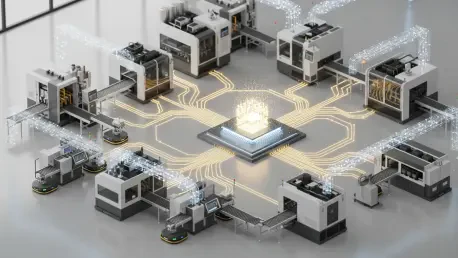

Global manufacturing is currently undergoing a seismic shift as traditional production lines evolve into interconnected ecosystems that can sense, think, and respond to environmental changes without human intervention. This transformation has gained significant momentum with Altimetrik officially introducing its new Industrial AI service line, a strategic initiative designed to help major enterprises move beyond isolated pilot programs toward full-scale autonomous manufacturing operations. By focusing on the integration of advanced artificial intelligence into physical assets and complex supply chain networks, the company targets high-stakes sectors such as aerospace, semiconductors, and pharmaceuticals. The core of this initiative is a transition toward a sophisticated perception-decision-action model, which enables real-time intelligence at the edge. This shift allows industrial systems to make split-second operational decisions locally, drastically reducing the reliance on distant cloud servers and minimizing latency in critical production environments.
Strengthening the Foundation With Intelligent Assets
The initial pillar of this technological strategy centers on the development of Smart Machines, which utilizes edge-native intelligence and digital twins to make individual pieces of equipment self-aware. By processing massive amounts of telemetry data locally, these machines can engage in high-level predictive maintenance, identifying subtle signs of potential mechanical failure before they cause significant disruptions to the production schedule. This proactive approach allows original equipment manufacturers to embed advanced intelligence directly into their hardware, fundamentally increasing the overall reliability and market value of their products for various end-users. Instead of being passive tools, these machines become active participants in the manufacturing process, capable of adjusting their own parameters to optimize performance. This level of granular control ensures that every component functions at peak efficiency, thereby extending the lifespan of expensive capital assets and reducing the total cost of ownership for modern industrial facilities.
Building upon the concept of machine self-awareness, the integration of digital twins provides a virtual sandbox where operational scenarios can be tested and refined in real time without risking physical assets. This synergy between the digital and physical realms allows for a deeper understanding of machine behavior under varying loads and environmental conditions. As machines continuously learn from their own operational data, they develop the capacity to suggest optimizations that were previously invisible to human operators or traditional monitoring systems. The implementation of these intelligent frameworks is particularly beneficial in high-precision industries where even a minor deviation in calibration can lead to catastrophic failures or massive waste. By empowering machines to correct themselves on the fly, enterprises can maintain a much higher standard of quality and consistency across their output. This transition marks a significant departure from reactive maintenance models, steering the industry toward a future where downtime is virtually eliminated.
Achieving Efficiency Through Coordinated Plant Management
To manage the broader manufacturing environment effectively, the Smart Plants solution acts as a sophisticated digital copilot that orchestrates entire production lines with a focus on achieving zero-touch operations. This layer of intelligence uses quality prediction systems and autonomous decision-making to optimize throughput and overall effectiveness across multiple departments. By providing a holistic view of the factory floor, this solution helps manufacturers break down long-standing data silos that often hinder communication between different stages of the production process. The result is a more fluid operation characterized by shorter cycle times and a significant reduction in costs related to both labor and quality control. These systems are designed to monitor environmental factors, energy consumption, and material flow simultaneously, ensuring that every resource is utilized to its fullest potential. This comprehensive orchestration allows for a level of agility that enables plants to pivot quickly in response to changing demands.
The Smart Operations solution extends these advanced AI capabilities beyond the factory floor to optimize the entire manufacturing value chain by leveraging supply chain analytics and inventory management. Implementation of these transformative AI tools is rooted in a pragmatic philosophy that intentionally avoids the need for expensive and disruptive upgrades to existing infrastructure. Altimetrik’s methodology focuses on building upon a company’s current operational technology, prioritizing the removal of waste and the reduction of unnecessary downtime. This three-stage process, ranging from executive advisory to strategic transformation, ensures that new technology remains closely aligned with the organization’s overarching business goals. By integrating AI into legacy systems, companies can realize the benefits of modern technology without the massive capital expenditure traditionally associated with industrial modernization. This approach allows for a more phased and manageable transition, where early efficiency wins can fund subsequent stages of the digital journey.
Empowering the Workforce Through Collaborative Autonomy
Real-world validation of this sophisticated approach was recently demonstrated through partnerships with global leaders like Lakshmi Machine Works, where AI was utilized to enhance machine accuracy and reduce skill dependency. As industrial machinery became more autonomous and self-correcting, the reliance on highly specialized manual intervention decreased, which helped the manufacturer remain productive despite significant labor shortages. This shift allowed the workforce to move away from routine troubleshooting and toward more strategic, high-value roles within the production facility. A core feature of this entire rollout was the human-at-the-helm philosophy, ensuring that human operators maintained ultimate control over autonomous systems. Rather than replacing human decision-making authority, the AI acted as a sophisticated copilot that provided workers with predictive insights and better data. This balanced approach addressed various concerns regarding automation while simultaneously empowering employees to use real-time information as a powerful competitive advantage.
Looking ahead, the successful deployment of these industrial AI solutions highlighted the necessity for manufacturers to prioritize data accessibility and cross-departmental collaboration. Organizations that embraced this model found that the most significant gains were achieved when technical implementation was paired with a cultural shift toward data-driven decision-making. To sustain this momentum, industrial leaders focused on upskilling their current workforce to handle advanced analytical tools while continuously refining their digital twin models. The transition toward autonomous manufacturing proved to be less about replacing people and more about augmenting their capabilities to handle increasing complexity. Future strategies involved expanding these AI frameworks to include sustainability metrics, ensuring that production efficiency also aligned with global environmental standards. By maintaining a focus on pragmatic integration and human-centric design, enterprises positioned themselves to navigate market complexities with greater agility, transforming their operations into resilient, self-optimizing ecosystems.