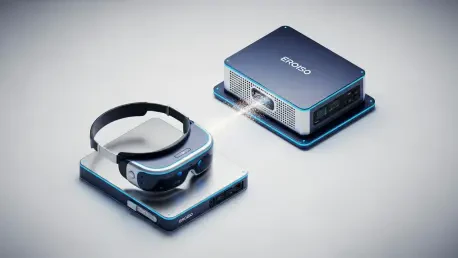

The ubiquitous presence of high-definition cameras and sensitive microphones nestled into the frames of modern eyewear has transformed the silent observer into an active, data-hungry participant in every human interaction. While these advancements in wearable technology offer unprecedented convenience, they simultaneously create a continuous stream of personal data that traditionally migrates to centralized cloud servers for processing. This architectural reliance on remote data centers has turned private moments into digital commodities, sparking a fierce debate among privacy advocates and technology developers regarding the ethical boundaries of “always-on” surveillance. As the industry matures in 2026, a fundamental tension remains between the desire for seamless artificial intelligence and the inherent right to digital sovereignity. The challenge is no longer just about building a smarter device, but about engineering a system that respects the sanctity of the user’s immediate physical environment without sacrificing the sophisticated utility that modern consumers have come to expect from their high-tech accessories.
The Architecture of Private Intelligence
Decentralizing AI Through Local Processing
The transition toward decentralized intelligence represents a seismic shift in how wearable hardware interacts with the surrounding world. By prioritizing edge computing, developers are effectively cutting the cord that links personal experiences to distant, third-party servers. This localized approach ensures that the raw data captured by smart glasses—ranging from the faces of friends to the text of private documents—is processed entirely within the user’s personal hardware ecosystem. Instead of transmitting recognizable images or audio files across the internet, the system generates encrypted embeddings. These mathematical representations are essentially non-human-readable snapshots that allow the AI to function without ever exposing the underlying sensitive content to potential breaches or corporate data mining. This technical safeguard acts as a digital perimeter, ensuring that what happens in the user’s field of vision stays within their physical possession.
Furthermore, the adoption of local inference provides a definitive solution to the persistent problem of latency that has long plagued cloud-dependent systems. In the context of a real-time conversational partner, even a millisecond of delay can make an interaction feel disjointed and artificial. By utilizing the onboard Neural Processing Units (NPUs) found in contemporary mobile chipsets, wearable devices can achieve near-instantaneous responsiveness. This “human-speed” interaction is critical for applications like live language translation or contextual search, where the value of the information is tied to its immediate delivery. As the computational heavy lifting shifts to the device in the pocket or on the face, the user experience becomes more fluid and natural. This efficiency does not merely improve performance; it reinforces the privacy model by proving that high-end AI capabilities do not require the massive, invasive infrastructure of a remote data center to provide meaningful value.
Security Through Encrypted Mathematical Models
Central to this new privacy-centric framework is the sophisticated use of encrypted embeddings which redefine the nature of data storage on mobile devices. When a wearable device captures an input, the local AI translates that information into a complex vector space rather than saving a traditional file format. These embeddings are designed to be one-way transformations; they allow the machine learning model to recognize patterns and recall context without providing a way for a malicious actor to reconstruct the original visual or auditory data. This means that even if the hardware were physically compromised, the information stored within would be functionally useless to anyone without the specific cryptographic keys and model weights used during the initial processing phase. This layer of abstraction is a powerful deterrent against the unauthorized monetization of personal habits, as there is no “raw” data left behind for third-party platforms to scrape or analyze for advertising purposes.
Building on this foundation of data abstraction, the system creates a secure “personal memory” that remains under the absolute control of the individual user. This feature allows the AI to index daily experiences, such as remembering where a set of keys was placed or recalling a specific detail from a morning meeting, without those memories ever touching the cloud. The integration of these local databases with advanced optimization techniques ensures that the search and retrieval process is both energy-efficient and highly secure. Because the indexing happens at the edge, the user can enjoy the benefits of a photographic memory without the fear that their life story is being archived on a corporate server. This model shifts the role of AI from a centralized observer to a personal, local assistant, fundamentally changing the power dynamics between technology providers and the people who use their products in their everyday lives.
A Philosophical Shift in Device Development
Transparency and the Open-Source Advantage
The move toward open-source architectures in the wearable sector marks a departure from the “black box” methodology that has defined the tech industry for decades. By making the underlying software stack accessible for public and independent audit, companies like Brilliant Labs are inviting a level of scrutiny that builds genuine consumer trust. This transparency is not just a marketing tactic; it is a rigorous engineering standard that allows developers and security researchers to verify exactly how data is routed and where it is stored. In an era where corporate promises of privacy are often met with skepticism, the ability to inspect the code provides a factual basis for security claims. This collaborative environment also accelerates innovation, as a global community of developers can contribute to the security protocols, ensuring that the software remains resilient against emerging threats while strictly adhering to its original privacy-first mission.
This commitment to transparency serves as a direct challenge to the closed ecosystems of major tech conglomerates, which often prioritize data harvesting to fuel their business models. When the internal workings of a device are hidden, users are forced to rely on the goodwill of the manufacturer, a gamble that has frequently resulted in privacy scandals. In contrast, an open-source approach empowers the user by providing the tools necessary to customize their privacy settings and understand the data lifecycle of their device. This shift reflects a growing industry consensus that the long-term sustainability of wearable AI depends on the user feeling secure and in control. By fostering an ecosystem where privacy is built into the source code rather than added as a superficial layer, these pioneers are setting a new benchmark for ethical hardware development that favors the individual over the aggregator.
Optimizing High-End AI for Mobile Hardware
The technical feasibility of local AI is largely driven by the rapid evolution of mobile hardware, specifically the specialized accelerators designed to handle neural network operations. Modern smartphones and wearable components now feature dedicated silicon that can execute trillions of operations per second with minimal power draw. This allows complex models, which once required the cooling and power of a server farm, to run efficiently in the palm of a hand or on the temple of a pair of glasses. Developers are now focusing on “model quantization” and other compression techniques that reduce the footprint of AI without significantly degrading its intelligence. This means that the trade-off between privacy and power is rapidly disappearing, as the local hardware becomes capable of handling sophisticated tasks like natural language processing and computer vision natively.
This optimization process is essential for maintaining the sleek form factors that consumers demand from wearable technology. If a device requires a constant, high-bandwidth connection to the cloud to function, it becomes a tethered peripheral rather than an independent tool. By moving the intelligence to the “edge,” designers can create devices that are more reliable in areas with poor connectivity while also extending battery life by reducing the energy-intensive process of constant data transmission. The result is a more robust and autonomous product that respects the user’s data sovereignty by design. As these mobile NPUs and GPUs continue to advance, the gap between what a local device can do and what a cloud server offers will continue to shrink, further solidifying the argument that privacy and high-performance technology are no longer mutually exclusive goals in the wearable market.
Delivering the Halo Experience
Specialized Roles in a Unified Ecosystem
The realization of a truly private AI wearable requires a harmonious integration of hardware design, conversational software, and computational optimization. In the development of the “Halo” smart glasses, the collaboration between hardware innovators and software engineers illustrates how different specializations can unite to solve the privacy puzzle. The hardware provides the physical interface—a lightweight, unobtrusive frame that people are willing to wear all day—while the software layers manage the delicate task of processing information locally. Features like “Vibe Mode” allow users to interact with their environment through natural language, creating a seamless bridge between the digital and physical worlds. Because these functions are handled by a unified, local ecosystem, the device can provide context-aware assistance without the need to “check in” with a central authority.
Behind the scenes, the conversational engine and neural accelerators work in tandem to ensure that the device remains helpful without being intrusive. The text-to-speech components are designed to run natively, providing a voice that feels human and responsive, while the underlying acceleration engine manages the distribution of processing tasks to prevent the hardware from overheating or draining the battery. This multi-layered approach ensures that every aspect of the user experience is optimized for the local environment. By distributing the workload across a paired smartphone’s powerful processor and the glasses’ efficient sensors, the system maintains a high level of performance. This coordinated effort demonstrates that creating a private wearable is not the responsibility of a single component but the result of a holistic design philosophy that prioritizes the user’s autonomy at every stage of the technological process.
Future Considerations for Data Sovereignty
As we look toward the continued evolution of these technologies, the focus must remain on the long-term implications of data ownership and the role of the user in the digital ecosystem. The success of the “Halo” project and similar initiatives will likely pave the way for a broader industry shift where personal data is viewed as an asset that belongs solely to the individual. Future iterations of these devices will probably incorporate even more advanced on-device learning, allowing the AI to adapt to the user’s specific needs and preferences without ever sharing that personal profile with a third party. This move toward “hyper-personalization” through local learning represents the next frontier in wearable technology, where the device becomes a true extension of the self, governed by the user’s own rules and ethical standards.
The journey toward restoring privacy in wearable technology is an ongoing process that requires constant vigilance and technical innovation. As local AI becomes more sophisticated, it will be essential for the community to maintain the open-source standards and transparent practices that have defined the current wave of progress. Developers should continue to explore new ways to minimize data footprints and enhance the security of local processing units. By staying committed to the principles of “Privacy by Design,” the industry can ensure that the next generation of smart wearables empowers users rather than exploiting them. The ultimate goal is a world where technology serves as a powerful ally, enhancing human capabilities while providing an unshakeable foundation of digital privacy that stands the test of time and technological advancement.