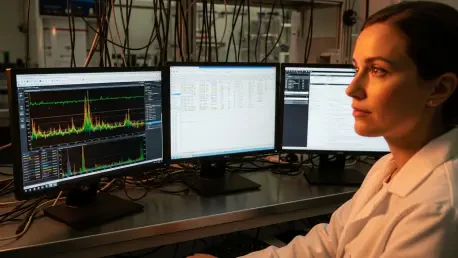

The promise of artificial intelligence to revolutionize biomanufacturing by optimizing yields, ensuring quality, and accelerating development timelines remains largely unfulfilled, not due to a lack of sophisticated algorithms, but because of a more fundamental, pervasive challenge. The industry’s most significant hurdle, as articulated by experts like Phil Mounteney of Dotmatics, lies in the chaotic and fragmented nature of its data. Bioprocessing information is currently scattered across a multitude of disconnected systems, creating a digital Tower of Babel where crucial insights are lost in translation. This fractured information ecosystem prevents AI models from learning reliable patterns, effectively blinding the very tools meant to provide unprecedented vision into complex biological processes. Before AI can deliver on its transformative potential, organizations must first address the foundational issue of building a coherent, contextualized, and unified data infrastructure that can feed these powerful analytical engines with high-quality information.
The Fractured Data Ecosystem
The typical biomanufacturing environment operates on a collection of information silos that actively resist holistic analysis, with critical data streams isolated within electronic laboratory notebooks (ELNs), laboratory information management systems (LIMS), SCADA control systems, individual instruments, and disparate spreadsheets. A particularly damaging division exists between the two primary types of data generated. On one hand, there is high-frequency, real-time data streaming from bioreactors—such as pH levels, dissolved oxygen, temperature, and inline spectroscopy signals—which provides a continuous, moment-by-moment view of the process. On the other hand, lower-frequency information, including batch records, offline assay results, and raw material specifications, provides critical context but is recorded intermittently. This separation means that a rich stream of sensor data often flows without a clear connection to the specific events or quality outcomes it influences, making it nearly impossible for an AI to correlate a subtle shift in a sensor reading with a subsequent drop in product titer.
Compounding the issue of siloed systems is a profound lack of end-to-end digital context, which effectively severs the link between cause and effect within a bioprocess. Even when high-frequency sensor traces are captured, they are rarely connected cleanly to their corresponding batch identifiers, cell lines, specific unit operations, or the raw materials used. Without this continuous digital lineage, an advanced algorithm has no reliable way to differentiate a healthy, well-controlled process from one that is subtly deviating toward failure. Furthermore, the absence of standardized ontologies and master data management creates widespread inconsistency. For example, one system might log a “glucose feed” while another records a “Glc feed,” and a third uses a different unit of measurement entirely. For a human analyst, these are easily reconciled, but for an AI model, they represent distinct, unrelated variables. This lack of a common language prevents the aggregation of data into a large, harmonized dataset required for training robust and accurate predictive models.
Forging a Unified Foundation for Intelligence
Overcoming these data-centric obstacles requires a fundamental paradigm shift in how bioprocess information is managed, moving from a collection of disparate records to a philosophy that treats data as a “first-class, shared asset.” The most effective solution involves the strategic implementation of a unified data layer designed to ingest signals from every source—from real-time bioreactor sensors to offline analytical instruments and batch records. This layer must perform three critical functions to create an AI-ready data model. First is integration, which involves combining the high-frequency sensor streams with the lower-frequency batch and analytical measurements into a single, cohesive timeline. Second is contextualization, a crucial step where a sophisticated software layer time-aligns sensor traces with specific batch IDs, unit operations, sampling events, and even manual operator interventions. Finally, standardization through consistent ontologies ensures that terms are harmonized across all systems, so that an AI recognizes all variations of a concept as the same entity, thereby creating a clean, reliable foundation for machine learning.
A Retrospective on Data-Driven Transformation
The organizations that successfully built this unified data infrastructure ultimately unlocked the transformative benefits that AI had long promised. With access to harmonized and contextualized data, AI model accuracy improved dramatically, enabling the reliable identification of critical process parameters (CPPs) that were previously obscured. This led to a significant compression of design-of-experiments (DoE) cycles, as models could predict outcomes with greater confidence from smaller datasets. The challenge of process scale-up became far less risky; models trained on integrated data from lab-scale, pilot, and manufacturing scales could better anticipate and mitigate equipment-specific challenges. Interactions with regulatory bodies were also streamlined, as companies presented a coherent, data-driven narrative supported by a complete digital thread. This foundational investment in data unification paved the way for the evolution of AI from a purely offline analytical tool into embedded, real-time process intelligence, where “soft sensors” inferred critical quality attributes (CQAs) from live signals, allowing for the proactive correction of off-track batches long before they failed. The journey confirmed that measurable impact from AI in biomanufacturing was only achieved once the essential work of data harmonization was complete.