
The race for artificial intelligence supremacy is rapidly shifting from the sheer power of large language models to the practical, procedural capabilities they can reliably execute in a professional setting. Enterprise AI Agent Skills represent a significant advancement in the workplace AI sector, moving beyond generalized knowledge to offer specialized, executable expertise. This review will explore the evolution of this technology, its key features, performance metrics, and the impact it has had on various enterprise applications. The purpose of this review is to provide a thorough understanding of the technology, its current capabilities, and its potential future development as a foundational infrastructure for artificial intelligence.
The Emergence of Agent Skills Technology
The introduction of Anthropic’s Agent Skills marks a deliberate and strategic effort to address the “specialization problem” inherent in general-purpose AI. While large language models like Claude possess an extraordinary breadth of encyclopedic knowledge, their application in a corporate environment often reveals a critical gap. They can struggle to perform specific, multi-step procedural tasks with the consistency, precision, and adherence to company standards that professional workflows demand. Agent Skills technology was conceived as the solution to this challenge, creating a framework that teaches the AI how to work, not just what to know.
This development represents a pivotal evolution in the enterprise AI landscape, transforming the AI from a knowledgeable consultant into a reliable and proficient colleague. By enabling models to execute complex procedures—from formatting a branded presentation to running a specific financial analysis—with repeatable accuracy, the technology bridges the gap between potential and performance. It allows organizations to codify their unique operational knowledge and best practices into a library of executable modules, ensuring that AI-driven work consistently meets high-quality benchmarks and aligns with established corporate protocols.
Core Architecture and Key Capabilities
The effectiveness of the Agent Skills framework lies in its carefully designed architecture, which combines modularity with a highly efficient processing method to create a system that is both powerful and scalable. These technical components work in concert to allow for the deployment of a vast library of specialized functions without compromising the performance of the underlying AI model, making it a viable solution for large-scale enterprise implementation.
A Modular Approach to Procedural Knowledge
At the heart of the system is the concept of a “skill,” which is defined as a self-contained, reusable module of instructions, scripts, and related resources. These modules function as discrete packages of procedural knowledge, encapsulating everything an AI needs to know to perform a specific task correctly and consistently. This modular approach allows organizations to deconstruct complex workflows into manageable, standardized components that can be developed, tested, and deployed independently.
By encoding procedural knowledge in this manner, an organization can systematically teach an AI to execute highly specialized, domain-specific tasks. For instance, a skill can contain the precise steps for generating a quarterly financial report, including data extraction from specific systems, application of proprietary analytical models, and formatting according to regulatory standards. This ensures that when the AI is tasked with the job, the output is not just an approximation based on general knowledge but a precise execution that adheres to predefined corporate guidelines, effectively standardizing complex work across the entire enterprise.
Progressive Disclosure and System Scalability
A critical technical innovation within the Agent Skills framework is its “progressive disclosure” architecture. This design ingeniously addresses one of the primary constraints of large language models: the limited size of the context window, which acts as the AI’s short-term memory. Instead of loading the entire code and instruction set of every available skill into this window, the system initially presents only a brief, token-efficient summary of each skill. This summary provides just enough information for the AI to recognize when a particular skill is relevant to a user’s request.
This approach ensures that the system remains efficient and responsive, even when an organization has deployed thousands of distinct skills. The full, detailed instructions of a specific skill are only loaded into the AI’s working memory at the precise moment they are needed to execute a task. This dynamic loading process prevents the context window from becoming overwhelmed, thereby maintaining optimal performance and enabling the system to scale seamlessly. As a result, enterprises can build and manage an extensive and sophisticated library of AI capabilities without hitting a technical ceiling, making enterprise-wide implementation a practical reality.
The Strategic Shift Toward Open Standardization
Perhaps the most significant development in this domain is Anthropic’s decision to release its Agent Skills technology as an open standard, complete with a public specification and a software development kit. This move transcends a simple product launch, representing a calculated strategic play to establish a universal format for encoding procedural knowledge for AI. By giving away the proprietary framework, Anthropic is prioritizing long-term ecosystem dominance over short-term competitive advantage, aiming to become the company that defines how the industry builds capable AI assistants.
This strategy is already influencing industry behavior and fostering widespread adoption at a remarkable pace. Competitors are not just taking note; they are actively aligning with the standard. Microsoft has integrated Agent Skills into its developer platforms like VS Code and GitHub, and analysis indicates that OpenAI has implemented a structurally identical architecture in both ChatGPT and its command-line tools. This rapid convergence suggests that the Agent Skills format is on track to become the de facto industry standard, creating a powerful network effect that reinforces its position as the foundational layer for AI procedural knowledge, regardless of the underlying model.
Enterprise Integration and Industry Applications
The practical value of Agent Skills is most evident in its real-world applications, where the technology is being integrated into existing corporate workflows and deployed across major industries to solve tangible business problems. Anthropic has complemented the technology with a suite of tools and a growing network of partners, ensuring that the framework can be effectively managed and leveraged within complex organizational structures.
Centralized Management for Corporate Workflows
To facilitate seamless enterprise adoption, Agent Skills is accompanied by a robust set of management tools that empower organizations to provision, control, and standardize the use of AI capabilities. Administrators can establish a core library of approved, company-vetted skills that are deployed across different teams and departments, ensuring consistency and adherence to corporate governance policies. This centralized control provides a powerful mechanism for maintaining quality and security across all AI-driven workflows.
Simultaneously, the system is designed to offer a crucial balance between top-down organizational governance and bottom-up individual customization. While the enterprise maintains control over a standardized set of core skills, individual employees and teams retain the flexibility to create or install additional skills tailored to their specific roles and projects. This dual approach fosters innovation and personal productivity without sacrificing the control and standardization necessary for enterprise-grade operations.
Proven Use Cases and a Growing Partner Ecosystem
The technology has already been put into production by Fortune 500 companies, demonstrating its value in high-stakes functions such as legal, finance, accounting, and software development. Early adopters report significant improvements in efficiency and output quality, as the skills enable them to tailor the AI’s capabilities to their unique operational realities. This early success serves as powerful validation of the framework’s practical utility in complex business environments.
Further bolstering its enterprise credibility is an expanding ecosystem of software partners that are integrating with the open standard. Leading companies like Atlassian, Figma, Canva, and Stripe are aligning their platforms with Agent Skills to enhance interoperability. These partnerships are not structured as simple revenue-sharing agreements but as strategic ecosystem relationships designed to create a more cohesive and powerful user experience, allowing the AI assistant to interact seamlessly with the essential tools of modern business.
Navigating the Challenges and Potential Risks
Despite its transformative potential, the widespread adoption of Agent Skills is not without its challenges. The technology introduces a new set of technical hurdles, security concerns, and human-centric obstacles that organizations must navigate carefully to realize its full benefits and mitigate potential downsides. These risks require thoughtful consideration and proactive management to ensure a successful and sustainable implementation.
The Risk of Human Skill Atrophy
One of the most discussed potential downsides of deploying highly proficient AI assistants is the risk of human skill atrophy. As employees become increasingly reliant on AI to execute complex, procedural tasks with flawless precision, there is a legitimate concern that their own expertise and problem-solving abilities may diminish over time. When the process of generating high-quality output becomes effortless, the incentive to engage in the deep learning and practice required to master a craft can weaken.
This concern extends beyond simple task execution to impact critical thinking and innovation. If employees no longer need to deeply understand the underlying principles of their work because the AI handles the mechanics, their ability to troubleshoot, adapt to novel situations, or innovate on existing processes could decline. Organizations must therefore consider how to integrate AI skills as a tool for augmentation and learning, rather than as a replacement for human knowledge and ingenuity.
Addressing Security and Governance Concerns
The executable nature of AI skills introduces new vectors for security vulnerabilities. A skill, particularly one obtained from an untrusted third-party source, could potentially contain malicious code or instructions designed to compromise data or systems. This necessitates a rigorous vetting process for any skill an organization chooses to deploy, with a strong recommendation to only install skills from trusted, verified sources and to conduct thorough security audits on any community-created or unverified modules.
Furthermore, the positioning of Agent Skills as an open standard raises important questions about its long-term governance and stewardship. As the standard evolves, decisions will need to be made regarding its future direction, maintenance, and security protocols. It remains an open question whether this governance will be managed by an existing body, such as the Agentic AI Foundation, or if a new, dedicated structure will be required to oversee its development, ensuring it remains a stable, secure, and vendor-neutral foundation for the industry.
Future Outlook: A New Paradigm for AI Assistants
The emergence of the Agent Skills framework represents more than just a technological improvement; it signals a fundamental philosophical shift in the development of AI assistants. The industry is moving away from the paradigm of creating numerous distinct, specialized agents for different domains and is instead converging on a more elegant and efficient model.
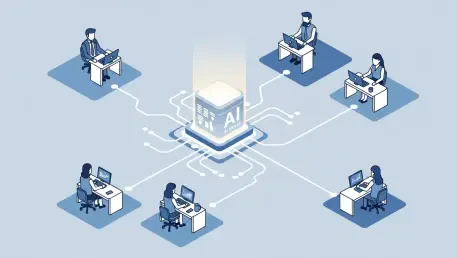
This new paradigm is centered on the concept of a single, universal AI assistant that can be dynamically equipped with a vast library of specialized skills. This approach is based on the insight that the core reasoning capabilities of an advanced AI are more universal than previously thought. Consequently, the focus of development shifts from building entirely new AI systems for each function to creating and curating a comprehensive catalog of skills. This allows organizations to encode their unique institutional knowledge and best practices into a portable, scalable format, fundamentally changing how they approach productivity and value creation.
Concluding Analysis: Redefining AI’s Foundational Infrastructure
The rapid industry-wide convergence around the Agent Skills framework positions it as the de facto standard for enabling AI assistants to perform specialized, high-value work. Anthropic’s strategic decision to release its technology as an open standard has effectively reshaped the competitive landscape, compelling rivals to adopt its architecture or risk being left behind. This move has successfully shifted the focus from the proprietary nature of the AI model itself to the interoperability of the skills that empower it.
Ultimately, the analysis suggests that the true, long-term value of this initiative lies not in any single AI model but in the establishment of the foundational infrastructure upon which the entire enterprise AI ecosystem will be built. By defining the standard for encoding procedural knowledge, Anthropic is positioning itself as an indispensable layer in the technology stack, similar to the role Red Hat played for enterprise Linux. For business leaders, the implication is clear: skills are becoming the fundamental building blocks of enterprise AI, and the investment made in codifying organizational knowledge into this portable format will likely determine the competitive advantage of their AI deployments for years to come.