
Today we’re joined by Laurent Giraid, a technologist at the forefront of applying Artificial Intelligence to the physical world. His work focuses on a new category called Physical AI, which aims to bridge the costly and inefficient gap between digital records and physical reality in industrial settings. Fresh off a major $40 million funding announcement for a leading platform in this space, we’ll explore how this technology is transforming global logistics. Our conversation will cover the practical application of AI in warehouses, its impressive return on investment, the journey from simply identifying problems to autonomously preventing them, and what makes this form of AI uniquely suited for complex industrial environments.
With your new $40 million funding round led by a former Salesforce co-CEO, what key steps will you take to become the “system of record” for warehouses, and what major challenges do you anticipate in scaling to that level?
This investment is a massive catalyst for us. The immediate plan is to use this capital to accelerate our expansion into hundreds of additional facilities across North America, Europe, and Asia. It’s not just about getting our tech into more buildings; it’s about embedding it deeply. We’re scaling our engineering and customer success teams to handle true enterprise-wide deployments, ensuring our platform becomes the foundational intelligence layer. The goal is for our Physical AI to be as essential as a WMS. The biggest challenge is the sheer diversity of physical environments. Every warehouse has unique layouts, inventory types, and workflows. To be the true “system of record,” our platform must be flawlessly reliable and adaptable, earning the trust of operators who have been burned by technology that overpromises and under-delivers.
Global logistics companies often struggle with a “reality gap” where physical inventory doesn’t match digital records. Could you walk me through how your Physical AI platform closes this gap in practice and provide a specific customer anecdote illustrating the financial impact?
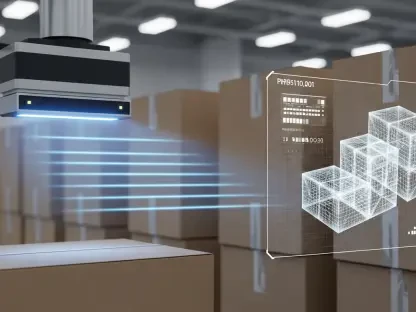
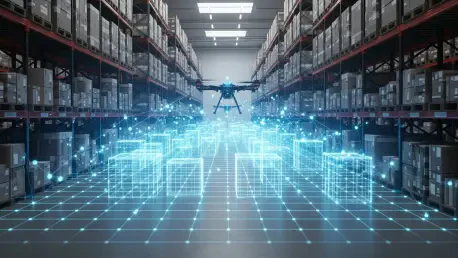
The “reality gap” is a constant headache for operators, creating blind spots that erode margins. Our platform directly addresses this by creating a live, digital twin of the warehouse floor. Imagine a drone autonomously navigating the aisles, its cameras capturing high-resolution images of every pallet. Our AI models, trained on millions of real-world warehouse images, then analyze this visual data to see, count, and verify everything. This ground truth is synced back to the WMS, correcting the digital record in near real-time. For one of our customers, a major logistics provider, this meant going from sporadic, labor-intensive manual counts to achieving 99.9% inventory accuracy, day in and day out. They were able to reduce their manual counting effort by a staggering 80%, freeing up their team to focus on value-added tasks instead of just firefighting stock discrepancies.
Your platform promises a return on investment in under six months using AI-powered vision on hardware like drones. Can you explain the implementation process for a new enterprise customer, from initial setup to achieving that rapid ROI, and detail the first performance indicators that improve?
The speed to value is one of the most exciting aspects of this technology. A key design principle is that we require zero infrastructure changes, which dramatically shortens the implementation cycle. For a new customer, we typically start with a pilot in one facility. We map the environment and deploy the drone or MHE-mounted vision systems. The first thing customers notice is the immediate improvement in inventory accuracy. Within weeks, their WMS data is cleaner than it has ever been. This leads directly to the second indicator: a sharp reduction in labor costs for manual cycle counting. We’ve seen teams improve productivity by 5x because they are no longer chasing ghosts in the system. When you combine that labor savings with the financial benefit of eliminating missed shipments and reducing excess inventory, the ROI becomes clear and quantifiable in less than two quarters.
You aim to move beyond just identifying problems to preventing them entirely. What does the shift from real-time visibility to “full autonomous orchestration” look like for your customers, and what new predictive capabilities are you developing to make that a reality?
This is the most transformative part of our vision. For too long, supply chains have been reactive. A problem happens, an alarm goes off, and people scramble to fix it. Our platform is moving beyond that. Today, we provide real-time visibility that helps customers find problems faster. The future, which this new funding helps build, is about full autonomous orchestration. This means our platform won’t just tell you a pallet is in the wrong place; it will predict that a specific workflow is likely to cause misplaced pallets based on historical data and real-time conditions. It can then proactively suggest an optimized path or task for a worker or even an automated system to prevent the error from ever occurring. This shift from reactive to proactive is what turns the warehouse into an intelligent, self-correcting organism.
While many AI models train on internet data, your Physical AI learns from millions of warehouse images. How does this specialized training provide an edge in complex industrial environments, and can you share an example of a situation where standard sensors would typically fail?
That’s the core differentiator. A generic, internet-trained AI might be great at identifying a cat in a YouTube video, but it would be completely lost in a warehouse. Our models are specialists. They have been trained on an immense, proprietary dataset of millions of images capturing the controlled chaos of a real logistics facility—partially obscured labels, shrink-wrapped pallets, stacked goods, and constant movement of machinery. This gives our robots the ability to see and understand context in a way standard sensors can’t. For example, a simple barcode scanner or RFID reader would fail if a pallet label is torn, facing the wrong way, or blocked by another box. Our vision-based AI, however, can identify the product through other visual cues on the packaging or even understand its location contextually, ensuring inventory is accurately counted even in these imperfect, real-world scenarios.
What is your forecast for Physical AI in the supply chain industry over the next five years?
Over the next five years, I predict that Physical AI will become the standard operating system for intralogistics. It will no longer be a novel technology but an essential, foundational layer, as critical as an ERP or WMS. We will see a rapid shift from human-led data capture to autonomous data capture, making operations not just more efficient but also vastly more reliable and predictable. This intelligence layer will enable true end-to-end supply chain reliability, turning individual warehouses from cost centers into intelligent, interconnected nodes that can proactively adapt to disruptions. The “firefighting” mentality that defines so much of logistics today will be replaced by a culture of confident, data-driven orchestration.