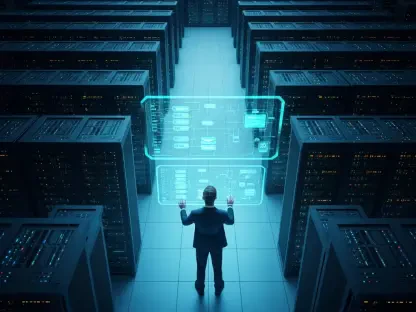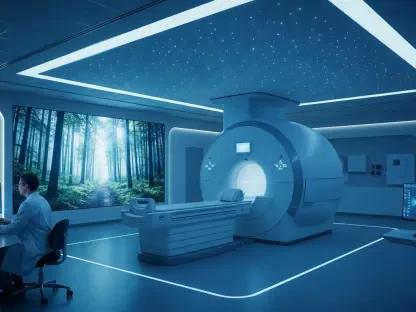

The strategic alliance between two of the technology industry’s most influential players reached a new zenith at the 2025 Microsoft Ignite conference, where a series of joint announcements signaled a concerted effort to build the definitive full-stack platform for enterprise artificial intelligence. Moving far beyond simple hardware integrations, Microsoft and NVIDIA unveiled a deeply interconnected ecosystem designed to accelerate business transformation by making sophisticated AI more powerful, accessible, and seamlessly woven into the core fabric of modern operations. This redefined collaboration spans from foundational silicon to high-level software services, presenting a unified and cohesive vision aimed at empowering organizations to develop, deploy, and manage complex AI workloads—from industrial digital twins to advanced workplace agents—with unprecedented efficiency and scale. The overarching trend is a move toward a holistic platform that addresses the entire AI lifecycle, promising to lower the barrier to entry for businesses embarking on their AI journeys.
Powering the Future with Next-Generation Infrastructure
A cornerstone of the deepened partnership is a significant overhaul of Azure’s AI infrastructure, anchored by NVIDIA’s latest technological breakthroughs. Microsoft officially launched the public preview of its new Azure NCv6 Series Virtual Machines, a powerful offering equipped with NVIDIA’s next-generation Blackwell-architecture RTX PRO 6000 GPUs. This integration is engineered to provide “right-sized” acceleration, a term that reflects its tailored performance for a diverse spectrum of converged AI and visual computing workloads. Businesses can now harness this advanced computing power for tasks such as high-fidelity 3D rendering, efficient large language model (LLM) inference, and the implementation of Retrieval-Augmented Generation (RAG) on small-to-medium-sized models. This solution not only delivers a substantial performance uplift but also offers a seamless upgrade path, promising greater efficiency and capability for enterprises tackling increasingly complex and data-intensive AI challenges. The availability of Blackwell on Azure marks a critical step in democratizing access to top-tier AI hardware.
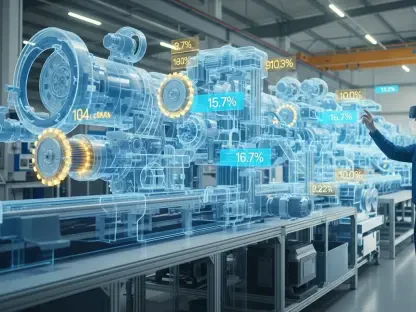
Further bolstering this robust infrastructure, the collaboration has made NVIDIA Omniverse libraries officially available on Microsoft Azure, creating a best-in-class ecosystem for industrial transformation. When combined with Azure Local for edge computing deployments, this platform offers unparalleled flexibility for developing, deploying, and managing innovative digital twin solutions. Enterprises can now simulate and optimize complex industrial workflows—from factory floors to supply chains—with unprecedented realism and accuracy, unifying operations from the edge to the cloud. This strategic move enables businesses to accelerate their time to insight, refine manufacturing processes, and innovate faster. The integration between Omniverse and Azure provides a unified environment where engineers, designers, and AI systems can collaborate in a shared virtual space, driving a new era of industrial digitalization built on a foundation of high-performance, cloud-native computing.
Elevating the Modern Workplace with Agentic AI
The partnership is also poised to fundamentally reshape workplace productivity through the advancement of agentic AI. In a key announcement, Microsoft revealed the integration of its Agent 365 with the NVIDIA NeMo Agent Toolkit. This powerful fusion empowers developers to build, customize, and deploy secure and compliant AI agents tailored to specific business needs. These intelligent agents are designed to operate seamlessly across the entire Microsoft 365 suite of applications, including Outlook, Teams, Word, and SharePoint. The goal is to move beyond generic assistants and provide organizations with highly specialized agents that understand unique internal workflows, data structures, and operational protocols. This allows for the automation of complex tasks, the surfacing of relevant information in context, and the creation of a more intuitive and responsive digital work environment, ultimately enhancing employee efficiency and decision-making capabilities across the enterprise.
Driving these sophisticated agents is a powerful combination of foundational models and scalable microservices. Through Microsoft Foundry, NVIDIA’s state-of-the-art models are now readily available as secure and scalable NVIDIA NIM microservices. This includes the versatile NVIDIA Nemotron model family, which provides robust capabilities for enterprise-grade agents, and the NVIDIA Cosmos models, which are specifically geared toward enabling physical AI and robotics applications. These models equip developers with the necessary tools to build agents possessing advanced skills such as multimodal intelligence, multilingual reasoning, and complex problem-solving in specialized domains like mathematics and coding. By making these foundational models easily accessible through a microservices architecture, Microsoft and NVIDIA are simplifying the development lifecycle and enabling organizations to rapidly prototype and deploy enterprise-grade AI agents that can handle nuanced and demanding tasks.
Bringing AI Directly to Enterprise Data
One of the most significant hurdles for AI adoption in the enterprise—data security and sovereignty—is being directly addressed through a groundbreaking new integration. The partnership announced that SQL Server 2025 will now connect with NVIDIA Nemotron RAG models, which are deployed as streamlined NVIDIA NIM microservices. This innovative solution is engineered to bring AI capabilities directly to where an organization’s vast stores of proprietary data reside, whether on-premises via Azure Local or within the Azure cloud. This approach fundamentally overcomes critical challenges related to data privacy, compliance, and the sheer volume of information. Instead of undertaking the complex, costly, and often insecure process of moving massive datasets to the AI, businesses can now run high-performance, secure AI applications directly on their data, maintaining complete control and sovereignty over their most valuable asset.
This integration streamlines AI deployment by eliminating the common bottlenecks associated with traditional infrastructure and cumbersome data pipelines. By enabling GPU-accelerated RAG workflows directly on enterprise data, the solution sidesteps the performance limitations of CPU-based systems and reduces architectural complexity. Organizations can now build powerful, context-aware AI applications that leverage their own information to generate more accurate and relevant insights without compromising security. This direct-to-data approach not only accelerates the development and deployment of custom AI solutions but also makes it significantly easier for businesses to unlock the value hidden within their proprietary datasets. The combination of SQL Server 2025 and NVIDIA NIM microservices represents a paradigm shift, making enterprise-grade generative AI more practical, secure, and accessible for a wider range of organizations.
A New Era of Integrated AI Strategy
The series of announcements at Microsoft Ignite 2025 ultimately revealed a deliberate and meticulously executed strategy by Microsoft and NVIDIA. Their collaborative efforts produced what can be considered the definitive end-to-end AI platform for the enterprise, addressing the entire AI lifecycle with remarkable cohesion. The main finding was that the partnership yielded a tightly integrated, full-stack solution that spanned from the underlying silicon of the Blackwell architecture and the cloud infrastructure of Azure NCv6 to the advanced development frameworks like NeMo and Omniverse. This culminated in the deployment of powerful models like Nemotron as NIMs and their direct integration with core enterprise data systems such as SQL Server. This unified approach provided organizations with a powerful and secure pathway to leverage generative AI for tangible, real-world impact, whether through optimizing industrial processes with digital twins, enhancing productivity with intelligent workplace agents, or unlocking critical insights from their own proprietary data.