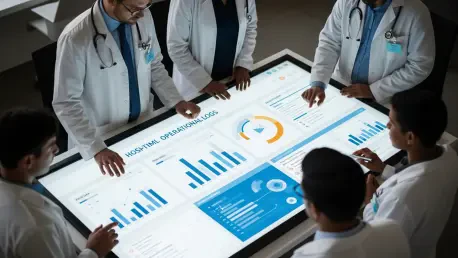

The modern healthcare landscape is currently defined by a profound paradox where the sheer volume of generated patient data often obscures the very clinical insights it was intended to reveal. As hospitals and insurance providers navigate the complexities of this year, the struggle is no longer centered on the acquisition of data, but rather on the sophisticated synthesis of fragmented records into actionable intelligence. Organizations are increasingly finding themselves caught in a cycle of “delayed insight,” where the time elapsed between a significant clinical or financial event and its subsequent discovery is too long to allow for effective intervention. This gap represents a critical failure in traditional infrastructure, necessitating a shift toward platforms that can weave together clinical notes, claims data, and operational logs into a single, cohesive narrative. The goal for any modern institution is to transform these disparate streams into a clear path for decision-making that enhances patient care while securing the financial viability of the enterprise.
Bridging this divide requires a fundamental reimagining of what analytics software is expected to achieve within a high-pressure medical environment. Success is currently measured by the speed at which an organization can move from raw data collection to strategic execution, ensuring that every department—from the intensive care unit to the billing office—operates on the same set of verified facts. Whether the objective is to reduce readmission rates or to identify payment leakages in a value-based care contract, the tools utilized must provide a defensible and transparent logic that users can trust implicitly. As we evaluate the current technological ecosystem, it becomes clear that the most successful institutions are those that treat data not as a static resource to be stored, but as a dynamic catalyst for organizational change and operational excellence. This analysis explores the methodologies and platforms that are defining this transition, providing a blueprint for how data gaps are being closed through innovative analytical frameworks.
The Landscape of Data Complexity and Fragmented Sources
Confronting the Persistent Crisis of Information Fragmentation
The primary obstacle facing healthcare leadership today remains the stubbornly siloed nature of data across disparate legacy systems and modern cloud environments. Clinical information is frequently trapped within proprietary electronic health record formats, while financial data resides in separate claims processing systems, and operational metrics are often buried in manually maintained staffing logs. This fragmentation creates significant risks for revenue integrity and patient safety, as clinicians and administrators are often forced to work with an incomplete picture of the organizational health. In 2026, the cost of these silos has reached a breaking point, preventing the implementation of holistic care models that depend on a 360-degree view of the patient journey. When one department identifies a clinical success that the finance department views as a loss due to missing contextual data, the organization’s ability to function as a unified entity is severely compromised, leading to friction and missed opportunities for systemic growth.
To effectively bridge this gap, modern healthcare organizations are aggressively adopting synthesis tools that can merge these diverse streams without the need for intensive manual reconstruction by data scientists. The objective is to establish a seamless flow of information where every discrete data point—ranging from a real-time bedside monitor reading to a three-month-old insurance claim—contributes to a larger and more accurate representation of institutional performance. By breaking down these traditional barriers, organizations can finally achieve a level of transparency that allows for the identification of root causes behind operational inefficiencies. This shift toward a unified data architecture is not merely a technical upgrade; it is a strategic necessity that enables leaders to see the “book of business” with total clarity, ensuring that every strategic move is backed by comprehensive evidence rather than departmental assumptions or fragmented snapshots of performance.
Furthermore, the integration of external data sources has become a non-negotiable component of a robust analytical strategy, as social determinants of health and community-level trends play an increasingly large role in patient outcomes. A truly integrated platform must be capable of ingesting and normalizing data from varied origins, including wearable devices and public health databases, to provide a more nuanced understanding of the populations being served. This level of sophistication allows for the creation of proactive care pathways that address risks before they manifest as costly emergency room visits or chronic conditions. As we move through the current year, the organizations that are most effectively closing the data gap are those that have moved past the era of isolated databases and have instead embraced a centralized intelligence hub that serves as the single source of truth for the entire healthcare ecosystem.
Shifting from Passive Data Storage to Immediate Actionable Intelligence
The historical focus on the sheer volume of data storage is rapidly being replaced by a prioritized demand for the velocity and utility of insight. It is no longer considered sufficient to maintain a robust and expensive data warehouse if that repository is not directly connected to the daily workflows of the frontline staff who make critical decisions. Actionable intelligence has become the primary currency of the modern healthcare sector, shifting the philosophy of analytics from retrospective reporting to proactive guidance. This means providing digital tools that do not just display complex charts and graphs, but instead highlight specific, high-priority areas that require immediate human attention. For instance, a sudden spike in referral leakage or a recurring pattern of billing variances should be flagged automatically, allowing administrators to focus their talents on solving problems rather than manually hunting through spreadsheets to find them.
This evolution benefits every stakeholder within the healthcare continuum, from providers and payers to specialized service organizations. By narrowing the window between the occurrence of an event and the subsequent intervention, modern analytics software acts as a vital bridge connecting the server room to the boardroom and ultimately to the patient’s bedside. The emphasis remains on driving outcomes that are simultaneously clinically sound and financially sustainable, ensuring that the mission of the hospital aligns with its economic realities. When insights are delivered in real-time or near-real-time, they empower clinicians to close care gaps during the patient encounter, rather than months later when a gap-in-care report is finally generated. This proactive stance is what separates the top-performing health systems from those that are merely struggling to keep up with the increasing demands of modern regulatory and clinical standards.
Moreover, the psychological shift toward trusting automated insights is being driven by the increased transparency of the underlying analytical models. Users are no longer satisfied with “black box” suggestions; they require a clear explanation of how a specific risk score or operational recommendation was derived. This demand for interpretability ensures that the human element remains at the center of the decision-making process, with the technology acting as an enhanced lens through which to view complex problems. As organizations refine their analytical maturity, the focus is increasingly on building a culture where data is a natural and welcome part of every clinical and administrative conversation. This environment fosters innovation and allows for the rapid testing of new strategies, as the feedback loop between an action and its measured result has been drastically shortened by the sophisticated tools currently available.
The Six Pillars of Analytical Success in 2026
Fidelity Interpretability and Workflow Integration
The first pillar of a successful healthcare analytics strategy involves maintaining high-fidelity data coverage that can handle the inherently messy and unstructured nature of medical records. In a world of dictated clinical notes and varying coding standards, a platform must be capable of extracting meaningful signals from the noise without losing the essential context that defines patient care. Analysts and clinicians should not be burdened with the manual cleaning and normalization of data; instead, the underlying system must provide a reliable foundation that is ready for immediate application. When data fidelity is high, the resulting insights carry a level of authority that can withstand the scrutiny of skeptical clinicians and rigorous financial auditors alike. This baseline of trust is the prerequisite for any further analytical exploration and is the most critical component of a data-driven culture.
Interpretability serves as the second vital pillar, acknowledging that data is only as valuable as a user’s ability to understand and explain its implications. If a sophisticated analytical finding requires hours of explanation from a data scientist to an executive or a lead nurse, the tool has failed in its primary objective of facilitating efficient decision-making. The leading platforms of this year prioritize intuitive visualizations and human-readable explanations that make complex statistical findings accessible to individuals without a technical background. By democratizing access to these insights, organizations ensure that data is not just the domain of a specialized department, but is instead a tool used by everyone to improve their daily performance. This clarity of communication is what allows an institution to move quickly and decisively in response to emerging trends or localized crises.
Finally, workflow alignment ensures that these insights are delivered in a way that fits the existing mental models and daily routines of the users. A financial officer and a primary care physician view the healthcare world through very different lenses, and their analytical tools should reflect those specific priorities and constraints. Providing a “single source of truth” while simultaneously allowing for role-specific interactions is a hallmark of a top-tier platform that understands the reality of modern clinical work. When data is presented at the right time and within the right application, it becomes a natural extension of the user’s professional intuition rather than an external distraction. This seamless integration is the ultimate goal of any analytical implementation, as it ensures that the power of the technology is fully realized in the service of better patient outcomes and more efficient operations.
Scalability Timing and Governance
As the volume of healthcare data continues to grow at an exponential rate, sustainable scalability has moved from a technical luxury to a non-negotiable requirement for institutional survival. A platform that serves a single clinic effectively must be designed with the architectural flexibility to evolve as that clinic expands into a regional health system or integrates with a larger network of partners. Organizations should not be forced to reconstruct their core metrics or redefine their data logic every time a new hospital or service line is added to their operational footprint. True scalability involves both the technical capacity to handle larger datasets and the organizational capacity to maintain performance standards during periods of rapid growth. This future-proofing ensures that the investment in an analytical platform provides long-term value and does not become a bottleneck for future expansion or innovation.
Optimized decision timing is the fifth pillar, emphasizing that the value of an insight is inextricably linked to the speed at which it is delivered. While accuracy is obviously of paramount importance, its practical utility diminishes rapidly if the information arrives after a critical decision has already been made or a window of opportunity has closed. Surfacing a trend while there is still time to intervene—whether it concerns a gap in patient care, a potential reimbursement error, or a supply chain disruption—is what distinguishes a proactive, successful organization from one that is merely reactive. The most advanced systems are those that leverage real-time data streams to provide immediate alerts and predictive modeling, allowing leaders to anticipate challenges before they escalate into significant institutional problems. This focus on timing ensures that the organization is always looking forward, rather than constantly trying to fix mistakes from the past.
Trust-based governance provides the essential guardrails that ensure data is used safely, consistently, and ethically across the entire enterprise. This involves the enforcement of strict data definitions and security permissions so that every stakeholder, regardless of their department, is looking at and discussing the same set of numbers. Without a strong governance framework, users often resort to “shadow reporting,” creating their own localized spreadsheets and databases that inevitably lead to conflicting conclusions and organizational paralysis. Effective governance does not just restrict access; it empowers users by providing a safe and reliable environment in which they can explore data and test new hypotheses. When there is universal trust in the underlying numbers, the organization can engage in more productive debates about strategy and performance, leading to more cohesive and effective action.
The Human-Centric Design Shift
There is a growing consensus across the industry that the mere count of features is no longer an accurate measure of an analytical platform’s actual value to a healthcare organization. Users are increasingly rejecting bloated, overly complex systems in favor of streamlined solutions that offer a few highly reliable and well-designed features that solve specific, high-stakes problems. Reliability, which is defined by both data accuracy and system uptime, has become the primary driver of user trust and platform adoption in the current technological landscape. A tool that provides consistent, error-free results is far more valuable than one that offers a wide array of experimental features but fails to deliver on its core promises. This shift toward quality over quantity reflects a maturing market where the focus is on the practical application of technology in demanding clinical and administrative environments.
The demand for transparency has also led to a widespread rejection of “black box” analytics that provide answers without showing the underlying work. Healthcare leaders now require that any system generating a risk score, a clinical prediction, or a financial forecast must also provide a clear and defensible explanation of the logic and data used to reach that conclusion. This move toward “explainable AI” is essential for building confidence among clinicians who are naturally and appropriately skeptical of automated suggestions that could impact patient care. By opening up the analytical process, platforms can foster a more collaborative relationship between human expertise and machine intelligence. This transparency not only improves trust but also allows for the continuous refinement of models as users provide feedback based on their real-world experiences and observations on the front lines.
Furthermore, interoperability has transitioned from a requested feature to a hard requirement for any new software purchase within the modern healthcare sector. Tools that operate in a silo are being rapidly phased out in favor of those that can integrate seamlessly with existing electronic health records, claims processors, and other core systems. This ensures that the analytical engine is a fully integrated part of the institutional ecosystem, rather than an expensive and isolated add-on that requires constant manual intervention to remain useful. In an era where data must flow freely to be effective, the ability to connect disparate systems is the key to unlocking the full potential of an organization’s information assets. This interconnectedness allows for more sophisticated cross-functional analysis and ensures that the entire organization is moving in the same direction toward its strategic goals.
Evaluation of the Leading 2026 Platforms
Cotiviti and Payment Integrity
Cotiviti remains the industry standard for large-scale healthcare payers and providers who prioritize payment integrity and the aggressive reduction of financial waste. The platform is specifically engineered to navigate the dense complexities of billing variances and payment leakage that have long plagued the administrative side of the healthcare industry. By allowing teams to drill down from broad, high-level financial trends to the specific claim level, Cotiviti provides the granular visibility needed to identify exactly where and why resources are being lost. This level of detail is essential for maintaining the financial health of an organization, particularly as it navigates the transition to increasingly complex value-based care reimbursement models. The system’s ability to pinpoint specific errors in the billing cycle allows for the immediate correction of processes that might otherwise lead to millions of dollars in cumulative losses.
One of the most actionable features of the Cotiviti platform is its ability to provide a prospective risk view, shifting the focus from historical auditing to forward-looking planning. Rather than simply explaining why an overspend occurred in a previous quarter, the software uses sophisticated modeling to inform plan designs and wellness programs for the upcoming cycle. This allows insurance carriers and large health systems to adjust their strategies based on predicted patterns, saving significant resources before the next financial cycle even begins. This shift toward a proactive financial posture is a key differentiator for organizations looking to gain a competitive edge in a crowded market. By leveraging these predictive insights, leaders can make more informed decisions about which service lines to emphasize and how to structure their provider networks for maximum efficiency and patient benefit.
However, the platform does have practical limitations that organizations must manage, particularly regarding data latency and the heavy reliance on month-end claims cycles. Because Cotiviti is primarily a claims-based tool, it is not always the best choice for real-time daily operational adjustments that require immediate feedback. Users must also be diligent about implementing a strong governance framework to prevent the creation of duplicate records or inconsistent data entries, especially in high-volume environments where millions of claims are processed simultaneously. Despite these considerations, the platform’s reputation for accuracy and its deep roots in financial integrity make it an indispensable tool for organizations that require a rigorous and defensible approach to their economic data. Success with Cotiviti often depends on the user’s ability to integrate its deep financial insights into the broader operational strategy of the institution.
Intellimed and Market Strategy
For hospitals and regional health systems that are focused on strategic growth and market dominance, Intellimed serves as a vital anchor for high-level market intelligence. It provides an exceptionally deep level of visibility into provider performance and diagnosis-based market dynamics, giving strategic planning teams the evidence they need to justify major capital investments or service-line expansions. The data provided by Intellimed is highly defensible, which is a critical requirement when presenting expansion plans to a board of directors or external investors. By quantifying the potential impact of a new outpatient center or a specialized cardiac wing, the platform turns abstract market theories into concrete, data-backed business cases. This level of analytical rigor is what allows health systems to expand their footprint with confidence in a highly competitive and shifting market.
A standout capability of the Intellimed platform is its sophisticated tracking of “referral leakage,” a metric that is central to the financial stability of any modern health system. By identifying exactly when and why patients are being directed outside of the home network for specialized care, hospitals can initiate targeted outreach programs to improve physician relationships and retain more patients within their own ecosystem. This granular detail turns a vague understanding of market share into a specific, actionable list of tasks for the physician relations and outreach teams. When a hospital can see that it is losing a specific percentage of orthopedic referrals in a particular zip code, it can take immediate steps to address the root cause, whether that involves adding more specialists or improving the scheduling process for referring providers.
While the analytical power of Intellimed is undeniable, the platform’s interface is often described as highly functional rather than visually modern or intuitive for the casual user. New team members may find the sheer volume of available data overwhelming at first, and the software generally requires a certain level of commitment and training to master effectively. Organizations must be prepared for an initial adjustment period as their strategic teams learn how to navigate the platform’s complex, workflow-oriented design. However, for those who invest the time to fully leverage its capabilities, Intellimed offers a level of market insight that is difficult to match with more generalized business intelligence tools. The platform excels at providing the “why” behind market shifts, allowing leaders to craft more nuanced and effective long-term growth strategies.
Personify Health and Wellness Engagement
Personify Health takes a distinct and human-centric approach to healthcare analytics by focusing primarily on employee wellness and proactive health engagement. It integrates physical, mental, and lifestyle health metrics into a single, enterprise-wide platform that is designed to drive sustained behavior change across a diverse workforce. The primary strength of the platform lies in its masterful use of gamification and social incentives, utilizing challenges and rewards to maintain high participation rates even in large and geographically dispersed organizations. By turning health and wellness into a social and interactive experience, Personify Health helps to create a culture of well-being that extends beyond the traditional boundaries of the workplace. This focus on the “human element” is increasingly seen as a vital part of a comprehensive strategy to reduce long-term healthcare costs and improve employee productivity.
The actionable insight provided by the Personify Health platform allows organizations to move beyond the era of generic, one-off health initiatives that often fail to produce measurable results. By tracking daily habits such as sleep quality, physical activity, and nutritional choices, the platform provides a continuous stream of engagement data that is far more valuable than a once-a-year health assessment. This data can then be correlated with long-term clinical outcomes and claims data, providing a powerful way to prove the return on investment for wellness programs to the organization’s executive leadership. When a company can demonstrate a direct link between high platform engagement and a reduction in chronic disease markers among its staff, the wellness program transitions from a “nice-to-have” benefit to a core part of the institutional strategy.
Potential users of Personify Health should be aware that the technical process of syncing various third-party wearables and health apps can sometimes require manual intervention to maintain stability. Additionally, some organizations have reported performance issues when trying to log very high volumes of data simultaneously during popular company-wide health challenges. Despite these occasional technical hurdles, the platform’s ability to drive meaningful and sustained behavior change is highly regarded by human resources and benefits leaders across the industry. The success of the platform depends on its ability to remain a constant and positive presence in the daily lives of employees, providing them with the tools and motivation they need to take charge of their own health. In this way, it bridges the gap between the healthcare system and the daily life of the individual.
LexisNexis and Compliance Verification
LexisNexis provides a highly specialized and essential layer of intelligence that focuses on the rigorous verification of healthcare entities and the integrity of claims data. It has become a cornerstone tool for compliance and legal teams who must validate complex practitioner details, intricate ownership structures, and various statutory identifiers across a vast and constantly shifting landscape. This capability is vital for any organization that must adhere to strict regulatory standards and maintain a high level of institutional integrity in its dealings with partners and providers. By providing a verified “external check” on data, LexisNexis allows institutions to avoid the significant legal and financial risks associated with fraudulent actors or unqualified practitioners who might otherwise slip through the cracks of internal verification processes.
The primary benefit of integrating LexisNexis into an organizational workflow is the ability to conduct thorough risk assessments before a provider or entity is even onboarded into the system. This proactive screening process protects the health system from regulatory exposure and potential reputational damage that could arise from associations with sanctioned or problematic partners. For debt recovery and financial compliance teams, the platform offers a level of precision in identifying and locating responsible parties that is unmatched by more general databases. The tool acts as a powerful shield, ensuring that the organization’s foundation is built on verified and trustworthy data. This focus on precision and verification is what makes LexisNexis an essential part of the modern healthcare compliance infrastructure, providing a level of security that internal data sources simply cannot match.
Because LexisNexis aggregates data from an enormous multitude of external public and private sources, some individual records may experience a slight lag behind real-time changes in the field. Furthermore, its query model is designed to be quite rigid and logic-driven, which may occasionally frustrate users who are looking for a more “exploratory” or highly visual business intelligence experience. It is a tool built for precision, accuracy, and legal defensibility rather than creative data discovery or broad trend analysis. Organizations that utilize LexisNexis typically do so within the specific context of compliance, credentialing, and risk management, where the cost of an error is far higher than the need for a modern user interface. It remains a foundational element for ensuring that the data used by the organization is not only comprehensive but also legally and professionally verified.
Definitive Healthcare and Commercial Growth
Definitive Healthcare has established itself as the premier tool for sales, marketing, and business development teams navigating the complex and often opaque hierarchies of the modern healthcare market. It provides a truly comprehensive view of health system financial statements, executive contact lists, and detailed affiliation maps that show how various clinics and hospitals are connected. This level of granular detail allows commercial growth teams to understand the strategic landscape and financial health of a potential partner long before they ever initiate a formal conversation or sales pitch. In 2026, the ability to walk into a meeting with a deep understanding of a prospect’s specific pain points—ranging from their staffing challenges to their current quality metrics—is a massive competitive advantage.
The actionable value of the Definitive Healthcare platform is most apparent during the high-stakes preparation for meetings with health system leadership and executive boards. Instead of spending days on manual research through public filings and press releases, a user can pull a complete profile of a system’s staffed beds, current Medicare cost reports, and recent technology investments in a matter of minutes. This allows for a much more targeted and professional approach to business development, as the conversation can be framed around the prospect’s actual needs and challenges. By reducing the “research tax” on sales teams, the platform allows them to focus more of their energy on building relationships and crafting solutions that deliver genuine value to the health systems they serve.
One practical limitation that users must consider is the high rate of turnover within healthcare leadership, which means that contact information can occasionally fall out of date despite the platform’s best efforts at maintenance. Furthermore, while the database is vast, it may have more incomplete records for smaller, rural, or highly specialized niche organizations compared to the major metropolitan health systems. Growth teams must account for these potential gaps and use the platform as a powerful starting point rather than an infallible source of all information. Despite these minor challenges, the depth and breadth of the commercial intelligence provided by Definitive Healthcare make it an essential tool for any organization looking to grow its presence in the healthcare sector. It bridges the gap between a company’s product offerings and the actual needs of the complex organizations they are trying to reach.
HealthStream Checklist and Operational Readiness
HealthStream Checklist is a highly specialized and effective solution designed to digitize the traditionally paper-based and fragmented processes of clinical documentation and compliance tracking. It serves as a centralized hub for everything from nursing skill verification to the formal acknowledgment of new hospital policies, making it significantly easier for clinical leaders to manage and verify the readiness of their staff. In the high-pressure environment of a modern hospital, the ability to quickly confirm that every staff member on a specific unit has completed their required training is a critical component of patient safety. HealthStream Checklist takes a very specific operational problem and provides a streamlined, digital-first solution that eliminates the need for physical binders and manual signature tracking.
The most significant insight offered by the HealthStream platform is the ability to instantly demonstrate audit readiness during an unannounced inspection by a regulatory body such as the Joint Commission. Instead of a stressful and time-consuming scramble to find paper records, clinical leaders can simply pull up a digital dashboard that proves compliance across the entire organization. This level of operational transparency not only reduces administrative stress but also ensures that the high standards of the institution are being met consistently across all shifts and departments. It transforms the “compliance chore” into a transparent and manageable part of the daily workflow, allowing clinical educators to focus on the quality of the training rather than the logistics of the documentation.
Because it is so specialized, HealthStream Checklist is not intended to be used as a broad clinical or financial analytics tool, and its reporting capabilities are strictly limited to completion rates and compliance metrics. It cannot be used for predictive modeling of patient outcomes or for analyzing the financial performance of a department. Additionally, achieving total adoption of a new digital checklist system across a busy hospital can be a slow and challenging process that requires strong support from middle management and senior leadership. However, for organizations that are committed to improving their operational readiness and maintaining the highest standards of safety, the platform provides a targeted and effective solution to a very common problem. It bridges the gap between institutional policy and the actual readiness of the staff on the floor.
Vizient and Clinical Peer Benchmarking
Vizient is a membership-driven analytical platform that provides participating hospitals with access to one of the most massive and detailed national clinical databases in existence. This allows organizations to measure their own performance against an incredibly wide range of peer institutions, providing an external reference point that is vital for any serious quality improvement effort. The platform is particularly strong in its analysis of patient safety indicators, complication rates, and risk-adjusted mortality scores, allowing hospitals to see exactly where they stand in relation to the best-performing systems in the country. This context is essential for identifying areas of clinical excellence and for highlighting specific departments where performance may be lagging behind national norms.
Quality improvement teams use the insights from Vizient to drive meaningful internal change and to justify new clinical initiatives to the hospital’s board of directors. By showing that a hospital’s infection rates are higher than those of similar-sized institutions, a clinical leader can secure the necessary resources and buy-in to implement new protocols. This data transforms raw clinical metrics into a powerful tool for institutional self-reflection and continuous improvement. The ability to participate in a larger community of data-sharing also allows hospitals to learn from the successes and failures of their peers, accelerating the adoption of best practices across the entire healthcare system. Vizient acts as a bridge between the isolated data of a single hospital and the collective knowledge of the national medical community.
On the technical and operational side, Vizient is a demanding platform that requires a significant commitment of resources from the hospital’s IT and data departments. Setting up the necessary API connections and ensuring the accurate migration of clinical data can be both costly and labor-intensive, often requiring months of dedicated work to achieve a stable integration. Additionally, because of the platform’s enormous scope and the complexity of its risk-adjustment models, it may take longer to fulfill requests for highly customized or niche reports compared to more localized tools. Organizations must view Vizient as a long-term strategic investment rather than a quick-fix solution. For those willing to put in the work, the rewards in terms of clinical insight and improved patient outcomes are substantial, providing a clear path toward becoming a top-tier healthcare institution.
Oracle and Enterprise Wide Intelligence
Oracle Enterprise Healthcare Analytics serves as the heavy-duty, industrial-strength engine for large health systems that need to integrate clinical, financial, and operational data on a massive scale. It is an enterprise-grade platform that is built to handle the most complex data architectures, providing the computing power and the flexible logic needed to serve thousands of users across a regional or national network. Oracle’s primary strength lies in its ability to act as a centralized intelligence hub, pulling data from dozens of different sources—including multiple EHR systems and financial databases—and normalizing it for enterprise-wide analysis. This level of integration is essential for large organizations that need to maintain a single, consistent strategy across a wide variety of locations and service lines.
The platform is particularly well-suited for organizations that are heavily involved in complex value-based care contracts and population health management. Oracle’s sophisticated modeling capabilities allow leaders to track the total cost of care for specific patient populations, identifying the key drivers of both clinical quality and financial performance. By providing a truly integrated view of the enterprise, the platform allows for the discovery of correlations that would be invisible in more siloed systems, such as the relationship between specific staffing levels and patient readmission rates. This high-level, cross-functional intelligence is what allows the largest health systems to operate with the agility and precision of a much smaller organization. It provides the “big picture” that is necessary for making multi-million dollar strategic decisions with a high degree of confidence.
While the power of Oracle is significant, it often comes with the complexities associated with large-scale enterprise software, including a potentially long implementation timeline and a significant requirement for specialized internal expertise. Organizations must be prepared to invest in a dedicated team of analysts and developers to maintain and optimize the platform to meet the unique needs of their system. Furthermore, the user interface, while powerful, can sometimes feel more aligned with the needs of a data scientist than a busy frontline clinician. However, for the largest and most complex healthcare organizations, the ability to centralize all institutional intelligence into a single, scalable, and highly secure platform is a game-changer. Oracle bridges the data gap by providing the sheer technical force needed to overcome the fragmentation of the modern healthcare enterprise.
Bridging the Divide: Moving Toward Predictive Healthcare
The transformation of healthcare analytics from a descriptive tool to a prescriptive engine represented the most significant shift in institutional strategy witnessed over the recent years. By prioritizing platforms that emphasized data fidelity, interpretability, and seamless workflow integration, the industry finally moved past the era of fragmented and delayed insights. The successful integration of clinical and financial streams allowed for a more nuanced understanding of institutional health, enabling leaders to make decisions that were both compassionate and economically sustainable. Organizations that embraced these sophisticated tools found themselves better equipped to handle the demands of value-based care and the complexities of a rapidly evolving regulatory landscape. The focus shifted away from the mere accumulation of information toward the purposeful application of that knowledge to improve every facet of the patient and provider experience.
As institutions moved forward, the emphasis on explainable AI and human-centric design proved vital in overcoming the traditional skepticism of the medical community toward automated systems. The most effective strategies were those that treated technology as a partner rather than a replacement for human judgment, ensuring that clinicians remained at the center of the care process. This collaborative approach fostered a culture of continuous learning and innovation, where data-driven insights were welcomed as a means of achieving professional excellence. The bridge between raw data and meaningful action was ultimately built on a foundation of trust, transparency, and technical reliability. Moving forward, the industry must continue to refine these tools, focusing on the development of predictive models that can anticipate needs before they become crises, ensuring a more resilient and responsive healthcare system for everyone.