
The rapid migration of Artificial Intelligence from distant cloud data centers to the physical edge of the network marks a pivotal transformation for businesses, bringing computational power directly into the stores, clinics, and remote sites where operations unfold. This paradigm shift promises unprecedented gains in speed, resilience, and real-time decision-making. However, this accelerated deployment of edge AI is simultaneously creating a critical and often overlooked security gap. As organizations race to connect these newly intelligent endpoints, they frequently deploy a patchwork of outdated security measures that are ill-equipped to handle the sophisticated threats of a distributed environment, demanding a fundamental and urgent re-evaluation of network architecture itself. This evolution is no longer a matter of choice but a prerequisite for any business aiming to safely harness the full potential of AI at the edge.
The New Frontier Why AI is Leaving the Cloud
Democratizing Intelligence for Small and Mid Sized Businesses
The sophisticated capabilities of artificial intelligence are no longer the exclusive domain of large, resource-rich enterprises. Small and mid-sized businesses (SMBs) are now actively deploying advanced AI applications, ranging from intelligent customer service assistants in retail settings to predictive analytical tools for optimizing inventory management. The most significant aspect of this trend is not merely the increasing sophistication of the AI models but their physical location. Computation is moving out of centralized cloud infrastructures and into the very environments where business is conducted, such as local storefronts, regional branch offices, and remote operational hubs. This strategic relocation brings the power of intelligent processing closer to the point of data generation and action, enabling a new generation of real-time applications that can respond instantly to changing conditions, a capability that was previously unattainable for most smaller organizations.
This democratization of AI is fundamentally altering the competitive landscape, empowering SMBs to make faster, more informed decisions directly at the point of customer interaction or operational execution. By embedding intelligence directly into their daily workflows, these businesses can achieve new levels of efficiency and responsiveness. For example, a retail store can use on-site AI to analyze customer foot traffic in real time to optimize store layouts, or a remote industrial site can use edge-based machine learning to predict equipment failures before they occur, minimizing downtime. This shift represents a move from a reactive to a proactive operational model, where data-driven insights are generated and acted upon in the moment, transforming core business processes from the ground up and enabling smaller players to innovate at a pace previously reserved for industry giants.
The Triple Threat Advantage of Edge AI
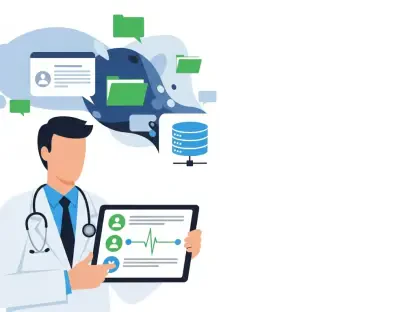
A primary driver behind this architectural migration is the critical need for real-time responsiveness. Many emerging AI-driven applications are extremely time-sensitive and cannot tolerate the inherent latency of sending data on a round-trip journey to a centralized cloud for processing. Consider the implications of delay in a clinical setting where an AI-powered medical device must detect a critical anomaly, or in a smart warehouse where an automated system needs to identify and respond to a safety hazard instantly. In these scenarios, even a few hundred milliseconds of latency can mean the difference between a successful intervention and a critical failure. By processing data and running AI inference models locally, at the edge, organizations can eliminate this network delay, ensuring that decisions are made and actions are taken with the immediacy required for mission-critical operations, unlocking new use cases that are simply not feasible with a cloud-centric approach.
Beyond speed, edge AI delivers powerful advantages in resilience, privacy, and mobility. By performing data processing and analysis on-site, business operations become significantly more resilient, capable of continuing to function even during an internet outage or periods of severe network congestion. This localized approach also enhances data privacy and helps organizations comply with increasingly stringent data sovereignty regulations, as sensitive customer or patient information can be processed and stored locally without being transmitted across public networks. Furthermore, the rise of wireless-first connectivity, particularly through 5G business internet, provides unparalleled mobility and deployment speed. Modern businesses with distributed footprints, including remote workers, temporary pop-up locations, and mobile field teams, can now deploy sophisticated AI tools quickly and efficiently, without the significant cost, time, and logistical challenges associated with installing traditional fixed-line circuits at every location.
The Unseen Dangers of the Edge
From Smart Stores to Unsecured Data Centers
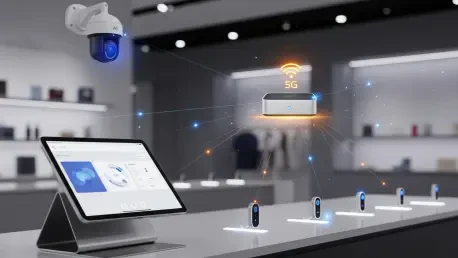
As businesses eagerly embrace the operational benefits of edge AI, the urgent need for robust security measures is frequently relegated to an afterthought, creating a landscape rife with significant vulnerabilities. A single, seemingly simple edge location, such as a retail store or a branch office, can rapidly transform into a small, unsecured data center. These sites are often populated with a heterogeneous mix of devices, including AI-enabled security cameras, Internet of Things (IoT) sensors, modern point-of-sale (POS) systems, interactive digital signage, and employee-used tablets, all sharing the same network access point. This rapid proliferation of diverse, and often unmonitored, connected devices dramatically expands the organization’s potential attack surface, presenting a rich target for malicious actors looking for an easy entry point into the corporate network.
The core of the problem lies in a reactive and piecemeal approach to security. In the race to deploy new connectivity and enable edge applications, many organizations neglect to implement a cohesive security strategy from the outset. This oversight results in networks with unsegmented data flows and inconsistent access controls, creating dangerous blind spots that attackers can readily exploit. For instance, a compromised IoT sensor with minimal built-in security could provide a pivot point for an attacker to move laterally across the network and access sensitive corporate data or critical operational systems. Without a unified view and centralized control over these distributed environments, IT teams are left struggling to secure a complex and constantly evolving technological ecosystem, leaving the entire organization exposed to significant risk.
Why Traditional Security Models are Failing
The long-standing “castle-and-moat” security model, which relies on building a strong, fortified perimeter to protect a trusted internal network, is fundamentally obsolete in the context of modern edge computing. This traditional approach was designed for a centralized world where all valuable data and applications resided within a single, well-defined corporate headquarters or data center. However, the modern business landscape is anything but centralized. With the network fragmented across dozens, or even hundreds, of distributed micro-environments—including retail stores, medical clinics, remote kiosks, and home offices—the very concept of a single, defensible perimeter dissolves. Each of these edge locations becomes its own potential entry point, rendering the castle-and-moat strategy ineffective at protecting a distributed and decentralized organization.
This security paradigm is failing because it was not built to manage the complexity and scale of the modern edge. A security architecture designed to defend a single fortress simply cannot provide adequate protection for a sprawling digital kingdom composed of countless interconnected outposts. When every IoT sensor, every remote employee’s laptop, and every smart device in a branch office represents a potential gateway for an attack, the traditional distinction between a “trusted” internal network and an “untrusted” external world becomes meaningless. The distributed nature of edge computing demands a new security philosophy, one that assumes no user or device can be trusted by default and that threats can originate from anywhere, both inside and outside the now-dissolved corporate perimeter.
A New Blueprint for Edge Security
Adopting a Zero Trust Mindset
The modern solution to the complex security challenges of the edge is a framework known as Zero Trust. This model fundamentally discards the outdated notion of a trusted internal network and instead operates on the principle of “never trust, always verify.” A Zero Trust architecture is built upon three core tenets that address the realities of a distributed environment. First, it prioritizes verifying identity over location, meaning that access to resources is granted based on the rigorously authenticated and authorized identity of a user or device, not merely on its physical or network location. Second, it mandates continuous authentication, treating trust not as a one-time, permanent state but as a dynamic attribute that must be continuously re-evaluated and re-verified throughout a session. Third, it leverages micro-segmentation to meticulously partition the network, severely limiting lateral movement and ensuring that if one device or system is compromised, the breach is contained to a small, isolated segment, preventing an attacker from moving freely across the entire network.
Applying the Zero Trust model directly addresses the unique vulnerabilities introduced by edge computing. Micro-segmentation becomes particularly critical for securing the vast array of IoT and edge devices that often lack the capability to run traditional security software, making solutions like hardware-based, SIM-based identity verification essential for establishing a root of trust. By isolating these devices on their own network segments, organizations can prevent them from being used as entry points to more sensitive parts of the network. Similarly, the principle of verifying identity regardless of location is paramount for securing a modern workforce that includes remote employees and mobile teams connecting from various networks. By consistently authenticating every access request, Zero Trust ensures that only legitimate users and devices can connect to corporate resources, effectively securing the fluid and ever-expanding perimeter of the modern business.
Fusing Connectivity and Security into One
Securing the distributed edge effectively requires more than just new policies; it necessitates a fundamental architectural shift toward “secure-by-default” networks. In this forward-thinking model, security is not treated as an afterthought or an add-on solution but is intricately woven into the very fabric of connectivity from the ground up. This integration is being powerfully realized through comprehensive solutions like Secure Access Service Edge (SASE), a framework that converges network and security functions into a single, cloud-delivered service. SASE platforms seamlessly blend secure network access, advanced threat protection, and granular policy enforcement with high-performance connectivity, such as 5G, providing a unified and simplified way for organizations to secure their users, data, and applications, regardless of their location.
This fusion of networking and security manifests in several innovative technologies designed to address specific edge challenges. For instance, device-level authentication, often implemented at the SIM card layer, provides a tamper-resistant, hardware-based method for verifying the identity of IoT sensors and 5G routers that cannot run traditional security clients. Another powerful tool is network slicing, which allows for the creation of isolated, virtual networks on top of a physical 5G infrastructure. This enables organizations to dedicate a “slice” of the network exclusively for sensitive traffic, guaranteeing both high performance and enhanced security, even during periods of heavy network congestion. Ultimately, the goal of this architectural evolution is to provide unified management through a centralized platform, giving lean IT teams a single point of visibility and control across their entire distributed ecosystem of SASE, IoT, and internet services.
The Future Was Symbiotic AI Securing AI
The journey to secure the intelligent edge led to a profound realization: the relationship between artificial intelligence and network security was destined to become symbiotic. Businesses that successfully navigated this transition understood that AI would not only be an application supported by the edge but would ultimately become the intelligence that actively managed and secured the edge itself. This evolution ushered in an era of self-healing networks, where AI-driven systems could automatically detect anomalies, predict potential disruptions, and dynamically reroute traffic to maintain optimal performance and availability without human intervention. The network became a living, adaptive organism capable of responding to challenges in real time.
Furthermore, this advanced integration gave rise to adaptive policy engines that moved beyond static security rules. These AI-powered systems could analyze threat intelligence and network behavior to adjust security postures and micro-segmentation rules dynamically, hardening defenses against emerging threats as they were identified. This culminated in highly sophisticated, AI-driven anomaly detection systems tailored to the unique operational context of each individual site, capable of identifying and neutralizing subtle, sophisticated attacks that would have evaded traditional security measures. The organizations that proactively modernized their connectivity and security foundations were the ones that unlocked the full value of this symbiotic future, deploying edge AI with the confidence that their network was not just connected but intelligent, resilient, and inherently secure.