
The tantalizing promise of quantum computing, with its potential to solve problems far beyond the reach of the most powerful classical supercomputers, has long been tempered by a fundamental and persistent obstacle: the inherent fragility of quantum information. For years, the global race to build a useful quantum machine has been a story of brilliant theoretical breakthroughs clashing with the unforgiving realities of physics. Quantum bits, or qubits, the basic units of quantum information, are notoriously susceptible to environmental interference, a phenomenon known as decoherence, which corrupts calculations and renders results unreliable. This sensitivity is the primary reason that, despite significant progress, the quantum industry has remained largely confined to an era of noisy, small-scale devices. However, a landmark collaboration between a pioneering software firm and a groundbreaking hardware developer signals a potential paradigm shift, aiming to construct a direct and robust bridge from today’s error-prone prototypes to the stable, fault-tolerant systems of tomorrow. This strategic union between Horizon Quantum Computing and Alice & Bob is not merely an incremental step forward; it represents a foundational effort to build an integrated ecosystem where the design of quantum algorithms and the architecture of quantum processors evolve in lockstep, potentially accelerating the arrival of practical quantum advantage.
Beyond the Hype: Why Quantum’s Fragility Is Its Greatest Obstacle
The current landscape of quantum computing is widely defined by the “Noisy Intermediate-Scale Quantum” (NISQ) era. This term aptly describes the state of existing hardware: systems with a respectable but still limited number of qubits that are highly susceptible to errors from environmental noise, such as temperature fluctuations or electromagnetic fields. While these NISQ devices have proven invaluable for research and demonstrating basic quantum principles, their unreliability prevents them from executing the complex, large-scale algorithms needed to tackle world-changing problems in fields like materials science, drug discovery, and financial modeling. The errors accumulate so rapidly that any computation of significant length or complexity quickly devolves into random noise, making the output essentially useless. This reality check has tempered the initial hype, focusing the industry’s collective efforts on a more formidable challenge.
This inherent instability creates a profound chasm between the elegant logic of quantum algorithms and the chaotic reality of their physical implementation. Developers can design sophisticated code on paper or in simulators, but when they attempt to run it on actual quantum hardware, the results are often disappointing. The gap between theoretical potential and practical performance is vast. The ultimate goal, therefore, is to achieve fault tolerance—the ability of a quantum computer to detect and correct its own errors in real-time. This is the holy grail of quantum engineering, as it would allow computations to run for extended periods with high fidelity, finally unlocking the ability to solve problems that are intractable for classical computers. The quest for fault tolerance is not just an engineering milestone; it is the essential bridge that must be crossed to transition quantum computing from a scientific curiosity into a transformative technology with real-world impact. The challenge is so immense that it requires a fundamental rethinking of how quantum hardware and software are designed and integrated, moving away from isolated development toward a holistic, co-designed approach.
A Strategic Alliance Forged to Tame Quantum Chaos
In a direct response to this challenge, a strategic partnership has been formed between two companies with highly complementary expertise: Horizon Quantum Computing and Alice & Bob. This alliance is designed to tackle the problem of quantum errors from both the software and hardware perspectives simultaneously, creating a unified development pathway. On one side stands Horizon, a Singapore-based company that has established itself as an architect of sophisticated quantum software and compilation tools. Their focus lies in abstracting the complexity of quantum programming, allowing developers to create algorithms in a more intuitive, high-level language without needing to become experts in the low-level physics of the underlying hardware. Horizon’s core technology, the Triple Alpha integrated development environment, is engineered to automatically compile and optimize these high-level programs for specific quantum processors, a critical function for maximizing performance.
On the other side of this collaboration is Alice & Bob, a Paris-based deep-tech company that has gained international recognition for its pioneering work in building intrinsically error-resistant hardware. Unlike conventional approaches that rely on adding vast numbers of physical qubits to encode a single, error-corrected logical qubit, Alice & Bob’s strategy is to redesign the qubit itself to be more robust from the ground up. Their signature innovation is the “cat qubit,” a type of superconducting qubit designed to be passively protected against one of the two primary types of quantum errors—bit-flips. By building hardware that is inherently less prone to certain errors, Alice & Bob aims to drastically reduce the overhead and complexity required for quantum error correction (QEC), making the path to fault-tolerant systems more direct and resource-efficient. This union of software abstraction and hardware resilience forms the core of their joint mission to tame the chaos inherent in quantum computation.
The Chasm Between Brilliant Code and Error-Prone Hardware
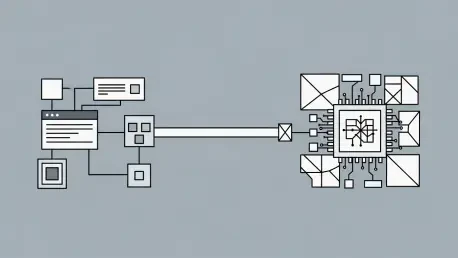
The collaboration’s central objective is to build a full-stack solution that seamlessly connects abstract algorithms to physical execution, effectively closing the gap between software intent and hardware reality. The first major step in this initiative involves integrating Alice & Bob’s unique “cat qubit” architecture directly into Horizon’s Triple Alpha development environment. Initially, this integration will be achieved through high-fidelity emulators, which are sophisticated classical simulations that mimic the precise behavior and error characteristics of Alice & Bob’s physical quantum processors. This provides a virtual testbed where developers can write, compile, and debug quantum programs specifically tailored to the cat qubit architecture long before the physical hardware becomes widely available. By embedding the hardware’s specific properties deep within the software stack, the partnership ensures that applications are not developed in a vacuum but are instead optimized from the very beginning for the target system.
This integration is designed to create an end-to-end, hardware-aware development pipeline that automates the complex translation process from a high-level algorithm to the low-level control pulses that manipulate physical qubits. The “cat qubit” advantage offers a hardware-first approach to error management, and the collaboration provides developers with a unique opportunity to explore this new paradigm. By providing early access to a QEC-capable architecture via emulation, the companies are empowering the quantum community to experiment with and refine fault-tolerant algorithms and error-correction protocols. This proactive approach ensures that a mature and robust ecosystem of software and applications will be ready to run on Alice & Bob’s physical machines from the moment they come online, dramatically accelerating the timeline for achieving meaningful results and demonstrating a practical quantum advantage.
Unpacking the Shared Vision: A Philosophy of Co-Design
This partnership is built upon a shared philosophy articulated by the leaders of both companies, Dr. Joe Fitzsimons of Horizon Quantum Computing and Dr. Théau Peronnin of Alice & Bob. Their expert consensus is that the monumental task of building a fault-tolerant quantum computer cannot be solved by advancing hardware and software in separate, isolated silos. For decades, hardware developers focused on increasing qubit counts and coherence times, while software developers created algorithms assuming an ideal, error-free machine. This disconnect has become a major bottleneck. The shared vision of Horizon and Alice & Bob is to champion a philosophy of co-design, where the development of quantum compilers, algorithms, and physical processors is a deeply intertwined and iterative process. This holistic approach ensures that software tools are aware of the specific strengths and limitations of the hardware and that hardware design is informed by the requirements of the applications it is intended to run.
By breaking down these traditional barriers, the collaboration aims to create a virtuous cycle of innovation. Software developers using Horizon’s tools can provide valuable feedback on the performance of Alice & Bob’s emulated hardware, which can in turn inform future hardware design iterations. Conversely, as Alice & Bob’s hardware matures, its unique features and error models can be incorporated more deeply into Horizon’s compiler, enabling even more sophisticated and automated optimizations. This collaborative mission is explicitly focused on accelerating the industry’s transition from the experimental NISQ era to the practical fault-tolerant era. It is an acknowledgment that the next great leap in quantum computing will not come from a single breakthrough in either hardware or software alone but from their synergistic integration, creating a platform where the whole is far greater than the sum of its parts.
A Practical Blueprint for Accelerating Quantum Development
The collaboration’s roadmap is not merely conceptual; it lays out a practical, two-step blueprint for building the necessary infrastructure to support developers. The first step involves laying the groundwork with high-fidelity emulators of Alice & Bob’s quantum processing units. These are not simple simulators but advanced software models that accurately capture the distinct physics and noise characteristics of the cat qubit architecture. By making these emulators accessible through the Triple Alpha platform, the partnership enables pre-launch software development and rigorous algorithm testing. Developers can begin writing and validating code for a fault-tolerant system now, identifying bugs, refining logic, and optimizing performance in a realistic virtual environment. This approach is critical for ensuring that a mature and vibrant software ecosystem is ready and waiting for the physical hardware on day one, avoiding the “hardware-first, software-later” delay that has plagued previous technology rollouts.
The second step focuses on empowering developers with a new class of hardware-aware tools designed to automate the most challenging aspects of quantum programming. Horizon’s compiler will be specifically enhanced to understand the unique architectural details of Alice & Bob’s systems. This allows it to automatically handle low-level optimizations, such as translating abstract quantum gates into the specific microwave control pulses required to manipulate cat qubits, a process that would otherwise require deep domain expertise. Furthermore, the platform will provide developers with advanced resource analysis capabilities. These tools will offer precise estimates of the resources—such as the number of qubits, gate operations, and execution time—that an algorithm will consume on Alice & Bob’s hardware. This analytical feedback is invaluable, allowing developers to refine their algorithms for maximum efficiency and make informed decisions about the feasibility of their applications, thereby pushing the entire field closer to the threshold of practical quantum advantage.
The concerted effort by Horizon Quantum Computing and Alice & Bob represents a methodical and strategically sound approach to one of the most significant challenges in modern science and technology. By deeply integrating a sophisticated software development environment with a novel hardware architecture designed explicitly for error resilience, this partnership constructed more than just a new tool; it built a foundational pipeline aimed at accelerating the entire field’s progress. The initiative provided developers with unprecedented early access to a fault-tolerant architecture, fostering a co-design ecosystem where software and hardware could evolve in symbiosis. This move was a clear acknowledgment that the path to scalable, reliable quantum computing required a unified front, dissolving the traditional silos that had separated algorithm designers from hardware engineers. Ultimately, this collaboration laid essential groundwork, creating a practical and accessible bridge intended to guide the quantum community from the noisy, experimental phase of today toward a future defined by robust, impactful, and fault-tolerant computation.