
The traditional boundary between a human worker and their digital productivity tools has officially dissolved with the emergence of autonomous systems capable of navigating complex organizational structures without constant manual intervention. Microsoft has fundamentally restructured its artificial intelligence strategy by unveiling Copilot Cowork, a sophisticated agentic layer that moves beyond the simple conversational prompts of previous years to engage in direct, multi-step execution. This evolution, part of the comprehensive Wave 3 update for Microsoft 365, represents a departure from the “chat-in-a-sidebar” model that defined early generative AI experiences. Instead of merely drafting a single email or summarizing a document upon request, the system now functions as a background engine that orchestrates workflows across the entire Microsoft ecosystem, including Teams, Outlook, Excel, and SharePoint. By leveraging a new framework known as Work IQ, the platform can index a user’s entire professional history—spanning years of calendar data, chat logs, and file versions—to act with a level of context that was previously impossible. This transition signifies a pivot toward an “execution layer” philosophy, where the AI is no longer just an assistant providing suggestions but a coworker authorized to perform labor within the secure confines of an enterprise tenant.
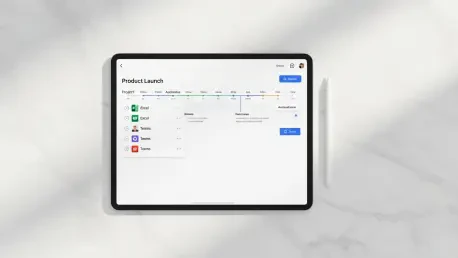
The technical foundation of this shift lies in the integration of the Microsoft Graph with advanced reasoning models, allowing the agent to understand not just the content of a file, but the intent behind a project. When a user initiates a high-level task, such as organizing a product launch or reconciling quarterly budgets, Copilot Cowork does not wait for step-by-step instructions. It proactively identifies the necessary stakeholders, retrieves relevant spreadsheets, and drafts the required communications, presenting a completed plan for human approval rather than asking for the next prompt. This advancement addresses the “fragmentation” problem that has plagued digital workplaces for decades, where information is often trapped in silos across different applications. By treating the entire Microsoft 365 suite as a single, unified canvas for action, the agentic execution layer eliminates the friction of switching between tools. This capability ensures that the AI remains grounded in the specific realities of an organization’s data, reducing the risk of hallucinations while increasing the practical utility of the output. As enterprises move into this new phase of digital transformation, the focus has shifted from the novelty of AI conversations to the tangible efficiency of autonomous background productivity.
The Strategic Partnership with Anthropic
The decision to deepen the collaborative relationship with Anthropic marks a pivotal moment in the competitive landscape of enterprise software, especially considering the historical and financial ties between Microsoft and OpenAI. By incorporating technology derived from Anthropic’s Claude models into the core of Copilot Cowork, Microsoft is signaling a definitive move toward a model-agnostic infrastructure. This strategy acknowledges that different large language models possess unique strengths; while one might excel at creative generation, another—such as the Claude 4.6 architecture—may offer superior reasoning for complex, multi-step agentic tasks. This modular approach allows the enterprise to offer its clients the “right tool for the job” without being tethered to a single provider’s limitations. It also reflects a pragmatic response to market demand, as many Fortune 500 companies have expressed a preference for the specific safety and reasoning benchmarks established by Anthropic. By integrating these capabilities directly into the Microsoft 365 environment, the platform retains its role as the primary orchestrator, ensuring that regardless of which model is running in the background, the data remains protected by the same rigorous identity and compliance frameworks that IT departments already trust.
This synergy between a platform giant and a specialized model developer highlights a broader industry trend where the ecosystem itself becomes more valuable than any individual underlying algorithm. Microsoft is essentially positioning its software suite as the “operating system for agents,” where various intelligences can be swapped or combined to achieve a specific business objective. This maneuver effectively neutralizes the threat of users leaving the Microsoft environment to seek specialized AI tools elsewhere, as those tools are now being brought directly to where the work is already happening. Furthermore, this partnership helps navigate the complex regulatory and ethical landscape of 2026, as Anthropic’s focus on “Constitutional AI” aligns well with the high-stakes requirements of government contractors and highly regulated industries like finance and healthcare. The collaboration demonstrates that in the race for AI dominance, the ability to integrate and secure diverse technologies is just as critical as the ability to invent them. Consequently, the enterprise market is seeing a shift where platform stability and administrative control are becoming the primary factors in deciding which AI solutions are deployed at scale.
Comparing Cloud and Desktop Agent Philosophies
The distinction between localized AI agents and cloud-integrated enterprise systems has become a central theme in how modern organizations choose to deploy automation. Anthropic’s Claude Cowork, which operates as a desktop-level agent, offers a high degree of flexibility by interacting directly with a user’s operating system, allowing it to move files between local folders and access third-party applications via the Model Context Protocol. This “heterogeneous” approach is particularly popular among startups and individual power users who utilize a wide variety of tools outside the Microsoft ecosystem, such as Slack, Zoom, or specialized coding environments. Because these agents live on the device, their security is often managed at the individual user level, providing a nimble but fragmented experience. While this allows for rapid innovation and a personalized workflow, it can create significant headaches for centralized IT departments that require a “single pane of glass” to monitor data movement and ensure that sensitive company information does not leak across unauthorized boundaries.
In contrast, Microsoft’s Copilot Cowork is built from the ground up as a cloud-native enterprise agent, inherently tied to the Microsoft 365 infrastructure and the Microsoft Graph. This deep integration provides a fundamental advantage: the agent does not need to ask for permission to access a specific document or email if the user already has the necessary credentials. It inherently understands the organizational hierarchy, knowing which teams are working on which projects and how a PowerPoint deck relates to a specific thread in Teams. This “contextual awareness” allows the agent to operate with a degree of precision that local agents struggle to match in a corporate setting. For large-scale organizations, the cloud-based model is far more attractive because it allows for centralized governance, auditability, and the enforcement of global security policies. While the desktop agent excels at individual flexibility, the cloud agent excels at organizational coordination. This divide represents two different visions for the future of work: one that prioritizes the autonomy of the individual user and another that prioritizes the collective efficiency and security of the entire corporation.
Functional Capabilities and Practical Use Cases
The transition from generative AI to agentic AI is best observed through the practical tasks that Copilot Cowork can now perform without human oversight. In the past, a user might have spent twenty minutes prompting an AI to draft an agenda for a meeting; today, the agentic layer can be instructed to “prepare for the client review,” at which point it independently scans previous email threads, finds the latest budget spreadsheet in Excel, summarizes the outstanding action items from a Teams recording, and generates a comprehensive briefing memo. This shift moves the human from the role of a “prompt engineer” to that of a “reviewer or supervisor.” The user is no longer required to watch the AI work in real-time; instead, they can assign several complex objectives and then check the progress in a dashboard later. This background execution is particularly transformative for administrative heavy-lifting, such as calendar triage. The agent can analyze a user’s meeting load, identify low-priority conflicts, and proactively suggest—or even execute—rescheduling based on historical preferences and project deadlines, effectively acting as a digital executive assistant.
Beyond administrative support, the agentic layer is proving its worth in deep analytical research and project management. For example, a financial analyst can task the agent with scraping a series of earnings reports and synthesizing the data into a pre-formatted Excel workbook. The agent will not only extract the numbers but also cite its sources and create a series of visualizations that highlight year-over-year trends. In a product launch scenario, the agent acts as a cross-functional coordinator, ensuring that the marketing team’s pitch deck is aligned with the latest technical specifications in the product roadmap. It can track milestones across various tools and flag potential delays before they become critical issues. By automating these “middle-management” tasks, the technology allows professionals to focus on higher-level decision-making and creative strategy. This level of autonomy is governed by a “human-in-the-loop” requirement, where the agent produces a plan of action that the user must explicitly approve before any permanent changes are made. This balance between automation and oversight is designed to build organizational trust while maximizing the productivity gains of the execution layer.
The New Economic Model of Enterprise AI
As the capabilities of AI agents have expanded, the financial structure surrounding their deployment has undergone a significant transformation to account for the massive increase in compute power and security requirements. Microsoft has introduced a tiered pricing model that reflects the move from simple chat features to high-stakes autonomous execution. While the base Copilot subscription remains a standard offering for many, the introduction of the Agent 365 control plane represents a new revenue stream focused on governance. This service is designed specifically for IT administrators who need to manage, monitor, and secure thousands of individual agents operating within their network. It provides the visibility necessary to ensure that autonomous entities are not accessing unauthorized data or performing actions that violate company policy. By pricing this control plane as a separate service, the industry is acknowledging that the “management” of AI is just as valuable as the AI itself. This approach mirrors the historical shift in cloud computing, where the value moved from the raw hardware to the orchestration layers that made that hardware usable for large organizations.
To further consolidate its position at the top of the market, the release of the Microsoft 365 E7 license bundle serves as the ultimate “all-in” solution for AI-centric enterprises. This premium tier, priced significantly higher than previous versions, combines the full suite of agentic tools with advanced security features like Entra identity management and the complete E5 security stack. This strategy is a calculated bet that large corporations will be willing to pay a substantial premium for a unified solution that handles both productivity and safety. By bundling these services, the provider simplifies the procurement process for enterprises that would otherwise have to piece together various security and AI tools from multiple vendors. This economic shift also signals the end of the “experimental” phase of enterprise AI; organizations are now making long-term financial commitments to these technologies as core components of their operational infrastructure. The move toward a more complex, tiered pricing structure is a clear indication that agentic AI is no longer a luxury add-on but an essential utility that requires a robust and sustainable commercial framework to support its continued growth.
Transitioning from Chat to Autonomous Agents
The professional world is witnessing the sunset of the “chat era,” a brief but necessary transitional period where users learned how to interact with large language models through dialogue. We have entered the age of the agent, where the primary metric of success is no longer how well an AI can talk, but how much it can actually do. In this new paradigm, the “multi-turn” conversation—where a user goes back and forth with a bot to refine an answer—is being replaced by a single objective setting followed by hours of background work. This fundamental change in human-computer interaction reflects a deeper understanding of what “productivity” actually means in a digital context. It is not just about producing more text or better summaries; it is about reclaiming the time spent on repetitive, low-value tasks. As agents become more capable of navigating software interfaces on our behalf, the concept of a “user interface” may eventually shift from something humans use to something agents use, with humans providing only the high-level goals and final sign-offs.
However, the proliferation of these autonomous entities brings with it a new set of challenges that extend beyond simple task completion. As companies begin to deploy millions of agents—some internal, some external—the primary hurdle shifts from “how to use them” to “how to govern them.” This involves creating a digital infrastructure that can audit the decisions made by an agent, track its “chain of thought,” and ensure it remains within ethical and legal boundaries. The development of specialized management platforms is a direct response to this need for oversight in a world where digital labor is becoming increasingly common. We are essentially building a new layer of the labor economy, one where software agents perform the bulk of the “process” work, leaving humans to handle the “purpose” work. This shift requires a rethink of organizational roles, as employees will increasingly be judged on their ability to direct and supervise AI workflows rather than their ability to perform the underlying tasks themselves. The era of autonomous agents is not just a technological upgrade; it is a total reimagining of the relationship between human intent and machine execution.
Strategic Positioning and Market Implications
Microsoft’s transformation of Copilot into an execution layer is a strategic maneuver designed to maintain its dominance in a market that is rapidly being disrupted by smaller, more agile AI companies. By embedding agentic capabilities directly into the tools that already dominate the corporate world, the company leverages its massive distribution network to “crowd out” specialized competitors. While a startup might develop a revolutionary AI project manager, that tool faces a significant uphill battle when compared to an agent that already exists within the user’s Outlook and Teams environment. This “platform advantage” allows the incumbent to integrate the best innovations from the wider field—such as the reasoning power of Anthropic’s models—while keeping users within its own ecosystem. This approach also addresses the regulatory concerns that often slow down the adoption of new technologies. By providing a transparent “human-in-the-loop” model where every action is auditable and reversible, the system builds the trust necessary for large-scale deployment in sensitive sectors like government and defense.
As we look toward the immediate future of the digital workplace, the focus will likely remain on the “Agentic Execution Layer” as the new standard for professional software. Organizations that successfully integrate these agents into their workflows will find themselves with a significant competitive edge, able to operate with a speed and precision that was previously unattainable. The key takeaway for business leaders is that AI is no longer a tool for creative inspiration or drafting emails; it is a core operational engine that can manage entire business processes. To prepare for this shift, enterprises should begin evaluating their data readiness and security protocols, ensuring that their internal information is structured in a way that an agentic system can understand and utilize. The move from conversational assistants to autonomous coworkers is complete, and the next few years will be defined by how effectively we can govern these digital entities to drive meaningful business outcomes. The infrastructure for this new era is already in place, and the focus must now turn toward maximizing the potential of this unprecedented execution layer while maintaining the human oversight that ensures its safety and alignment.