
In a landmark collaboration with Samsung, Google has launched Android XR, an ambitious new operating system designed to unify the fragmented world of virtual and augmented reality. This strategic move represents Google’s comprehensive plan to build a foundational platform for the next generation of spatial computing. By leveraging its dominance in software, AI, and ecosystem building, Google aims to replicate the success of Android in the smartphone market, creating a democratized and accessible future for headsets and smart glasses. This initiative synthesizes lessons from past ventures into a meticulously planned effort to define the standards for how individuals and industries will interact with an increasingly blended digital and physical world.
The Strategic Blueprint
Fostering an Open and Collaborative Ecosystem
At the very core of Google’s ambitious strategy for spatial computing is the foundational principle of an open and collaborative ecosystem, a deliberate and stark contrast to the closed, proprietary “walled gardens” cultivated by key competitors. This approach is not merely a philosophical preference but a calculated business decision designed to ignite innovation and accelerate widespread market adoption. By providing a common, open platform, Google aims to empower a diverse range of hardware manufacturers to create a wide variety of devices at different price points and form factors, preventing the kind of market stagnation that can arise from a single-vendor monopoly. This philosophy extends deeply to the developer community, inviting creators to build upon a unified standard without fear of being locked into a single company’s hardware roadmap or restrictive app store policies. The goal is to replicate the explosive growth of the Android smartphone market, where openness led to a vibrant ecosystem of both hardware and software that catered to a global audience. This strategy fosters a competitive environment that drives down costs and encourages experimentation, which is critical in a nascent field like XR where the winning formulas for hardware design and user experience are still being discovered.
This vision of an open platform is powerfully anchored by foundational partnerships with industry titans, ensuring a robust and reliable technological backbone from the outset. The collaboration with Samsung is paramount, with the electronics giant taking the lead on developing the flagship hardware, including the inaugural Galaxy XR headset. This is not a simple licensing agreement; it is a deep co-engineering effort that ensures the software and hardware are intricately optimized for one another, delivering a seamless and high-performance user experience. Complementing this is the crucial role of Qualcomm, whose specialized Snapdragon chipsets provide the essential processing power and efficiency required for spatial computing. These chips are engineered to handle the immense demands of rendering high-resolution graphics for two displays simultaneously, tracking user movement with minimal latency, and running complex AI models locally on the device—all while managing thermal output and conserving battery life. Together, this triumvirate of Google’s software, Samsung’s hardware expertise, and Qualcomm’s silicon engineering forms a powerful alliance intended to establish Android XR as the default, go-to platform for the entire industry.
Weaving AI into the Fabric of Reality
Android XR distinguishes itself by being more than just an operating system enabled for extended reality; it is fundamentally an AI-driven platform with Google’s powerful Gemini models woven into its very fabric. This deep integration is not an afterthought or a collection of discrete features but rather the core engine powering the entire user experience. AI is designed to make interactions within mixed reality environments feel natural, intuitive, and profoundly context-aware. For example, the system can perform real-time language translation, not just as text on a screen, but as spatially-aware subtitles that appear to emanate from the person speaking, or even as a translated voice that maintains the original speaker’s tone and cadence. Furthermore, sophisticated object recognition allows the system to understand the user’s physical surroundings, identifying furniture, walls, and other objects to seamlessly blend virtual content with the real world. This capability moves beyond simple passthrough video, enabling applications to interact intelligently with the environment, such as placing a virtual chessboard firmly on a real table or having a digital character realistically navigate around a physical room. This layer of artificial intelligence is what aims to transform XR from a novel technology into a genuinely useful and assistive computing platform.
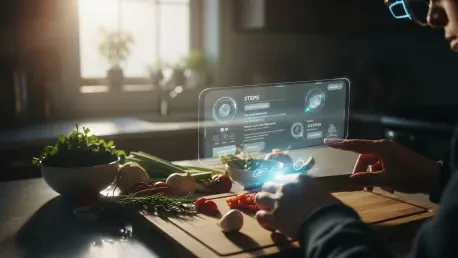
The reliance on generative AI positions it as the primary interface between the user and the spatial computing environment, representing a paradigm shift away from traditional menus, icons, and controllers. Instead of navigating complex settings or explicitly launching applications, users can interact with the system through natural language and gestures, with the AI dynamically adapting to their needs and context. For instance, a user could simply ask their device to “show me my work emails next to my calendar on the wall” and the AI would understand the command, identify a suitable open space, and arrange the virtual windows accordingly. This contextual awareness extends to proactive assistance, where the system might anticipate a user’s needs, such as automatically pulling up a recipe when it recognizes they are in the kitchen looking at ingredients, or providing contextual information about a landmark they are viewing. By offloading cognitive burdens to the AI, Google is aiming to make spatial computing feel less like operating a computer and more like having an intelligent assistant that enhances one’s perception and capabilities within the real world, making it accessible for both everyday tasks and highly specialized professional applications.
Leveraging the Power of the Android Universe
Perhaps the most formidable competitive advantage in Android XR’s arsenal is its intrinsic connection to the vast, mature, and globally dominant Android mobile ecosystem. The new platform has been meticulously engineered to not only coexist with this universe but to actively leverage its immense library of applications. A core feature allows for the seamless porting and “spatializing” of the millions of existing 2D Android apps, transforming them from flat rectangles on a phone screen into dynamic, three-dimensional experiences within a mixed reality environment. This means that from day one, users of an Android XR headset can have immediate access to their favorite and most essential apps—be it for communication, productivity, or entertainment—without waiting for developers to create bespoke XR versions. This capability dramatically lowers the barrier to entry for consumers, as the device offers instant utility and a sense of familiarity, mitigating the “content desert” problem that has plagued many new computing platforms in their early stages. A user can arrange their email, messaging apps, and video streaming services as a series of floating windows around them, creating a personalized and infinitely configurable workspace or entertainment hub.
This strategic bridge to the existing Android world provides an equally powerful incentive for the developer community, potentially creating a self-perpetuating cycle of growth that could allow Android XR to rapidly outpace its rivals. Instead of asking developers to make a risky bet on a fledgling platform and invest significant resources in building entirely new applications from the ground up, Google is offering a much simpler proposition: extend your existing application to a new and exciting medium. The tools provided are designed to make the process of adapting a 2D application for a 3D space relatively straightforward, de-risking the development process and dramatically shortening the time to market. This approach encourages a massive influx of content and functionality onto the platform from its inception. As users are drawn in by the rich library of familiar apps, the growing user base makes the platform an even more attractive target for developers, who will then be more inclined to invest in creating unique, built-for-XR experiences that take full advantage of the medium’s capabilities. This flywheel effect, driven by the sheer scale of the Android ecosystem, is Google’s strategic key to achieving critical mass and establishing market dominance.
Building the Future, Piece by Piece
The Technological Foundation and User Centric Features
Android XR is built upon the robust and proven core of the Android operating system, yet it has been significantly enhanced with specialized functionalities tailored for the unique demands of spatial computing. The platform is the culmination of years of research and development, incorporating critical lessons learned from Google’s previous forays into the field, such as the ambitious but socially premature Google Glass and the mobile-focused but ultimately fragmented Daydream VR. Announced in late 2024 and officially launched in October 2025, Android XR represents a more holistic and patient approach, focusing on building a sustainable ecosystem rather than just a single piece of hardware. The OS architecture is designed for low-latency sensor fusion, precise spatial mapping, and efficient power management, all of which are essential for creating a comfortable and believable immersive experience. Continuous updates are a core part of the strategy, with new features being rolled out to systematically improve usability and deepen integration with existing user workflows, ensuring the platform evolves to meet the growing expectations of both consumers and enterprise clients. This iterative development model reflects a mature understanding that building a new computing paradigm is a marathon, not a sprint.
Reflecting this user-centric philosophy, early updates for the platform have focused on delivering practical functionalities that address real-world usage scenarios, moving beyond novelty to genuine utility. For instance, the introduction of a “Travel Mode” for the Samsung Galaxy XR headset is a key feature designed to optimize the user experience while in motion. This mode uses sophisticated algorithms to stabilize the virtual environment against the movement of a vehicle like a plane or train, preventing motion sickness and allowing the user to remain productive or entertained while commuting. Another significant addition is “PC Connect,” a feature that seamlessly bridges the gap between the immersive XR device and a traditional computing setup. This allows a user to mirror their PC desktop as a massive virtual display or even create a multi-monitor environment within mixed reality, transforming the headset from a standalone entertainment device into a powerful extension of their professional workspace. These types of thoughtful, practical features demonstrate a clear focus on integrating spatial computing into the daily lives and workflows of users, which will be critical for driving long-term adoption.
A Roadmap from Headsets to Smart Glasses
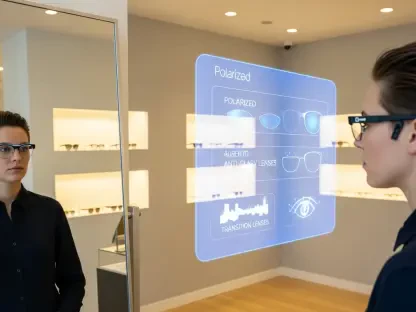
While headsets form the initial beachhead, Google’s long-term hardware ambitions clearly extend into the more challenging and potentially more transformative category of smart glasses. This work is being carried out under the “Project Aura” initiative, which focuses on developing technology that can deliver augmented reality in a socially acceptable, all-day wearable form factor. Early prototypes, though reportedly functional, still face the persistent trade-off between performance and aesthetics, but they demonstrate a clear direction: running full-featured Android applications in a device that resembles a standard pair of sunglasses. The first major public milestone on this roadmap is a planned 2026 launch for a pair of AI-powered glasses. These devices are not expected to offer fully immersive mixed reality but will aim to fulfill the long-held promise of ambient, assistive computing. They will deliver contextual AR overlays for daily life, such as displaying turn-by-turn navigation arrows that appear to be painted on the road ahead, providing real-time information about landmarks, or flashing discreet notifications in the user’s peripheral vision, all powered by a constant connection to Google’s AI services.
Looking further ahead, the roadmap diversifies into a sophisticated three-tier glasses strategy slated for the 2026-2027 timeframe, indicating an understanding that a one-size-fits-all approach will not suffice for the broader consumer market. This strategy is designed to cater to different user needs, technical requirements, and, crucially, price points. The entry-level tier might focus on basic AI assistance and notifications, serving as a lightweight companion to a smartphone. A mid-tier product could introduce more advanced AR capabilities, such as limited object interaction and more persistent world-anchored virtual content. Finally, a high-end or “pro” tier would likely target developers, professionals, and early adopters, offering the most advanced immersion and functionality, potentially including full mixed-reality capabilities that begin to blur the line between AR glasses and a more compact VR headset. This segmented approach is a classic market penetration strategy, designed to create an accessible on-ramp for mainstream consumers while still pushing the technological envelope and seeding the developer community with powerful creative tools.
Navigating the Competitive Landscape
Facing a Crowded Market and Overcoming Hurdles
Android XR does not enter the market in a vacuum; it faces a competitive landscape populated by formidable and well-established players. Meta, with its early start and significant investment in the metaverse, has already established a strong foothold with its Horizon OS and a mature hardware lineup. Apple, with its Vision Pro, has defined the premium end of the market, offering a highly polished, albeit expensive and closed, ecosystem. In this crowded arena, the consensus among industry analysts is that Google’s most potent weapon is its massive, pre-existing app ecosystem. The ability to easily port and spatialize millions of familiar Android applications could prove to be the decisive factor that tips the market balance. While competitors must convince both users and developers to invest in a brand-new, unproven content library, Google offers an XR platform that is already rich with the tools and entertainment consumers use every day. This immediate utility could give Android XR a critical advantage in achieving mainstream relevance and developer support, making it the most practical and content-rich choice from the moment it launches.
However, the path to widespread adoption is fraught with significant challenges that go beyond market competition. Hardware limitations remain a persistent hurdle across the entire industry. Early prototypes of smart glasses are often described as functional but “chunky,” highlighting the difficult engineering trade-offs between processing power, battery life, heat dissipation, and a socially acceptable aesthetic. Furthermore, the deep integration of AI, which continuously processes user and environmental data to provide its contextual magic, raises profound user privacy concerns. The idea of a device with always-on cameras and microphones connected to a powerful AI creates a new frontier of data privacy risks that will require unprecedented levels of transparency, user control, and responsible development from Google to build public trust. Finally, the intertwined challenges of affordability and manufacturing scale are crucial. To avoid the fate of past niche technologies, the hardware must reach a price point accessible to the mainstream market, and the supply chain must be capable of meeting mass-market demand. The ultimate success of Android XR will depend not just on its technology, but on its ability to navigate these complex hurdles.
Spanning Enterprise and Consumer Worlds
From its inception, the Android XR platform has been strategically positioned to serve the distinct needs of both the enterprise and consumer markets, recognizing that a dual-pronged approach can create a more stable and resilient ecosystem. For the business world, the platform’s flexibility and powerful integrated AI tools offer significant potential to revolutionize workflows across numerous industries. The ability to easily integrate existing Android-based productivity tools into immersive mixed reality environments could drive substantial gains in efficiency. Sectors like manufacturing and healthcare stand to benefit immensely from applications such as virtual training simulations that provide realistic, hands-on experience without physical risk, remote collaboration tools that allow teams to interact with 3D models of products as if they were in the same room, and augmented reality guidance for complex assembly or repair tasks. These high-value enterprise use cases can provide a consistent and lucrative revenue stream for the ecosystem, justifying the initial hardware investment for businesses and funding further platform development.
On the consumer side, the vision is centered on creating deeply engaging immersive entertainment, fostering new forms of social interaction, and seamlessly enhancing daily life with assistive AI. The goal is a future where technology augments reality in useful and delightful ways, from personalized shopping experiences where a user can see how a new piece of furniture would look in their living room, to next-generation games that blend fantastical elements with the real world. To ensure a compelling content library from day one, Google has made strategic acquisitions of respected VR content studios, including the teams behind the creative tool Tilt Brush and the popular game developer Owlchemy Labs. This investment is not just about securing launch titles; it is about bringing in top-tier talent that possesses the unique expertise required to design intuitive and captivating experiences for an immersive 3D medium. By seeding the ecosystem with high-quality, ready-made content, Google aims to provide the compelling “wow” factor necessary to attract early adopters and build the initial momentum needed for the platform to thrive in the competitive consumer market.
A Unified Vision for an Interconnected Future
Google’s introduction of Android XR represented a strategic, long-term, and comprehensive bet on the future of computing. It stood as a meticulously planned initiative that synthesized the company’s core competencies in mobile operating systems, artificial intelligence, and partnership-driven ecosystem development. By creating an open, collaborative platform that was deeply integrated with Gemini AI and supported by an accessible hardware roadmap in partnership with Samsung and Qualcomm, Google aimed to overcome the shortcomings of its past experiments in the XR space. The platform’s ability to leverage the vast and familiar Android app library emerged as its most formidable competitive advantage. While significant challenges related to hardware design, user privacy, and mainstream market adoption remained, Android XR was positioned as a powerful contender that helped define the standards for the next era of spatial computing, fundamentally altering how individuals and industries interacted with the digital and physical worlds.