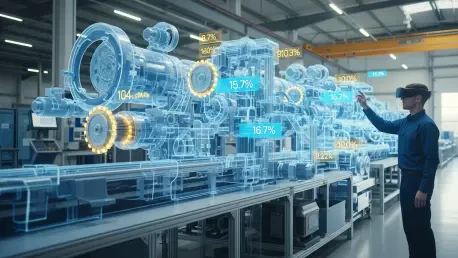

The blurring of boundaries between digital information and physical space is no longer a concept confined to the pages of speculative fiction or the high-tech laboratories of Silicon Valley. Today, Extended Reality, an expansive term encompassing Augmented Reality, Virtual Reality, and Mixed Reality, functions as a high-performance engine for corporate growth and operational efficiency. This technological suite allows enterprises to overlay complex data onto the real world or transport users into entirely synthetic environments, effectively removing the traditional constraints of geography and physical presence. As organizations move through 2026, the adoption of these tools is driven less by a desire for novelty and more by the cold necessity of solving persistent business frictions. By providing a sense of scale, depth, and interactivity that two-dimensional screens cannot replicate, spatial computing is enabling a more intuitive way for humans to interface with digital systems. This shift represents a fundamental change in the architecture of the modern economy, where the value of a product or service is increasingly tied to the immersive quality of the experience surrounding it.
The Evolution of Spatial Sales and Virtual Inventory
Traditional retail and wholesale models have long struggled with the physical limitations of square footage, which dictates how much inventory can be showcased to a prospective buyer. In the automotive sector, for example, a dealership might only have room for a dozen vehicles, leaving customers to rely on color swatches or small-scale catalogs to imagine different trims and features. Mixed Reality has fundamentally altered this dynamic by allowing manufacturers like BMW to deploy full-scale digital twins that occupy physical space without requiring a physical footprint. A customer can walk around a virtual vehicle, open its doors, and swap interior materials instantaneously, providing a level of customization that was previously impossible. This capability does more than just enhance the aesthetic experience; it generates a continuous stream of behavioral data. By tracking which configurations attract the most attention and where users linger during their virtual tour, companies gain granular insights that inform production schedules and regional inventory distribution, turning the sales floor into a sophisticated laboratory for consumer research.
Beyond the automotive world, the challenge of spatial visualization is a primary cause of friction in high-consideration purchases like furniture or industrial equipment. Consumers often hesitate to finalize a purchase because they cannot accurately judge how an object will fit within the dimensions and lighting of their specific environment. Augmented Reality applications solve this by projecting true-to-scale 3D models into a user’s actual room through a smartphone or headset. This “spatial certainty” effectively eliminates the psychological barrier of the unknown, shortening the sales cycle significantly. For business-to-business transactions, this technology allows facility managers to visualize how new machinery will integrate with existing assembly lines before a single piece of equipment is shipped. By reducing the reliance on imagination and replacing it with visual evidence, brands are seeing a marked increase in conversion rates and a decrease in the time required to move a lead through the marketing funnel. This transition from passive viewing to active, spatial interaction is setting a new standard for how high-value goods are marketed and sold in a digitally integrated economy.
Strategic Cost Mitigation and Enhanced Profitability
The financial burden of product returns is a persistent drain on the profitability of e-commerce, particularly within the fashion and luxury goods sectors where fit and appearance are subjective. High-end brands are now deploying sophisticated AR try-on features that utilize advanced foot and body tracking to show exactly how a garment or accessory interacts with the wearer’s movements. Gucci, for instance, has integrated high-fidelity rendering into its mobile platforms, allowing users to “wear” sneakers or watches with photorealistic accuracy. This is not merely a marketing tactic to engage younger demographics; it is a defensive financial strategy designed to reduce the logistical costs associated with shipping, processing, and restocking returned items. When a customer has a clear, realistic expectation of a product’s appearance on their own body, the likelihood of a return drops precipitously. Consequently, Extended Reality serves as a high-tech filter that ensures only the most confident purchases are completed, preserving margins and streamlining the supply chain.
Some market leaders have moved beyond experimental projects to establish XR as a permanent pillar of their corporate infrastructure. L’Oréal exemplifies this shift by acquiring specialized technology firms to create a unified “augmented beauty” ecosystem that spans dozens of global brands and regions. Instead of launching one-off campaigns, the company has embedded virtual try-on capabilities into every stage of the customer journey, from social media advertisements to in-store kiosks. This systematic approach has yielded compounding returns, with data showing that consumers who engage with these immersive tools are three times more likely to convert than those who do not. By treating XR as a long-term utility rather than a temporary gimmick, enterprises are building a proprietary layer of digital intelligence that becomes more valuable with every user interaction. This shift toward infrastructure-level deployment signals that spatial computing is no longer a peripheral interest but a core component of the modern enterprise’s digital transformation strategy, providing a sustainable competitive advantage in an increasingly crowded marketplace.
Operational Excellence and Standardized Workforce Training
The challenge of maintaining consistent operational standards across a global workforce is one of the most difficult hurdles for large-scale organizations to overcome. Traditional training methods, such as instructional videos or classroom-based lectures, often suffer from low retention rates and a lack of practical application. Virtual Reality has revolutionized this process by allowing companies like Walmart to place thousands of employees into simulated, high-stakes environments without any real-world risk. Whether it is managing the chaotic crowds of a major holiday sale or handling a complex customer service de-escalation, VR provides a safe space for workers to gain “muscle memory” and experiential knowledge. This immersive approach ensures that an employee in a rural outpost receives the exact same quality of instruction as one in a flagship urban location. Because the simulations are repeatable and measurable, managers can identify specific areas where a trainee might be struggling and provide targeted interventions, leading to a more competent and confident workforce.
The measurable impact of XR on training efficiency is often profound, frequently resulting in a significant reduction in the total time required to achieve proficiency. In industrial and technical fields, where learning to operate specialized machinery can be both dangerous and expensive, VR allows trainees to master complex procedures in a digital environment before ever touching a piece of hardware. This “hands-on” experience leads to higher scores on post-training assessments and a faster transition to productive work. Moreover, the ability to simulate rare but critical scenarios, such as emergency shutdowns or equipment failures, prepares employees for situations that would be impossible to replicate in traditional settings. By minimizing the costs associated with trainer travel, equipment downtime, and onsite accidents, XR-based development programs provide a clear return on investment. This focus on operational excellence ensures that the brand’s promise is delivered consistently by every frontline associate, reinforcing the organization’s reputation for reliability and expertise in a competitive global landscape.
Brand Loyalty and the Power of Immersive Storytelling
In a world where digital convenience is the baseline expectation, physical retail spaces must offer something more than just a place to exchange currency for goods. Forward-thinking brands are utilizing XR to transform traditional stores into “destination experiences” that emphasize emotional resonance and sensory engagement. By creating virtual dreamscapes or interactive brand stories, retailers can invite customers into a curated world that reflects the brand’s values and aesthetic. For example, beauty retailers have experimented with virtual environments that transport shoppers from a crowded mall to a cosmic or surreal landscape, allowing them to explore product lines in a way that static shelf displays could never achieve. This type of “world-building” fosters a deep sense of loyalty that transcends transactional relationships, turning casual shoppers into dedicated brand advocates. The goal is to create a lasting memory that stays with the consumer long after they have left the store, leveraging the unique psychological impact of presence that only immersive technology can provide.
The hospitality and travel industries are similarly leveraging these tools to reduce the perceived risk of high-cost bookings through a “sample the experience” model. Since a vacation cannot be physically tested before purchase, VR allows potential guests to virtually inhabit a destination, explore hotel suites, or walk through local landmarks from the comfort of their own homes. This sensory-rich preview, which can include synchronized elements like simulated environmental sounds and detailed 360-degree visuals, makes the intangible tangible. For a hotel chain like Marriott, providing “VR postcards” serves as a powerful conversion tool that bridges the gap between looking at a photograph and feeling like one is actually there. By allowing customers to “teleport” to a beach or a bustling city center, the brand removes the uncertainty that often stalls the booking process. This strategy effectively turns passive browsing into active participation, making the travel experience feel attainable and enticing, which ultimately drives higher booking rates and strengthens the brand’s position as a gateway to global exploration.
Data Intelligence and the Future of Interaction
One of the most transformative aspects of Extended Reality is the unprecedented depth of behavioral data it provides to corporate strategists. In a standard web environment, analytics are typically limited to clicks, scrolls, and time spent on a page. However, an XR environment can track gaze direction, head movement, and even subtle physical gestures, offering a window into the subconscious preferences of the user. If a customer in a virtual showroom spends three minutes looking at a specific wheel design but ignores the upgraded audio system, the manufacturer gains a clear data point regarding what truly drives that individual’s interest. This level of granular insight allows for the hyper-personalization of marketing messages and product offerings, ensuring that the brand’s outreach is always relevant to the consumer’s demonstrated desires. As these data sets grow, they provide a predictive roadmap for future product development, allowing companies to innovate with a much higher degree of confidence.
As we look toward the continued integration of digital and physical realities, the organizations that prioritize spatial computing will be best positioned to lead their respective industries. The next logical step for businesses is to move beyond viewing XR as a set of separate tools and instead see it as a unified interface for all digital communication. This involves integrating immersive capabilities into existing enterprise resource planning systems and customer relationship management platforms to create a seamless flow of information. Those who invest in building these capabilities today are not just adopting a new technology; they are evolving their entire business model to meet the expectations of a generation that values interactivity and transparency. The strategic advantage lies in the ability to reduce friction at every touchpoint, from the initial brand discovery to the final post-purchase support. By embracing the full potential of Extended Reality, modern enterprises can build a more resilient, efficient, and engaging commercial future where the only limit is the scope of their digital imagination.
To capitalize on these developments, decision-makers should move toward a phased integration of spatial tools into their existing workflows. The first step involves identifying the specific points of friction within the customer journey or internal operations where 3D visualization or immersive training could provide the most immediate relief. Once these high-impact areas are established, organizations ought to focus on building a scalable digital twin library of their products and environments, ensuring that these assets can be utilized across marketing, sales, and training departments to maximize ROI. It is equally important to establish clear metrics for success, such as reduced return rates or faster employee onboarding times, to justify continued investment in hardware and software. By fostering a culture of spatial literacy among staff and stakeholders, businesses will be prepared to navigate the shift from flat screens to immersive computing. Ultimately, the transition to Extended Reality is a journey toward greater clarity and connection, providing the infrastructure necessary to thrive in a world where the digital and physical are one and the same.