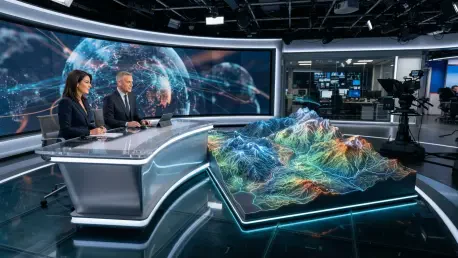

The expansion into immersive news technology reflects a broader effort to maintain a competitive edge by redefining the viewer experience through advanced visual storytelling techniques. The rapid evolution of television broadcasting has reached a pivotal juncture where traditional delivery methods are no longer sufficient to capture the attention of a digitally savvy audience. CBS has responded to this challenge by integrating high-fidelity virtual environments into their daily broadcasts, effectively blurring the lines between physical studios and digital data visualizations. This transformation is not merely about aesthetic appeal but serves as a strategic pivot toward data-driven narratives that allow anchors to walk through three-dimensional models of complex events. By prioritizing these innovations, the network is addressing the growing demand for transparency and clarity in reporting, ensuring that local news remains a reliable primary source of information in an increasingly fragmented media landscape. This approach has turned newsrooms into interactive high-tech hubs.
National Expansion: The Growth of Immersive News Technology
The successful national scaling of these immersive tools represents a significant milestone in broadcast history, culminating on November 2, 2026, with the completion of a rollout across 15 major markets. What began as a pilot program at CBS Bay Area has now matured into a comprehensive framework encompassing over 20,000 square feet of AR and VR enabled studio space. This infrastructure allows local stations to produce content that was previously reserved for high-budget cinema or national network specials. By standardizing this technology across diverse regions, CBS ensures a consistent level of quality while providing local teams with the creative freedom to adapt visuals to their specific community needs. The shift toward these “NextGen” studios facilitates a more intuitive understanding of news by placing the presenter within the data rather than beside a flat screen. This massive investment underscores a commitment to staying ahead of technological trends and redefining the standards of local journalism in a competitive era.
Early adopters of this technology, including CBS Minnesota (WCCO), CBS Boston (WBZ), and CBS Pittsburgh (KDKA-TV), have already demonstrated the practical utility of these virtual environments in their daily operations. These stations utilize the increased spatial capacity of their new studios to break down complex issues, such as urban development projects or environmental shifts, using interactive overlays that respond to the movement of the journalist. The integration of augmented reality specifically allows for the overlaying of digital information onto the physical set, creating a seamless viewing experience that keeps the audience anchored in reality while providing deep layers of context. Furthermore, the ability to switch between virtual sets instantly means that a single studio space can serve multiple roles throughout a broadcast day, from a morning news desk to a specialized sports arena. This versatility not only enhances the visual variety of the programming but also optimizes the operational efficiency of the stations involved in the rollout.
Strategic Implementation: Enhancing Election and Weather Coverage
The strategic deployment of AR and VR becomes particularly evident during high-stakes events such as the November 3rd election cycles and severe weather coverage. CBS has introduced specialized “Election Centers” that utilize these tools to help viewers navigate the complexities of local races and real-time polling data. Instead of static charts, audiences are presented with immersive maps and interactive graphics that illustrate voting trends as they happen. In the realm of meteorology, the “First Alert Weather” teams are leveraging these capabilities to provide more sophisticated analysis. The recent hiring of Emmy-nominated meteorologist Shane Hinton at CBS Chicago, who moved from the Miami market, highlights the network’s focus on pairing top-tier talent with these advanced tools. Hinton and his colleagues can now virtually step inside a storm cell or simulate a flood zone, providing life-saving information through a lens that is both educational and visually compelling. This method transforms weather reporting into a deep dive.
The transition to these interactive formats proved that the future of local news lay in the ability to turn information into a shared visual journey for the viewer. To remain competitive, stations adopted a model of constant technological iteration, ensuring that AR assets were updated alongside real-time data feeds. Broadcast engineers focused on reducing latency in virtual renderings to maintain the illusion of a physical presence within digital spaces. Furthermore, management prioritized the recruitment of multi-disciplinary talent who possessed both journalistic integrity and technical proficiency in spatial computing. These steps ensured that the local news remained a vital, interactive component of the community’s daily routine. By establishing these high-tech hubs, the network successfully bridged the gap between traditional media and the immersive expectations of the next generation of viewers. This proactive stance allowed the organization to lead the industry into a new era of sophisticated storytelling.