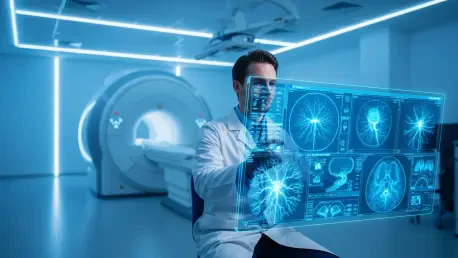

The human brain represents one of the final frontiers of medical science, yet the intricate nuances within magnetic resonance imaging often remain obscured by the sheer volume and complexity of the raw data. Traditional diagnostic methods have long relied on the manual expertise of radiologists or rigid algorithms that require massive amounts of labeled data to function effectively. However, the emergence of BrainIAC, or Brain Imaging Analysis with Contrastive learning, is fundamentally altering this landscape by introducing a self-supervised foundation model that interprets neurological structures with unprecedented depth. By leveraging nearly 49,000 unlabelled, multiparametric brain scans, this technology sidesteps the bottlenecks associated with task-specific training, allowing for a more fluid and generalizable understanding of human anatomy. This shift marks a transition from reactive observation to a proactive computational analysis that can identify subtle patterns invisible to the naked eye.
The Technical Foundation: Shifting the Paradigm of Medical Training
Conventional machine learning models in neurology have historically been hindered by the necessity of expertly annotated datasets, which are both time-consuming to produce and limited in scope. BrainIAC overcomes these limitations through the implementation of self-supervised learning, a technique that enables the artificial intelligence to find inherent structures within the data without pre-defined labels. This methodology is particularly effective for high-dimensional MRI data, as it allows the model to learn from a diverse array of patient demographics and scan types. By processing tens of thousands of unlabelled scans, the model develops a foundational understanding of what constitutes a healthy brain versus one affected by pathology. This robust framework ensures that the AI can be adapted to new clinical questions with minimal fine-tuning, drastically reducing the time required to deploy life-saving tools into active clinical environments and research settings.
Central to this technological breakthrough is the use of contrastive learning, which trains the system to recognize similarities and differences across vast datasets to build a cohesive internal map of neurological features. Unlike earlier models like MedicalNet or BrainSegFounder, which often struggled when presented with data from different imaging machines or patient populations, BrainIAC exhibits a high degree of generalizability. This adaptability is crucial in the current healthcare climate of 2026, where hospitals utilize a wide variety of hardware and imaging protocols. The model’s ability to synthesize information from multiparametric scans—including T1-weighted, T2-weighted, and fluid-attenuated inversion recovery sequences—enables a holistic view of the brain. Consequently, this foundation model provides a more reliable baseline for longitudinal studies, allowing clinicians to track disease progression with a level of precision that was previously unattainable.
Clinical Applications: Enhancing Survival Rates and Diagnostic Speed
In the realm of neuro-oncology, BrainIAC demonstrates a remarkable capacity for predicting tumor mutational subtypes and survival outcomes for patients battling aggressive diseases like glioblastoma. This capability is especially transformative for cases where surgical biopsies carry significant risks due to the location of the tumor or the fragile health of the patient. By analyzing the subtle textures and volumetric shifts within an MRI, the AI can infer genetic markers and potential responses to specific chemotherapy regimens. This non-invasive “virtual biopsy” provides oncologists with critical information needed to tailor treatment plans to the individual, potentially extending life expectancy and improving the quality of life during treatment. Furthermore, the model’s performance in identifying these markers surpasses previous benchmarks, suggesting that AI-driven analysis will become a standard component of preoperative planning and therapeutic monitoring for brain cancers globally.
Beyond chronic conditions, the application of BrainIAC in emergency medicine addresses the critical “time is brain” mandate associated with acute ischemic strokes. One of the most challenging aspects of stroke management is determining the exact time of onset, a variable that dictates whether a patient can safely receive thrombolytic therapy. BrainIAC has proven highly effective at estimating the time elapsed since the initial vascular event by detecting minute changes in tissue signals that often elude human detection. This precision allows emergency physicians to make informed, rapid decisions that can prevent permanent disability or death. Additionally, the model excels in predicting “brain age,” an emerging biomarker that serves as a vital indicator for early-onset cognitive decline and Alzheimer’s disease. By identifying individuals whose brains appear older than their chronological age, clinicians can initiate preventative strategies years before significant symptoms manifest.
Strategic Integration: Actionable Steps for Neurological Care
The integration of BrainIAC into standard imaging protocols represented a major leap forward in bridging the gap between raw imaging data and actionable clinical insights. To fully capitalize on this advancement, healthcare institutions focused on establishing centralized data repositories that could facilitate the continuous refinement of these foundation models. This approach ensured that the AI remained current with evolving imaging technologies and diverse patient populations. Moreover, the transition to AI-assisted diagnostics necessitated a collaborative framework where radiologists and data scientists worked in tandem to validate model outputs against real-world clinical outcomes. By prioritizing the transparency of AI decision-making processes, the medical community successfully fostered trust in these automated systems. These steps were essential in moving toward a future where predictive modeling became a standard of care for every patient undergoing a neurological evaluation.
As the medical landscape continued to evolve, the widespread adoption of BrainIAC emphasized the importance of ethical data sharing and the standardization of MRI protocols across different regions. Stakeholders recognized that the true power of self-supervised models lay in their ability to learn from a global pool of data, which required robust privacy protections and interoperable software systems. Moving forward, the focus shifted toward developing even more granular models capable of identifying rare neurological disorders that had previously been difficult to study due to a lack of annotated samples. The success of this model provided a blueprint for other fields, such as cardiology and hepatology, to develop their own foundation models. Ultimately, the shift toward these generalized AI tools allowed for a more personalized era of medicine, where diagnostics were no longer just about identifying a disease, but about understanding the unique biological trajectory of every individual.