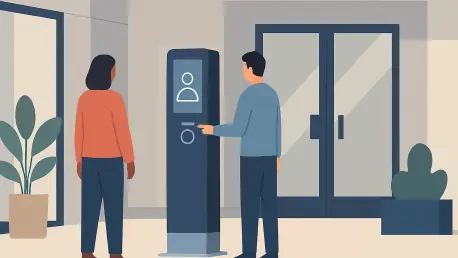

Seoul office workers are reportedly boycotting building gyms for months because they refuse to surrender sensitive biometric markers to private management companies. This resistance highlights a burgeoning crisis in South Korea’s most prestigious residential districts, where the push for technological sophistication has collided with the fundamental right to informational privacy. In high-end complexes, the traditional key fob has been largely discarded in favor of facial recognition scanners designed to streamline access to exclusive community amenities. While developers pitch these systems as the ultimate expression of luxury and modern convenience, a significant portion of the population views them as a digital intrusion. The debate is no longer just about the efficiency of a workout routine but rather about who owns the digital representation of a person’s identity. As biometric surveillance moves from the public square into the private home, residents are beginning to question the price of seamless living.
Addressing the Challenges: The Logic Behind Biometric Adoption
The primary motivation behind this technological surge is the “outsider problem,” where non-residents gain unauthorized access to private facilities. In many large complexes, residents often share their entry credentials with friends or acquaintances, leading to overcrowded amenities and increased maintenance costs for legitimate owners. Management companies argue that facial recognition is the only foolproof way to ensure that these premium spaces remain exclusive to the people who pay for them. By linking access to a permanent physical trait, these systems eliminate the loopholes created by shared passwords or borrowed RFID cards. This shift ensures that the financial burden of maintaining expensive equipment like screen golf ranges or saunas is shared fairly among the registered inhabitants. For boards of directors, the technology represents a pragmatic solution to a persistent administrative headache that manual security guards struggled to manage effectively.
Beyond basic access control, the implementation of these systems in prominent developments like Maple Xi and Helio City has redefined the “frictionless” residential experience. Residents no longer need to carry heavy keychains or worry about losing magnetic cards that are expensive to replace. The automation of the community center allows for 24-hour operation without the need for constant human supervision at the front desk, which significantly reduces the building’s operating budget. Proponents of this high-tech approach suggest that the enhanced security also acts as a deterrent against package theft and unauthorized loitering in shared lobbies. By creating a digital perimeter that is unique to each individual, the apartment complex becomes a more controlled and predictable environment. However, this vision of a streamlined future relies entirely on the residents’ willingness to provide their biometric data, a requirement that has proven to be a significant point of contention.
Analyzing the Security: The Risks of Permanent Identifiers
Despite the efficiency of these systems, many residents feel a deep sense of anxiety about surrendering their biometric markers to private management firms. Unlike a physical key or a digital password, a human face is a permanent identifier that cannot be reset or replaced if the database is ever compromised. Critics argue that the minor inconvenience of unauthorized gym use does not justify the risk of losing control over such sensitive data. This skepticism is fueled by the realization that once this information is handed over, residents have little transparency regarding how it is stored or who might eventually have access to it. There is also a broader concern regarding the “mission creep” of surveillance technology, where data collected for gym access might eventually be used for more intrusive monitoring of residents’ daily movements. The fear is that the home, once a sanctuary of privacy, is being transformed into a data-collection node for security vendors.
The fear of a data breach is not merely theoretical, as South Korea has seen a dramatic spike in personal information leaks throughout the recent year. According to official statistics, reported data leaks jumped from 167 cases in the previous cycle to 447 in 2026, with current trends suggesting that the end of this year could reach record-breaking levels. While security firms claim they only store mathematical “feature values” rather than actual photographs, experts warn that these encrypted templates are still personally identifiable. If a breach occurs, these values could potentially be exploited for identity theft or other sophisticated cybercrimes, leaving residents permanently vulnerable. Furthermore, the lack of standardized security protocols across different management companies means that the level of protection varies wildly from one building to another. This inconsistency makes the residential sector an attractive target for hackers looking to exploit the vast amounts of biometric data.
Shaping the Future: Sustainable Security and Resident Autonomy
The implementation of facial recognition varied significantly depending on the age of the housing complex and the existing legal frameworks. In brand-new luxury developments, biometric systems were often integrated into the building’s infrastructure from day one, sometimes leaving residents with no alternative way to enter community spaces. In contrast, older complexes often faced stiff resistance when attempting to upgrade, as residents frequently blocked these projects during the voting process. This created a fragmented living environment where some people enjoyed “frictionless” entry while others felt coerced into a surveillance net they never agreed to join. To address these ethical concerns, legal experts emphasized the importance of “informational self-determination,” which gave individuals the right to decide how their data was used. This period of transition highlighted the need for clearer regulations regarding the mandatory collection of biometrics in private residential spaces.
The consensus among privacy advocates was that biometric registration should never have been a mandatory requirement for using building facilities. Instead, apartment boards were encouraged to offer a “multi-modal” approach that included traditional options like mobile app access, one-time passwords, or physical card keys. By providing these opt-out alternatives, complexes maintained high security standards without forcing residents to sacrifice their digital privacy for a morning workout. Furthermore, the introduction of stricter oversight for private security firms ensured that biometric templates were deleted immediately upon a resident’s departure from the complex. This balanced strategy allowed for the continued use of advanced technology while respecting the fundamental rights of the inhabitants. Ultimately, the resolution of the conflict depended on the commitment of property managers to prioritize transparency and individual choice over purely technological efficiency in the modern residential landscape.