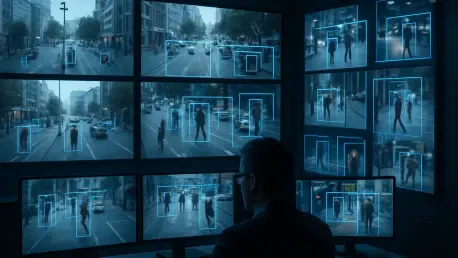

The rapid proliferation of high-definition surveillance networks across municipal landscapes has created an unprecedented data bottleneck that traditional human-monitored security centers can no longer manage effectively or reliably. As public sector agencies face an increasingly complex landscape of physical threats and limited personnel resources, the necessity for automated intelligence has shifted from a luxury to a fundamental requirement for civil safety. This evolving environment demands a sophisticated synthesis of hardware and software that can interpret vast streams of visual information in real time. The integration of advanced artificial intelligence into existing infrastructure allows government entities to transition from a reactive posture, where footage is reviewed only after an incident, to a proactive stance that identifies potential dangers as they emerge. By addressing the inherent limitations of human observation, these technological advancements provide a critical layer of oversight that ensures vital public spaces remain protected against a diverse array of modern security challenges.
Strengthening Public Infrastructure Through Strategic Procurement
Modernizing Government Acquisition Channels
The strategic partnership between Scylla AI and Carahsoft Technology Corp. establishes a streamlined pathway for federal, state, and local agencies to access high-tier security innovations without the typical bureaucratic delays. By serving as the Master Government Aggregator, Carahsoft facilitates the distribution of these specialized AI tools through established contracting vehicles such as NASA SEWP V, NASPO ValuePoint, and OMNIA Partners. This arrangement is particularly significant because it allows procurement officers to leverage pre-negotiated terms and compliant frameworks, ensuring that the latest threat detection capabilities can be deployed rapidly across diverse jurisdictions. The collaboration simplifies the logistical hurdles often associated with upgrading government technology, providing a unified point of entry for agencies seeking to modernize their defensive posture. This structured approach ensures that critical security updates are not stalled by administrative friction during periods of heightened operational necessity.
Furthermore, this procurement model encourages the adoption of software-defined security solutions that maximize the utility of existing camera installations. Rather than requiring a complete and costly overhaul of physical hardware, the partnership enables agencies to overlay sophisticated analytical layers onto their current surveillance systems. This methodology provides a cost-effective route for resource-constrained departments to achieve state-of-the-art monitoring capabilities while maintaining fiscal responsibility. By integrating these solutions through trusted channels, government entities can ensure that their security investments are both scalable and sustainable over the long term. The emphasis on utilizing established government contracts also guarantees that the technology meets rigorous vetting standards, providing peace of mind to stakeholders who are responsible for safeguarding public funds and citizen safety. This seamless integration of commerce and security technology represents a major step forward for public sector modernization.
Ensuring Data Sovereignty and Compliance Standards
A primary concern for any government agency adopting artificial intelligence is the preservation of data integrity and the strict adherence to cybersecurity protocols. The Scylla AI platform distinguishes itself through a proprietary air-gapped architecture that functions entirely on-premise, effectively eliminating the vulnerabilities often associated with commercial cloud dependencies. This design is specifically engineered to align with the stringent requirements of the Federal Information Security Management Act and the NIST cybersecurity framework, which are essential for maintaining trust in public institutions. By keeping sensitive video data within isolated local networks, agencies can mitigate the risks of external data breaches and unauthorized access by third-party entities. This level of control is vital for organizations handling classified or sensitive information, ensuring that security intelligence remains strictly within the authorized chain of command at all times.
Beyond mere isolation, the focus on data sovereignty ensures that government organizations maintain absolute ownership over their analytical outputs. In an era where data privacy is under constant scrutiny, the ability to process information locally without transmitting it to external servers provides a robust defense against cyber espionage and systemic leaks. This architecture allows for the implementation of advanced video analytics in environments where internet connectivity may be restricted or entirely prohibited for security reasons. The partnership emphasizes a “security-first” philosophy, where the protection of the network is as important as the detection of physical threats. This dual focus on physical and digital safety creates a comprehensive shield that protects both the people on the ground and the digital infrastructure that supports them. As agencies navigate the complexities of digital transformation, this commitment to high-level compliance serves as a foundational pillar for all future deployments.
Operational Excellence in Threat Detection
Enhancing Accuracy Through Advanced Analytics
One of the most significant hurdles in traditional surveillance is the overwhelming frequency of false positives, which can desensitize security personnel and lead to critical oversights. The implementation of Scylla’s AI technology addresses this issue directly by reducing false alarms by ninety-nine percent, a feat achieved through refined computer vision algorithms that can distinguish between benign movements and genuine threats. The platform demonstrates immense processing power, analyzing over six hundred billion video frames daily across hundreds of thousands of connected cameras. This massive scale of operation allows for real-time detection of weapons, unauthorized intruders, and suspicious behaviors without requiring constant human intervention. By filtering out the noise of everyday activity, the system empowers security teams to focus their attention on high-priority incidents, significantly improving response times and operational efficiency across large-scale installations and urban centers.
Building on this analytical precision, the technology provides a unified narrative of security intelligence that enhances situational awareness for the Department of Defense and the Department of Homeland Security. The ability to automatically identify incidents as they occur allows for a more coordinated response between different branches of law enforcement and emergency services. For instance, in high-traffic environments like airports or border crossings, the system can track potential risks across multiple camera feeds, providing a continuous loop of information to responders. This automation does not replace the human element but rather serves as a force multiplier, giving officers the tools they need to make informed decisions under pressure. The integration of these capabilities into public sector workflows ensures that the detection of a threat is immediately followed by actionable intelligence, closing the gap between identification and resolution in critical scenarios.
Securing Vital National Assets and Infrastructure
The application of high-performance video analytics extends deeply into the protection of critical national infrastructure, including energy grids, transportation hubs, and water treatment facilities. These sites are often vast and difficult to monitor manually, making them prime targets for unauthorized access or sabotage. The partnership between Scylla and Carahsoft ensures that these vital assets are monitored by a system capable of detecting anomalies with surgical precision. By deploying these tools at military installations and defense contractor sites, the government reinforces the perimeter of its most sensitive operations against both conventional and unconventional threats. The automated nature of the platform ensures twenty-four-hour vigilance, providing a consistent level of security that does not fluctuate based on staff fatigue or environmental conditions. This persistent oversight is essential for maintaining the continuity of essential services that the public relies upon daily.
Moving forward, government agencies should have prioritized the integration of air-gapped AI solutions to ensure that their physical security upgrades did not inadvertently create new digital vulnerabilities. Decision-makers were encouraged to evaluate their current surveillance footprints and identify key nodes where automated threat detection could have provided the greatest immediate impact on public safety. The successful deployment of these systems required a shift in strategy, where agencies moved away from passive recording and toward active intelligence gathering. By utilizing the procurement pathways established through this partnership, organizations bypassed the complexities of traditional tech adoption and implemented localized, high-speed analytics. This transition allowed for a more resilient national security posture, where the combination of reliable hardware and intelligent software worked in unison to safeguard the civilian population. Ultimately, the focus remained on creating a secure environment through the application of validated, federal-grade technological solutions.