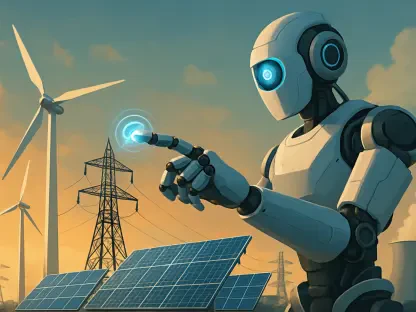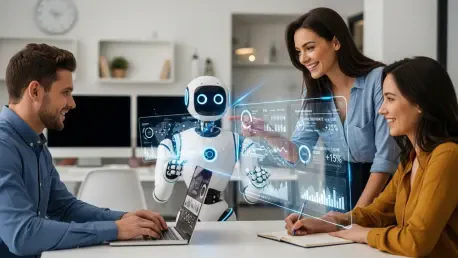

The world is changing. A modern office is no longer compiled out of just your human employees. Increasingly, they’re joined by artificial intelligence agents.
The reason behind it? Artificial intelligence has moved far beyond simple automation, now positioning artificial intelligence not merely as a tool but as a fully-fledged collaborative teammate.
To explore why adopting the technology matters for your competitive advantage, here’s an outlook on its impact: during a large-scale study, the Massachusetts Institute of Technology discovered that human-AI marketing teams created 60% greater productivity per worker. Moreover, the study highlighted that this leap in efficiency did not compromise the quality of the final output, confirming that the deliverables produced by these human-AI hybrid teams were on par with those from their human-only counterparts.
These findings are vital, as they’re shifting the strategic imperative from whether AI should be adopted to how it can be integrated effectively and risk-free into the fabric of collaborative workflows to unlock unprecedented levels of performance and creativity.
Redefining the Modern Marketing Team
The modern marketing team relies on technology and innovation to succeed and differentiate itself in 2026. And there’s a clear reason for it. Artificial intelligence delivers productivity boosts, enhanced efficiency, and faster, more focused project outcomes. Additionally, it decreases communication overhead and cuts down administrative “noise”, which often emerges in the creative process as points of friction that can heavily disrupt the workflow.
The outcome? A more available cognitive bandwidth that can be immediately reallocated to high-value activities, with more collective effort being placed directly into core content creation tasks. Consequently, this new approach leads to a decluttered, more strategic work environment where AI absorbs repetitive tasks, thereby liberating human talent to focus on innovation.
The integration of AI doesn’t just mean adding more robots to the room; it means reimagining the role of every team member. When AI handles data entry, report generation, audience segmentation, and even content drafts, marketers can spend more time refining brand voice, innovation planning, and customer engagement strategies. As a result, teams become more agile, strategic, and creatively fulfilled. AI lifts the constraints of time-consuming manual labor and allows humans to do what they do best: build emotional connections, tell compelling stories, and spark transformative ideas. Here lies AI’s real strength: its adaptability and integration across use cases, from data analysis to customer or team communication and content production.
One major application that’s rapidly emerging is hyper-personalization. Marketers now use AI to analyze billions of real-time data points to dynamically tailor everything from ad copies to recommended products. For example, a fashion brand can detect that a customer lives in a rainy region and automatically insert waterproof clothing suggestions into their daily email. In the past, personalized marketing at this level was impossible to scale manually, but artificial intelligence makes it effortless.
Content creation itself is another frontier revolutionized by artificial intelligence. Tools like Copy.ai produce headlines and social media captions based on brief descriptions and brand style guidelines. These solutions don’t replace the human element of creativity. However, they do accelerate ideation, offer a fresher perspective, and eliminate writer’s block. With them, marketing teams can develop complete content calendars at a faster speed, reserving human attention for voice consistency and brand storytelling.
Then there’s predictive analytics, where artificial intelligence predicts customer churn, recommends upselling opportunities, or flags behavioral shifts before they can manifest in metrics. Imagine a subscription-based software company, now capable of receiving alerts about customers likely to downgrade due to underutilization. That’s AI proactively guiding customer success strategies well before cancellations occur.
Finally, there’s the matter of real-time campaign optimization, which brings a new game-changer. Marketing teams no longer have to wait for quarterly reports to identify underperforming ads. Artificial intelligence continuously monitors click-through-rates engagement, spend, and more. More importantly, it can immediately reallocate budget to top-performing campaigns. In essence, AI becomes your marketing team’s 24/7 digital media analyst, operating at a speed and scale no human element could match.
Evolving Roles and Team Dynamics: What Comes Next?
The adoption of artificial intelligence across marketing teams has redefined not only workflows. It has changed how teams, roles, and work cultures operate. Traditional divisions such as copywriters, analytics, or campaign managers are evolving into more hybrid roles, reflecting the dual expertise needed for both creative and technical domains.
This shift encourages companies to invest not just in tools, but in people too, by upskilling employees to understand how to operate alongside AI, not just use it passively. Marketers now require proficiency in prompt engineering (knowing how to ask an AI partner the right questions), data literacy (interpreting insights generated by machine learning models), and ethical discernment (knowing when and how AI should be used for customer-facing messaging).
Organizations prepared to embrace the change will foster this cross-skilling mentality and prepare their workforce for the upcoming, AI-enabled years. Instead of positioning workers to fear disruptions, they will showcase artificial intelligence as a partner in progress, a co-pilot that enhances every project they work on and builds a more resilient, engaged, and future-proofed workflow.
In Closing
There’s no doubt left that artificial intelligence is changing the world. As marketing and business decision-makers look towards the future, they cannot ignore one core truth: artificial intelligence won’t replace marketers, it will empower them. That’s because AI excels at the tasks that hinder human productivity and slow down innovation: pattern recognition, campaign monitoring, and data analysis. In comparison, humans excel at imagination, empathy, cultural relevance, and ethical understanding.
Moving into 2026, your enterprise can’t afford to excel at one without the other. Bringing the two together is already transforming what marketing can achieve.
Rather than fearing the rise of machines, marketers should embrace a new professional identity: creative strategist, enabled by artificial intelligence. By putting technology and humanity in balance, companies can deliver campaigns that are not only smart and scalable, but also deeply resonant and ethical.
The future of marketing isn’t one defined by either man or machine. It’s man and machine, collaborating together to create campaigns that are faster, smarter, and more meaningful than anything else achieved in the sector’s history.