
The ability for machines to see and interpret the world has moved beyond the realm of science fiction, becoming a foundational technology that is actively reshaping the very fabric of global industries. This is not merely an incremental improvement in software but a paradigm shift where artificial intelligence has evolved from a computational tool into a perceptive entity, capable of learning from visual data and making autonomous decisions. This technological leap, fueled by advancements in machine vision, is unlocking unprecedented levels of efficiency and innovation across sectors from healthcare to transportation. However, as these systems become more integrated into our daily lives, they present a profound set of ethical challenges that demand careful consideration. The central question is no longer about what AI vision can do, but rather how its immense power can be harnessed responsibly to ensure it serves humanity in an equitable and beneficial manner. The path forward requires a delicate balance between pushing the boundaries of technology and establishing the robust ethical guardrails necessary to guide its development.
The Unprecedented Power of Seeing Machines
From Code to Comprehension The Technological Leap
The core of this technological revolution lies in the potent combination of machine vision and deep learning. This synergy has “supercharged” the ability of computers to process and understand visual information, moving far beyond the rudimentary object recognition of the past. At the heart of this advancement are complex neural networks, algorithms modeled loosely on the human brain, which are trained on vast datasets containing millions of images and videos. Through this intensive training, these systems learn to identify subtle patterns, understand context, and track movement with a precision and speed that far exceeds human capabilities. The crucial distinction in this modern era of AI is the transition from simply “seeing” pixels to genuinely “comprehending” the visual world. This deeper level of understanding is the essential precursor to effective and autonomous decision-making, allowing machines not just to identify an object but to understand its function, its relationship to other objects, and its potential implications within a given scenario.
This progress is consistently accelerated by the development of state-of-the-art models and more sophisticated learning mechanisms that are pushing the boundaries of what is possible. For instance, breakthrough models like Neural Radiance Fields (NeRFs) are transforming 3D reconstruction from 2D images, paving the way for hyper-realistic virtual and augmented reality applications that were previously unimaginable. In parallel, the rise of multimodal models, which can process and synthesize information from text, images, and audio simultaneously, signals a future where AI can interact with the world in a more holistic and human-like manner. The learning processes themselves are also evolving. Reinforcement learning, where an AI refines its choices through trial and error, is critical for advancing robotics and autonomous navigation. Furthermore, the development of continual learning ensures these systems can adapt and acquire new knowledge over time without suffering from “catastrophic forgetting,” a phenomenon where learning new information causes the loss of previously learned data.
Reshaping Industries AI Vision in Action
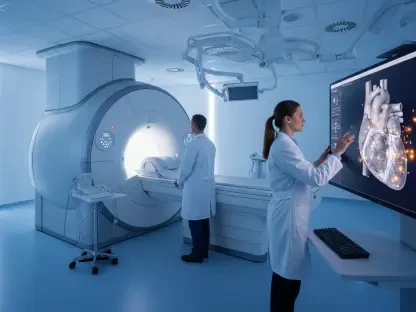
The transformative impact of AI vision is now being felt across a multitude of sectors, where it is being integrated to enhance efficiency, accuracy, and strategic insight. The medical field stands as a prime beneficiary of these advancements. Machine vision algorithms are becoming instrumental in the analysis of medical imagery, including X-rays, MRIs, and CT scans, to detect diseases like cancer with greater accuracy and at earlier stages than is possible with traditional methods. This capability not only accelerates the diagnostic process but also significantly reduces the potential for human error. Beyond diagnostics, deep learning models are being leveraged to develop personalized treatment plans based on a patient’s specific visual data, marking a significant step toward the era of precision medicine, where care is tailored to the individual rather than a one-size-fits-all approach. This technology is fundamentally changing how diseases are identified, managed, and treated on a global scale.
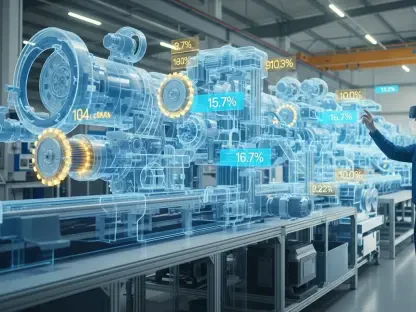
In industrial settings, AI-powered vision systems are a cornerstone of the Industry 4.0 movement, driving a new wave of automation and intelligence on the factory floor. These systems perform high-speed quality control inspections on production lines, identifying microscopic defects with an unparalleled level of consistency and speed that far surpasses human inspection. Beyond simple defect detection, AI vision enables predictive maintenance by continuously monitoring equipment for subtle visual signs of wear and tear. This allows for repairs to be scheduled proactively before a catastrophic failure occurs, which in turn minimizes costly downtime and maximizes overall productivity. Similarly, autonomous systems, from self-driving vehicles to sophisticated industrial robots, depend heavily on integrated AI vision. These systems utilize edge AI inference, processing data from sensors in real-time to make split-second decisions about navigation and obstacle avoidance without relying on a slow or intermittent cloud connection.
The Ethical Crossroads of an All-Seeing AI
Confronting the Shadows Bias Privacy and Over Reliance
Despite its immense potential, the rapid deployment of AI vision is accompanied by profound ethical and societal challenges that demand urgent attention. A primary concern is the risk of bias embedded within the AI training data. If the datasets used to train these models predominantly feature certain demographics while underrepresenting others, the decisions made by the AI can perpetuate and even amplify existing societal inequalities. This is a critical issue in high-stakes domains such as security, finance, and healthcare, where biased outcomes can have severe and lasting consequences. For example, a facial recognition system trained on a non-diverse dataset may perform less accurately for certain ethnic groups, leading to false identifications. Similarly, a medical diagnostic tool might be less effective for populations not well-represented in its training data. The consensus is that creating diverse, representative datasets is an essential, non-negotiable step toward ensuring fair and equitable AI systems.
Furthermore, the very nature of vision-based systems, which capture and analyze vast amounts of visual data, raises significant data privacy concerns. Much of this data can be personal and highly sensitive, necessitating the implementation of secure data handling protocols and transparent policies to protect individual privacy. Concurrently, the computational cost of training these large-scale AI models presents a formidable sustainability challenge due to their high energy consumption. The industry is now being pushed to develop more efficient algorithms and adopt sustainable computing practices to mitigate its environmental footprint. Alongside these issues, as AI systems become more autonomous, a critical debate has emerged regarding the appropriate balance between automation and human judgment. An over-reliance on AI for critical decision-making could diminish essential human oversight, potentially leading to unforeseen errors or the inability to handle novel situations not covered in the training data, underscoring the importance of maintaining a “human-in-the-loop.”
Building a Framework for Responsible Innovation
Addressing these multifaceted challenges requires a concerted and global commitment to the principles of responsible innovation. There is a clear and growing call for the establishment of robust ethical frameworks and international collaboration on AI governance. Across the world, governments and organizations are beginning to draft policies designed to regulate AI decision-making, particularly in high-stakes domains where the consequences of failure are most severe. This regulatory push includes the creation of clear guidelines for accountability, transparency, and safety. A central goal is to ensure that AI technologies are developed and deployed in a manner that is aligned with human values and benefits all of humanity, rather than a select few. This involves not only setting technical standards for performance and reliability but also fostering a culture of ethical consideration among developers, policymakers, and end-users alike to build a foundation of trust.
Ultimately, the journey of AI vision was one defined by this crucial interplay between technological advancement and ethical stewardship. The synthesis of advanced models, sophisticated learning mechanisms, and vast computational power endowed machines with the ability to see and comprehend with remarkable autonomy, driving unprecedented innovation across industries. However, the technology’s transformative potential was inextricably linked to profound challenges of bias, privacy, and the need for human oversight. The path forward that was navigated required a dual focus: continuing to push technological boundaries while simultaneously building robust ethical frameworks. The ultimate success of the AI vision revolution depended not only on the ingenuity of its creators but on the collective wisdom and foresight that was applied to its responsible governance, ensuring its power was directed toward a more equitable and prosperous future.