
In a landmark $7.75 billion deal, enterprise workflow giant ServiceNow is set to acquire cybersecurity firm Armis, a move that signals a strategic pivot far more ambitious than a simple expansion of its security portfolio. This acquisition is not merely about adding another tool to the arsenal; it represents a calculated and decisive step toward building a comprehensive operating system for the burgeoning era of enterprise Artificial Intelligence. As organizations increasingly deploy autonomous AI agents across their operations, the fundamental challenge shifts from creating AI to controlling it. ServiceNow is betting that by combining its automation prowess with total asset visibility, it can build the indispensable “AI Control Tower” that will govern, secure, and manage the complex, AI-driven corporate environments of tomorrow.
The Strategic Play: Unifying Visibility and Workflow
Bridging the Asset Visibility Gap
A foundational challenge for modern enterprises is the rapidly expanding “asset visibility gap,” a blind spot in security and management that grows with every new connected device. Organizations now contend with hundreds of thousands of digital and physical assets, ranging from traditional servers and cloud instances to a vast, often unmonitored ecosystem of cyber-physical systems. This includes everything from IoT sensors on a factory floor and smart building controls to connected medical equipment in a hospital. Conventional security platforms, which often rely on agents installed on endpoints, are ill-equipped to handle this diverse and sprawling landscape. They cannot see or manage the multitude of devices that cannot support a security agent, such as industrial controllers or specialized medical hardware. This invisibility creates dangerous exposure gaps, leaving unmanaged “shadow IoT” devices and operational technology vulnerable to attacks that can halt production lines, costing millions per hour, or compromise patient safety and sensitive data.
The core value of Armis lies in its specialized, agentless discovery technology, which is engineered to close this critical visibility gap by identifying and profiling every device connected to a network, regardless of its type or function. This capability provides the comprehensive, real-time asset inventory that serves as the prerequisite for any effective security, risk, or governance program. By continuously scanning the environment without requiring any software to be installed on the assets themselves, Armis creates a detailed and context-aware map of the entire digital and physical ecosystem. This includes understanding what a device is, what it does, and how it communicates with other assets. For enterprises, this level of insight is transformative. It moves them from a state of reactive defense against unknown threats to a proactive posture where security and IT teams have a complete and accurate understanding of their attack surface, allowing them to build a robust foundation for risk management and operational resilience in an increasingly interconnected world.
From Manual Triage to Automated Remediation
The true strategic potential of the acquisition is realized by integrating Armis’s deep contextual intelligence directly into ServiceNow’s powerful workflow automation engine. While ServiceNow’s existing Configuration Management Database (CMDB) excels at mapping known IT assets and their relationships to specific business services, it traditionally lacks the real-time, agentless discovery capabilities for the burgeoning world of cyber-physical systems. The combination of these two platforms promises to create a single, unified system of record that not only identifies every asset within the enterprise but also understands its business context, assesses its vulnerabilities, and prioritizes remediation efforts based on potential impact. This fusion of visibility and workflow intelligence is designed to provide answers to critical questions in real-time: What is this device, who owns it, what business service does it support, and what is the risk if it is compromised? This creates a powerful foundation for intelligent, risk-based decision-making at scale.
This integrated approach aims to fundamentally transform security operations, evolving them from a model where teams manually triage a deluge of alerts to a system of automated, closed-loop response. When the combined platform identifies a critical vulnerability on a device, it will not just generate another alert. Instead, it can automatically trigger a pre-defined workflow within the ServiceNow Platform. This could involve creating a high-priority ticket and assigning it to the appropriate IT or operational technology team, initiating a patching process through an endpoint management tool, or even quarantining the device from the network to contain a potential threat. By automating these crucial first-response actions, the platform can significantly improve mean time to resolution, reduce the burden on security analysts, and ensure that remediation efforts are consistently aligned with business priorities, thereby enhancing both operational efficiency and the organization’s overall security posture.
Building the Foundation for AI Governance
Market Positioning and Customer Considerations
This acquisition strategically positions ServiceNow as a dominant force in the global information security market, which is on a trajectory to reach $240 billion in spending by 2026. The growth is fueled by the dual pressures of an ever-expanding attack surface and the rise of sophisticated, AI-driven threats. By integrating Armis, ServiceNow not only strengthens its security credentials but also gains significant financial and strategic assets. Armis brings with it $340 million in high-growth annual recurring revenue and a prestigious customer base that includes 35 percent of the Fortune 100. This influx of expertise and market penetration is expected to more than triple ServiceNow’s total addressable market in the security sector, complementing its already successful $1 billion Security and Risk business. The move is a clear signal of the company’s intent to move beyond its core IT service management identity and become a comprehensive platform for managing all aspects of the modern digital enterprise, with security as a central pillar.
However, the trend toward platform consolidation presents enterprise technology buyers with a complex set of trade-offs. For organizations already heavily invested in competing security ecosystems from vendors like Palo Alto Networks, CrowdStrike, or Microsoft, the ServiceNow-Armis combination introduces new layers of complexity. These customers must carefully weigh the promised benefits of a unified, automated workflow against the practical difficulties of integration, the potential for reduced innovation velocity that can sometimes follow major acquisitions, and the inherent risks of vendor dependency. Furthermore, the realization of this integrated vision remains on a long-term horizon. With the transaction expected to close in late 2026 and meaningful platform integration estimated to take an additional 12 to 24 months, customers will need to meticulously evaluate the platform’s current capabilities against its future roadmap, making a strategic bet on a vision that is still several years from being fully realized.
Assembling the AI Control Tower
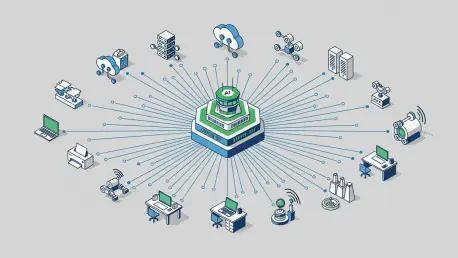
The Armis acquisition should not be viewed in isolation but as the capstone in a series of deliberate strategic moves made by ServiceNow throughout 2025. These actions were aimed at systematically building what its leadership has termed the “AI Control Tower,” a single, unified platform designed to onboard, govern, secure, and manage all AI systems and agents across an enterprise. This overarching ambition is about constructing the essential infrastructure layer for agentic AI. The strategy becomes clear when looking at the other key pieces ServiceNow has assembled. The acquisition of Moveworks provides sophisticated conversational AI, enabling users to interact with and automate complex workflows using natural language. The purchase of Veza, an identity security platform, adds a critical layer of governance for determining who and what has access to sensitive systems and data. Finally, integrations like the Agent2Agent (A2A) Protocol with systems such as Zoom’s AI agents and Google Agentspace enable cross-platform AI collaboration and interoperability.
A New Framework for AI Governance
By bringing these distinct capabilities together—workflow automation as its core, conversational interfaces from Moveworks, identity governance from Veza, and now comprehensive asset visibility from Armis—ServiceNow conspicuously constructed the foundational infrastructure required to manage the next generation of enterprise AI at scale. The Armis acquisition provided the essential visibility component, ensuring that as enterprises deployed autonomous AI agents, they possessed a complete and continuously updated inventory of every asset those agents could interact with. This comprehensive awareness enabled a new paradigm of intelligent trust and robust governance. The strategic assembly of these technologies was not merely a reaction to market trends; it was a proactive effort to build the core infrastructure needed for the future of AI-powered business operations, shifting the conversation from simply using AI to fundamentally managing it.