
The frantic rush of first responders navigating flooded streets and the anxious wait for aid are all-too-common scenes when natural disasters overwhelm a community’s defenses, often turning a manageable crisis into a widespread tragedy. For decades, emergency management has operated on a largely reactive basis, mobilizing resources only after the damage has begun. This traditional model, however, is being fundamentally challenged by a new wave of innovation that combines real-time data with institutional agility. In the municipality of Itagüí, Colombia, a groundbreaking initiative has provided a powerful demonstration of this shift, earning the nation’s highest honor for public sector excellence, the 2025 National High Management Award. By moving beyond conventional response tactics, the city developed a sophisticated system that has not only revolutionized its own risk management but has also established a compelling blueprint for how technology can be harnessed to protect citizens before a disaster fully unfolds. This success signals a pivotal change in public safety, suggesting that the future of disaster response lies in prediction and prevention.
A New Paradigm in Public Safety
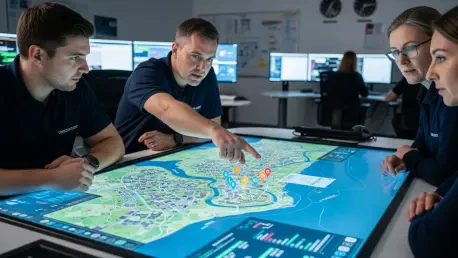
At the heart of Itagüí’s award-winning strategy is a real-time monitoring technology designed to provide unparalleled situational awareness during emergencies, particularly the severe rainy seasons that frequently threaten the region. Described as unique in the nation, the system operates as a live, dynamic map that georeferences and tracks emergency zones as events develop. During a critical incident like a flash flood or a landslide, this tool provides a unified operational picture for all response agencies. It allows officials in a central command center to visualize exactly which neighborhoods are being impacted, identify the most vulnerable populations, and pinpoint where resources are most urgently needed. More importantly, the system can map out safe and clear access routes for emergency vehicles, bypassing blocked roads or hazardous areas. This eliminates the guesswork and communication delays that can cost precious minutes, ensuring that personnel and equipment are deployed with maximum efficiency and precision when lives are on the line.
The tangible outcome of this technological integration is a dramatic optimization of emergency response times, a critical factor in saving lives and minimizing property damage. However, the project’s success extends far beyond the implementation of a new application. It involved a comprehensive reengineering of institutional processes to fortify the operational capacity of the city’s rescue organizations. This systemic overhaul ensured that the flow of information from the digital platform translated directly into faster, more coordinated action on the ground. By creating a shared and immediate source of truth, the system empowers emergency teams to make better-informed decisions under immense pressure. The initiative fostered a new level of inter-agency collaboration, breaking down communication silos and ensuring that help is dispatched proactively, often arriving before a dangerous situation escalates into a catastrophic event. It represents a holistic approach where technology serves as the catalyst for deeper, more effective institutional change.
From Reactive to Proactive Risk Management
The significance of Itagüí’s initiative radiates beyond its municipal borders, offering a scalable and replicable model for other towns and regions grappling with similar climate-related threats. The project embodies a crucial philosophical shift in risk management, moving away from a historically reactive posture toward a proactive and preventative framework. The system is not only used during active emergencies but also serves as a powerful analytical tool. By collecting and analyzing data on recurring trouble spots, officials can identify areas of chronic vulnerability with a high degree of accuracy. This data-driven insight allows for the strategic prioritization of preventative measures, such as clearing clogged drainage systems before a storm, reinforcing unstable slopes in landslide-prone areas, or conducting targeted public awareness campaigns. This forward-thinking approach transforms risk management from an emergency function into an ongoing, data-informed public service.
This proactive stance delivers profound long-term benefits, protecting both lives and municipal budgets. The economic principle is straightforward: preventing a disaster or mitigating its impact early is exponentially less costly than funding post-disaster recovery and reconstruction efforts. By investing in preventative infrastructure and maintenance based on predictive data, a municipality can avoid the immense financial and social costs associated with widespread damage. Itagüí’s project powerfully demonstrates that even smaller municipalities can leverage technology to develop intelligent and effective tools for public safety without requiring massive capital investment. It proves that innovation in governance, coupled with smart technology, can create a virtuous cycle where safer communities are also more financially resilient, providing a compelling case for governments everywhere to rethink their approach to the inevitable challenges of a changing climate.
Forging a Resilient Future
Itagüí’s journey from tradition to innovation demonstrated a fundamental truth about modern governance: integrating smart technology with deep institutional reform created a powerful new defense against natural threats. The project did more than simply implement a cutting-edge application; it fundamentally cultivated a culture of preparedness and foresight throughout the city’s public safety apparatus. By leveraging data not just for response but for prediction, the municipality moved beyond guesswork and into the realm of proactive risk management, permanently altering its relationship with recurring climate emergencies. This landmark achievement showcased that municipalities of any size could pioneer solutions that delivered tangible safety benefits and built profound trust with their citizens. The ultimate legacy of this initiative was not a collection of awards, but a more secure community and a proven, scalable model that illuminated a clear path for other regions aiming to forge their own resilience in an increasingly unpredictable world.