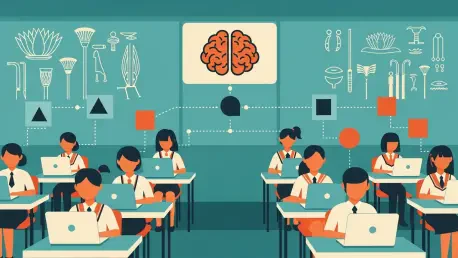

In an educational landscape increasingly grappling with the challenges of digital distraction, a groundbreaking comprehensive analysis of two teacher-led studies in Egypt showcases a transformative approach to integrating technology and emotional intelligence into the modern classroom. These pioneering initiatives, supported by the British Council’s Action Research Grants Program, are not merely attempting to coexist with students’ digital lives but are actively harnessing artificial intelligence and social media to foster greater focus, wellbeing, and academic achievement. By shifting the paradigm from viewing technology as a problem to leveraging it as a powerful pedagogical tool, these schools are providing a compelling new blueprint for how education can ethically and effectively prepare students for a complex, interconnected world, setting a new standard for student success that balances digital literacy with emotional maturity. The results from these projects are demonstrating that when schools strategically embrace the digital realities students face, the outcomes can be profoundly positive for the entire learning community.
From Distraction to Digital Literacy
At Ramses College for Girls in Cairo, a whole-school initiative led by high school principal Hala Tewfik directly confronted the pervasive influence of social media on student attention. Rather than implementing restrictive bans, the program aimed to align classroom practices with the digital environments students navigate daily. This multi-faceted strategy involved establishing a clear and comprehensive school-wide digital policy that provided a framework for responsible technology use. To support this, psychologist-led workshops were offered to students, focusing on critical topics such as cognitive health, memory, and the neurological effects of constant digital engagement. Concurrently, a robust professional development program was rolled out for educators, equipping them with the skills to design engaging, AI-supported lessons that integrate digital tools in a meaningful way. The fundamental objective was to move beyond simple technology integration and to actively teach students how to use these powerful tools ethically, responsibly, and for their own academic and personal benefit, transforming a potential source of distraction into a valuable learning asset.
The impact of this strategic approach was both immediate and transformative, yielding compelling evidence of a significant shift in student and teacher perspectives. The data revealed that an astonishing 100% of students demonstrated an increased awareness of how social media directly affects their ability to focus and retain information, a crucial first step in developing self-regulation. Furthermore, 90% of participating students reported that they had learned useful academic content through these newly integrated methods, validating the program’s core premise that educational value can be found within the platforms they use most. Perhaps most significantly, 80% of students came to recognize the inherent educational potential of social media, moving from a perception of it as purely for entertainment to seeing it as a resource for learning. This shift was mirrored among the faculty, with teachers expressing substantially greater confidence and competence in integrating AI tools and other digital technologies into their curriculum, fostering a more dynamic and relevant learning environment for all.
Integrating Emotional Intelligence for Academic Success
In a parallel study conducted at Salahaldin International School in Alexandria, research led by Mustafa Atas explored a different but equally vital component of student success: Social and Emotional Learning (SEL). This initiative provided powerful, quantifiable evidence demonstrating that cultivating emotional intelligence is a cornerstone of creating a positive, motivated, and high-achieving learning environment. The findings from this project were unequivocal, documenting that over 70% of students reported tangible improvements in both their academic performance and their overall self-confidence. This boost in self-belief and academic capability was directly correlated with a more engaged and collaborative classroom atmosphere. The study meticulously tracked participation rates, which rose by a remarkable 25%, indicating that students felt more comfortable, secure, and willing to contribute to classroom discussions and activities. Simultaneously, instances of behavioral conflicts within the classroom saw a significant decline, dropping by 30% as students developed better emotional regulation and interpersonal skills.
The overarching consensus emerging from these two distinct but complementary studies is that digital literacy and emotional development are not isolated pursuits but are intertwined forces essential for building balanced, resilient, and confident learners. The British Council has articulated that the success of these initiatives underscores a significant global trend in education: when educators are empowered with evidence-based tools, professional development, and strong leadership support, they can effectively address the most pressing modern challenges. The positive impact of such programs extends far beyond any single classroom, creating a ripple effect that enhances the entire school culture. These Egyptian projects are part of a much larger global education movement funded by the British Council, which is conducting similar action research in countries such as Pakistan, Zimbabwe, and Nigeria. This international collaboration aims to identify and share innovative, locally-driven solutions to the shared challenges facing education systems worldwide, with complete findings set to be presented on a global stage in December 2025.
A New Blueprint for Global Education
The work accomplished at Ramses College for Girls and Salahaldin International School provided a powerful and actionable model for educational systems worldwide. These initiatives demonstrated that by entrusting teachers with the resources and autonomy to conduct targeted research, schools could develop highly effective, context-specific solutions to contemporary problems like digital distraction and student disengagement. The data clearly showed that strategically integrating AI and SEL did not just improve isolated metrics but fostered a more holistic and supportive learning ecosystem. The students emerged not only with a greater capacity for academic work but also with enhanced self-awareness and emotional resilience. This evidence-based approach, which treated digital habits and emotional needs as integral parts of the educational experience, has since offered a compelling alternative to more traditional, restrictive policies. These projects established that the key to preparing students for the future lay in a balanced curriculum that valued both technological fluency and emotional intelligence as equally critical skills for success.