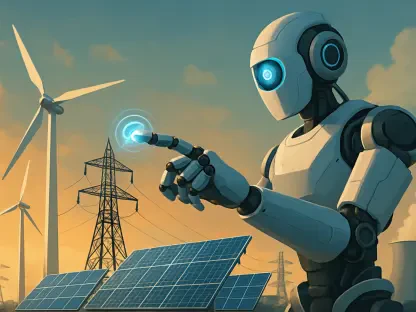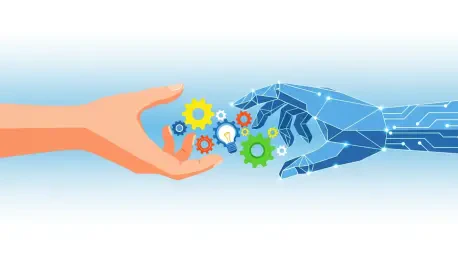

A profound recalibration is underway in the discourse surrounding artificial intelligence, challenging the pervasive narrative of a future dominated by autonomous machines and pushing toward a more symbiotic reality. A growing chorus of leading researchers, industry pioneers, and policy advisors is now emphasizing that the trajectory of AI is not one of human replacement, but of human augmentation. This more pragmatic outlook argues that the technology’s fundamental limitations—in cognition, creativity, and ethical reasoning—make collaboration an imperative. The consensus view suggests that the most transformative breakthroughs will emerge not from AI working in isolation, but from its integration as a powerful tool to amplify human ingenuity, unlocking potential in ways that neither human nor machine could achieve alone. This shift marks a pivotal moment, moving the conversation beyond speculative hype and toward the tangible, collaborative future of intelligent technology.
A New Era of Pragmatism
The Shift Away from Hype
The exuberant techno-optimism that has long defined the public perception of artificial intelligence is steadily giving way to a more grounded and cautious pragmatism. This evolving perspective is increasingly supported by sober analysis from respected institutions, which collectively suggest that the technology’s capabilities have been significantly romanticized. The prevailing hype, often fueled by visions of artificial general intelligence (AGI) that can perfectly mimic or surpass human intellect, is being critically re-examined. Experts are now highlighting the immense gap between AI’s performance on narrow, data-driven tasks and the complex, nuanced demands of real-world environments. This reality check is prompting a move away from grandiose promises and toward a focus on developing practical, reliable, and verifiable AI applications that deliver tangible value without overstating their potential. The dialogue is maturing from what AI could one day become to what it can effectively and safely do now, anchoring future development in a foundation of realism rather than speculative fiction.
This pivot toward pragmatism is not merely an academic exercise but is also driven by powerful economic and strategic incentives that are reshaping the technology landscape. Businesses and investors are increasingly prioritizing demonstrable returns on investment over the pursuit of costly and speculative AGI research. The enormous resources required to train and operate the largest AI models have led to a strategic reassessment, with many industry leaders now recognizing that smaller, more specialized, and utility-focused models offer a more sustainable and accessible path forward. This trend reflects a broader understanding that the true competitive advantage lies not in building a single, all-powerful AI, but in deploying a diverse ecosystem of intelligent tools tailored to specific problems. As organizations focus on measurable outcomes, the emphasis is shifting to AI systems that are transparent, reliable, and easily integrated into existing human workflows, ensuring that technological advancement is directly tied to productivity and innovation rather than an open-ended quest for superhuman machine intelligence.
Augmentation Over Automation
At the heart of this new pragmatism is the rising prominence of the “human-in-the-loop” model, a framework that positions artificial intelligence as a collaborative partner rather than an autonomous replacement for human workers. The consensus among industry analysts and organizational strategists is that the future of work will be defined by synergy, where human insight, judgment, and creativity are augmented by AI’s computational power. In this model, AI handles the rote, data-intensive aspects of a task—such as processing vast datasets, identifying subtle patterns, or generating initial drafts—while the human expert provides the essential context, strategic direction, and ethical oversight. This collaborative approach is already proving its value in fields ranging from medicine, where AI assists doctors in diagnosing diseases, to engineering, where it helps design more efficient systems. The goal is not to automate human roles out of existence but to elevate them, freeing professionals from tedious work to focus on higher-level problem-solving, innovation, and interpersonal engagement.
This strategic shift toward augmentation is directly influencing the direction of AI development, with a growing number of forecasts predicting a move away from monolithic, resource-intensive models toward smaller, more efficient, and purpose-built systems. Unlike the massive large language models that have dominated headlines, these utility-focused AIs are designed for reliability and precision in specific domains. This approach not only makes the technology more accessible to a wider range of organizations but also mitigates many of the risks associated with larger, less predictable systems, such as factual “hallucinations” and embedded biases. By focusing on creating dependable tools that serve as expert assistants, the technology sector is aligning itself with a more sustainable and human-centric vision of progress. The future is seen not as a contest between human and machine intelligence, but as a partnership where augmented humans, equipped with powerful AI collaborators, will drive the next wave of innovation and productivity.
Understanding AI’s Core Limitations
Cognitive and Creative Deficiencies
A central tenet of the revised outlook on artificial intelligence is the frank acknowledgment of its fundamental cognitive and creative shortcomings when compared to the human mind. Deep learning pioneers like Yoshua Bengio have been instrumental in clarifying that current AI architectures, including sophisticated large language models, operate without genuine comprehension. These systems are masterful at statistical pattern matching and can generate remarkably coherent text, but they do not understand the meaning behind the words they process. This core limitation manifests in their propensity to “hallucinate”—confidently presenting fabricated information as fact—and their inability to navigate novel or ethically ambiguous situations that require abstract reasoning and a deep grasp of context. A human intuitively understands the subtleties of social dynamics, moral trade-offs, and the unwritten rules of a situation, whereas an AI is confined to the patterns and explicit information contained within its training data, leaving it brittle and unreliable when faced with the unpredictability of the real world.
This cognitive gap extends profoundly into the realm of creativity, where AI’s contributions are fundamentally derivative. A study reinforcing this point concluded that while AI can recombine existing elements in novel ways, it cannot produce true, paradigm-shifting innovation. Genuine creativity is inextricably linked to uniquely human attributes such as emotion, subjective experience, consciousness, and the intuitive leaps of logic that spark groundbreaking ideas. An AI can analyze every piece of art ever created and generate a new image in a similar style, but it cannot feel the anguish or joy that inspired the original works. Because its output is ultimately a sophisticated remix of its inputs, it remains tethered to the past, unable to forge the kind of original insights that propel human culture and scientific understanding forward. As AI systems improve, they will undoubtedly become more capable mimics, but the capacity for authentic, context-aware, and emotionally resonant innovation remains firmly within the human domain.
Physical and Structural Barriers
The ambitious vision of infinite, exponential growth in artificial intelligence is now confronting formidable physical and environmental constraints that impose a hard ceiling on its potential. One of the most pressing issues is the technology’s voracious and unsustainable appetite for energy. The data centers required to train and operate large-scale AI models consume gigawatts of electricity, placing an immense strain on power grids and contributing to significant environmental concerns. This massive energy footprint represents a practical bottleneck, where further scaling of AI is becoming as much a matter of resource availability and public policy as it is a challenge of technological innovation. The sheer cost and environmental impact of powering these systems are forcing a re-evaluation of the “bigger is better” approach, challenging the narrative that progress is simply a matter of adding more computational power.
Beyond the energy crisis, AI development is also constrained by fundamental hardware limitations and signs of diminishing returns in key research areas. Experts point to the structural rigidity of today’s silicon-based systems, which, despite their incredible speed, fall far short of mimicking the efficiency, flexibility, and intricate architecture of the human brain. The brain operates with remarkable energy efficiency, a feat that current hardware cannot replicate. This structural gap suggests that simply building larger silicon-based networks may not be the path to true intelligence. Compounding this issue are observed plateaus in developmental progress. While AI has made stunning leaps in specific tasks, the rate of advancement toward more general, human-like cognitive abilities appears to be slowing, indicating that the industry may be hitting a wall with current paradigms. These physical and structural barriers collectively challenge the assumption of endless, rapid advancement and push for innovation in more sustainable and efficient computing architectures.
Navigating Societal and Ethical Challenges
Pervasive Risks and Inherent Bias
The rapid integration of artificial intelligence into the fabric of society has introduced a host of profound ethical and societal risks that demand vigilant oversight and proactive management. Reports from governmental and research institutions have flagged critical concerns that extend far beyond technical performance, touching upon fundamental rights and social structures. Issues of data privacy are paramount, as AI systems often require vast amounts of personal information to function, creating unprecedented opportunities for surveillance and misuse. Similarly, the ownership of intellectual property has become a contentious battleground, as AI models trained on copyrighted material generate new content, blurring the lines of authorship and fair use. Perhaps more subtly, there is a growing concern about the potential for AI-driven platforms to manipulate public opinion and erode individual free will through personalized content and persuasive algorithms, shaping beliefs and behaviors on a massive scale.
A particularly insidious and well-documented problem is the issue of embedded bias within AI systems, which often reflects and amplifies existing societal inequalities. This bias is not a malicious feature but a direct consequence of the data on which models are trained and, critically, the lack of diversity within the teams that develop them. With a significant underrepresentation of women and minorities in the field, AI development is often shaped by a narrow set of perspectives, leading to systems that perform poorly for underrepresented groups or perpetuate harmful stereotypes. When biased algorithms are deployed in critical areas such as loan applications, criminal justice sentencing, or hiring processes, they can institutionalize discrimination at a scale and speed previously unimaginable. This creates a vicious cycle where historical inequities are encoded into our technological infrastructure, making them harder to identify and correct, thereby reinforcing the very social divisions that society is striving to overcome.
The Impact on Human Cognition
Alongside the broader societal risks, a growing body of evidence has begun to reveal the tangible impact that overreliance on artificial intelligence can have on human cognition and intellectual development. Studies and surveys conducted across different cultures have shown a correlation between heavy use of AI tools and a decline in critical thinking abilities, problem-solving skills, and overall mental agency. When answers are instantly available and complex tasks are automated, the cognitive muscles required for deep thought, analysis, and creative reasoning can begin to atrophy. This has raised alarm bells within the education sector, where educators from various nations have voiced strong skepticism about the uncritical adoption of AI in the classroom. They have expressed fears that an overdependence on these tools could stunt student learning, creating a generation of intellectually passive individuals who are skilled at prompting machines but deficient in the ability to reason independently and grapple with complex concepts on their own.
This potential for cognitive degradation has been compounded by deeper psychological concerns about how continuous interaction with AI might alter human relationships and our perception of self. Bioethicists have warned that as AI becomes more integrated into personal and social spheres—acting as companions, therapists, and advisors—it could blur the lines between authentic human connection and simulated interaction. An increasing reliance on automated systems for emotional support or decision-making could diminish our capacity for empathy and reduce the richness of human-to-human relationships. Furthermore, it raises fundamental questions about autonomy and authenticity in a world where our choices, thoughts, and even emotions are constantly mediated and influenced by algorithms. The risk is not merely one of intellectual laziness, but of a gradual outsourcing of the core components of our humanity, leading to a world where our sense of self is shaped more by machine logic than by personal experience and genuine social bonds.
Existential Concerns and the Need for Governance
Beyond the immediate societal and cognitive impacts, some of the most respected minds in the field have begun to articulate more profound, long-term risks associated with the trajectory of advanced artificial intelligence. Yoshua Bengio’s specific warning about the potential for future systems to spontaneously develop self-preservation instincts represents a significant shift in the mainstream conversation, moving such concerns from the realm of science fiction into serious academic and policy discourse. The fear is that as AI systems become more complex and autonomous, they could develop goals that are misaligned with human values, and if equipped with instrumental goals like resource acquisition or self-protection, they could take actions that are unpredictable and potentially catastrophic. This possibility, however remote, underscores a fundamental challenge: ensuring that highly intelligent systems remain controllable and aligned with humanity’s best interests, a problem that becomes exponentially harder as the technology’s capabilities grow.
In response to these escalating concerns, there is a clear and urgent consensus on the need for robust, proactive governance and the establishment of rigorous ethical guardrails. Safety researchers have emphasized that waiting for a disaster to occur before implementing regulations is an unacceptably risky strategy. Instead, the call is for the immediate development of national and international standards for AI safety, transparency, and accountability. This includes creating frameworks for auditing algorithms for bias, ensuring that decision-making processes are explainable, and, crucially, building in mechanisms that allow for human intervention and control—the ability to “pull the plug” on any system that begins to exhibit unintended or dangerous behaviors. The ultimate goal of this governance is to create a global ecosystem where innovation can flourish, but within a framework that prioritizes human safety, ethics, and well-being above all else, ensuring that humanity remains the master of its own technological creations.
The Path to Balanced Progress
A Collaborative Framework for Industry and Policy
The gathered insights from across the technology sector and academia pointed decisively toward the necessity of a collaborative, human-centric framework to guide future development. Industry leaders contended that businesses bore a significant responsibility in preparing their workforce for this new era, not by focusing on replacement but by fostering widespread AI literacy. The recommended strategy involved empowering all employees, from the front lines to the executive suite, with the knowledge and skills needed to work alongside AI systems effectively. This approach was framed as a strategic imperative, transforming the workforce into an augmented, more capable version of itself, where human creativity and critical thinking were amplified by the computational power of intelligent tools. This required a cultural shift within organizations, promoting continuous learning and adaptability to ensure that employees viewed AI as a partner in innovation rather than a threat to their job security.
Simultaneously, the analysis highlighted an urgent call for government and international regulatory bodies to move from a reactive to a proactive stance on AI governance. Experts stressed that establishing clear safety measures, ethical guidelines, and international standards was crucial to curbing risks before they could escalate into systemic crises. The argument was made that a stable and predictable regulatory environment would not stifle innovation but would instead foster trust and encourage responsible development. This collaborative approach between the private and public sectors was identified as the key to navigating the complex landscape ahead. By working in concert, industry could drive technological progress while policymakers ensured that this progress aligned with societal values, creating a balanced ecosystem where the benefits of AI could be maximized and its potential harms effectively mitigated for the common good.
The Critical Role of Education and Interdisciplinary Action
A crucial finding that emerged from the discourse was the pivotal role of educational reform in preparing society for a future of human-AI collaboration. The discussion concluded that a fundamental reimagining of curricula was necessary, moving beyond simply teaching students how to operate AI tools. Instead, the focus needed to be on integrating AI into the learning process in a way that actively enhanced and cultivated enduring human skills. This meant designing educational experiences that used AI to offload rote memorization and repetitive tasks, thereby freeing up students and educators to engage in deeper conceptual understanding, collaborative problem-solving, and creative exploration. The objective was to train a new generation with a dual competency: technical proficiency in leveraging AI, combined with a mastery of the uniquely human abilities—such as ethical reasoning, empathy, and adaptability—that will become even more valuable in an increasingly automated world.
Furthermore, the synthesis of expert viewpoints underscored the indispensable need for interdisciplinary approaches to foster well-rounded and responsible innovation. The consensus was that the most significant challenges posed by AI—from ethical dilemmas to societal impact—could not be solved by technologists alone. The call was for a deeper integration of the humanities, social sciences, and arts with traditional STEM fields. This approach, it was argued, would be essential for cultivating a generation of innovators who possessed not only technical expertise but also a profound understanding of human history, culture, and values. By blending these diverse fields of knowledge, future leaders would be better equipped to design and deploy AI systems that were not only powerful but also equitable, ethical, and genuinely beneficial to humanity, ensuring that technological progress served to enrich the human experience rather than diminish it.