
A stark ultimatum for the artificial intelligence industry was delivered from the global stage of the World Economic Forum, where Microsoft CEO Satya Nadella declared that AI is standing at a pivotal crossroads and facing an urgent need to justify its immense resource consumption and continued development. The central argument of his address was that the technology must now deliver concrete, measurable improvements across critical societal sectors or risk squandering public support and investment. This is no longer a conversation about theoretical potential; it is a demand for tangible results. For AI to secure its future, it must prove its worth in practical applications that enhance healthcare outcomes, revolutionize educational methods, and bolster the overall economic competitiveness of nations. The era of speculative promise is yielding to a period of accountability, where the true value of artificial intelligence will be judged not by its technical sophistication but by its direct and positive impact on human lives and global productivity.
The Imperative for Adoption and Integration
For artificial intelligence to transition from a promising concept to a foundational economic driver, both corporations and the workforce must proactively embrace its integration into daily operations. Nadella emphasized that the responsibility for fostering this change lies with all stakeholders, as organizations that hesitate to adopt AI risk becoming obsolete in a rapidly evolving marketplace. Similarly, individuals must actively pursue AI-related skills to remain competitive and navigate the shifting landscape of the labor market. This dual adoption strategy is crucial for unlocking the productivity gains that AI promises. The technology’s potential cannot be realized if it remains siloed within tech departments; it must become an accessible tool that empowers employees across all functions. The call to action is clear: engagement with AI is no longer optional for those who wish to thrive in the modern economy, and the future belongs to those who learn to leverage its capabilities effectively.
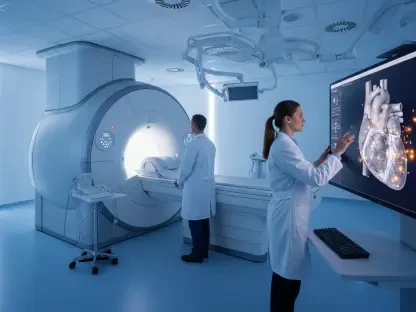
Despite the urgent need for adoption, significant infrastructural hurdles are currently impeding the widespread deployment of AI, creating a bottleneck that has led to hardware scarcity and rising costs. Nadella highlighted the critical need for a “ubiquitous network of energy and tokens” to power the next wave of AI development, acknowledging that the current infrastructure is struggling to keep pace with demand. These challenges, however, do not diminish the technology’s potential value. As a compelling example of its immediate benefits, he described how medical professionals can use AI to automate administrative duties, such as transcribing patient notes. This application frees up valuable time, allowing doctors to focus more on direct patient care and ultimately improve the efficiency and quality of the entire healthcare sector. This illustrates that even amidst systemic challenges, targeted AI integration can deliver profound, practical benefits that justify the investment and effort required for its implementation.
Bridging the Gap Between Promise and Reality
While the vision for an AI-powered future is optimistic, it is tempered by the current reality of its performance and a growing sense of skepticism among business leaders. A significant disconnect persists between the theoretical promise of artificial intelligence and its practical impact on business outcomes. This gap was starkly illustrated by a recent report, which found that an overwhelming 95% of organizations have not yet achieved a significant return on their substantial AI investments. This statistic underscores a widespread challenge: many companies are struggling to translate their AI initiatives into tangible financial or operational gains. The initial enthusiasm is now being met with a more critical evaluation as executives question whether the technology can truly deliver on its lofty promises. The industry is facing a critical moment where it must demonstrate that AI is more than just a costly experiment and can provide genuine, measurable value.
In his concluding remarks, Microsoft’s CEO strongly defended the ultimate potential of artificial intelligence to serve as a catalyst for genuine global economic growth, pushing back against the notion that its impact is confined to a speculative bubble. He insisted that the true measure of AI’s success must be its ability to generate a real, measurable increase in productivity that extends far beyond the technology sector itself. The immense investments currently being poured into infrastructure, while necessary, cannot be the endgame. For AI to fulfill its purpose, its influence must be felt across the entire economic landscape, enhancing efficiency, creating new opportunities, and fostering sustainable growth worldwide. The challenge laid out was to ensure that this technological revolution translates into widespread prosperity rather than remaining a self-contained cycle of investment and hype.