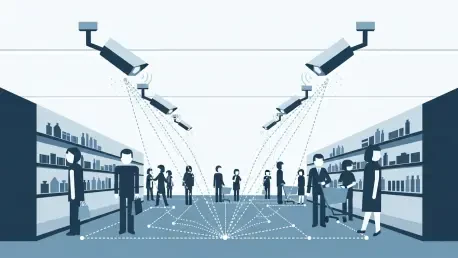

The familiar experience of browsing through store aisles is undergoing a silent transformation, with artificial intelligence now serving as an unseen security guard in an increasing number of retail environments. While this technological leap aims to curb theft and protect employees, a significant and growing chasm is opening between the retailers implementing these systems and the very consumers they serve. A new analysis reveals a stark reality: a majority of shoppers, nearly three-fifths, express unhappiness with retailers using AI to track their movements for security purposes. This sentiment is not just a vague feeling of unease; it is a pointed concern about specific technologies and the implications for personal privacy. The rapid adoption of these sophisticated surveillance tools is occurring largely under the public’s radar, creating a climate of potential distrust that threatens to undermine the fundamental relationship between a business and its customers, even as retailers justify the measures as necessary for survival in a challenging economic landscape.
The Growing Divide Between Retailers and Shoppers
A Pervasive Sense of Unease
The discomfort shoppers feel is palpable and directed at the core technologies being deployed to watch them. Over half of all consumers, 52% specifically, report feeling uneasy about the presence of AI-enabled CCTV and body cameras, tools that are becoming more common on the retail floor. This apprehension persists even when the technology’s stated purpose is a noble one, such as protecting store employees from verbal and physical abuse. The issue appears to stem from the impersonal and constant nature of the surveillance. A human security guard is a visible presence, but an AI system is an invisible, all-seeing eye that logs and analyzes every movement, turning a casual shopping trip into a monitored event. This shift fundamentally alters the atmosphere of a store from a welcoming public space to a controlled environment, which can make customers feel like suspects rather than valued patrons. The psychological impact of being continuously tracked can stifle the leisurely browsing that often leads to discovery and impulse purchases, potentially impacting a retailer’s bottom line in ways that are not immediately obvious.
This persistent surveillance creates a potential “chilling effect” on natural consumer behavior, breeding a sense of caution that is antithetical to a positive shopping experience. When customers are aware they are being algorithmically scrutinized, they may alter their patterns, avoid certain aisles, or shorten their visit to minimize the duration of monitoring. This can lead to a more transactional, less experiential visit, eroding the brand loyalty that retailers spend millions to cultivate. The very technology intended to secure assets could inadvertently devalue the store’s greatest asset: its relationship with the customer. Furthermore, the unease extends beyond simple tracking. Questions arise about what the AI is trained to look for. Does it flag individuals based on their attire, their race, or how long they linger in front of a high-value item? The lack of transparency about these algorithmic biases feeds a narrative of suspicion and potential discrimination, further alienating a customer base that is already wary of the ever-expanding reach of technology into their daily lives.
The Unseen Threat to Personal Data
Compounding the general sense of unease is a significant information vacuum, as a staggering 57% of consumers are entirely unaware that AI-driven security systems are even operating in the stores they frequent. This lack of awareness points to a critical failure in transparency on the part of retailers. The deployment of such powerful monitoring technology without clear disclosure or consumer consent raises profound ethical questions. While stores post general notices about CCTV, these often fail to convey the sophisticated analytical capabilities of modern AI systems, which can go far beyond simple recording to include facial recognition, gait analysis, and behavioral prediction. When customers eventually learn about the extent of this surveillance, often through media reports rather than from the retailers themselves, the result is a feeling of betrayal. This discovery can shatter trust far more effectively than any single act of theft, as it suggests a fundamental disregard for the customer’s right to privacy and informed consent in a commercial space.
Beyond the immediate privacy invasion, 53% of shoppers harbor deep-seated worries about how their personal data is being handled, a fear that is greatly amplified by the recent wave of high-profile cyber-attacks that have plagued the retail sector. The data collected by AI security is not merely video footage; it is a rich tapestry of behavioral and, in some cases, biometric information. Shoppers are right to question where this sensitive data is stored, who has access to it, and with whom it might be shared. Is a customer’s shopping path and dwell time in front of certain products being sold to third-party data brokers? Could a facial recognition profile be cross-referenced with other databases? These are no longer hypothetical concerns. The potential for such data to be breached, misused, or sold creates a long-term risk for consumers that extends far beyond the walls of the store. For retailers, a single data breach involving this kind of intimate customer information could trigger a catastrophic loss of public trust and legal repercussions.
Bridging the Gap with a Human-Centric Approach
The Irreplaceable Value of Human Interaction
Despite the technological arms race in retail, the data overwhelmingly shows that consumers continue to place a high value on human connection. An impressive 84% of shoppers still rely on store employees for assistance, whether it is for locating an item, getting a product recommendation, or resolving an issue. Furthermore, 77% explicitly state they prefer speaking with a person rather than interacting with technology for help. These figures serve as a powerful reminder that efficiency and security are not the only metrics of a successful retail operation. The “human touch”—the empathy, nuanced understanding, and personal connection offered by a knowledgeable and friendly employee—remains a key differentiator that AI cannot replicate. In an increasingly automated world, the ability to have a positive, face-to-face interaction can be the deciding factor that builds brand loyalty and encourages repeat business. Retailers who overlook this fundamental aspect of the customer experience in their pursuit of technological solutions do so at their own peril.
The preference for human help highlights the limitations of AI in a customer-facing role. While an AI kiosk can provide stock information, it cannot gauge a customer’s frustration, offer a creative solution to a complex problem, or build the kind of rapport that makes a shopper feel truly valued. Human employees excel at interpreting non-verbal cues, providing personalized advice based on a real conversation, and de-escalating tense situations with genuine empathy. It is these qualitative interactions that transform a simple transaction into a memorable and positive experience. Therefore, the most effective strategy is not to replace humans with AI, but to use AI to augment human capabilities. By automating mundane background tasks, technology can free up staff to focus on what they do best: engaging with and assisting customers. This symbiotic relationship ensures that the store remains an efficient and secure place to shop without sacrificing the essential human element that customers clearly and consistently demand.
A New Blueprint for Trust and Technology
The period of rapid, uncommunicated AI deployment in retail ultimately underscored a critical lesson: technology implemented without a clear human purpose created more problems than it solved. The retailers who successfully navigated this challenge were those who shifted their focus from mere surveillance to empowerment. They recognized that AI’s greatest potential was not as a replacement for their staff, but as a tool to make their human teams faster, smarter, and more responsive to customer needs. This involved using AI to streamline incident reporting so staff could spend less time on paperwork, to manage stock levels so shelves remained full, and to facilitate seamless communication between employees and security teams during critical events. By framing the technology as a support system for their people, these businesses fostered a more positive internal culture and were able to better articulate the benefits of the systems to the public, moving the narrative away from one of suspicion and toward one of service.
Ultimately, the successful integration of AI security systems depended less on the sophistication of the algorithms and more on the retailer’s commitment to transparency and trust. The most forward-thinking companies initiated open dialogues with their customers, using clear in-store signage and digital communications to explain what technologies were in use, what data was being collected, and, most importantly, how it was being used to create a safer and better shopping environment for everyone. They established clear data privacy policies and demonstrated that the information was used responsibly to enhance the human experience, not just to monitor it. It became evident that building customer confidence was as vital an investment as the technology itself. The path forward was forged not by the businesses that watched their customers most closely, but by those who respected them most deeply, proving that trust was the ultimate currency in the new age of retail.