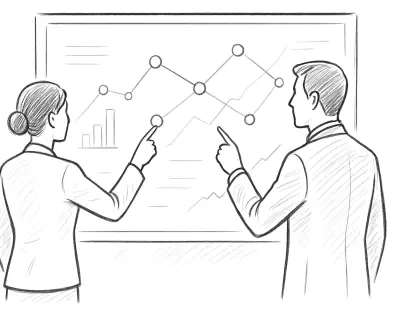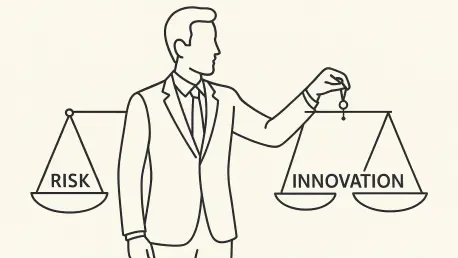

As artificial intelligence transitions from isolated pilot programs into core business workflows, it is increasingly influencing decisions that were once the sole province of human judgment. In the high-stakes corporate environment of 2026, these systems are no longer merely experimental tools but are active participants in customer engagement, financial forecasting, and strategic planning. This shift necessitates a move away from viewing AI through a purely technical lens. Instead, chief executive officers must treat AI governance as a fundamental pillar of organizational design and risk management. The challenge lies in the fact that while technology teams can optimize for model accuracy and security, they cannot unilaterally decide the risk appetite of the firm or determine which ethical boundaries should never be crossed. As regulatory bodies like the European Commission begin enforcing strict transparency and oversight requirements under the AI Act as of August 2, 2026, the responsibility for these decisions rests squarely on the shoulders of executive leadership. Effective governance now provides the necessary framework to ensure that machine-assisted decisions remain aligned with corporate values and legal obligations.
1. Classifying Levels: The Hierarchy of Machine Authority
Moving beyond simple software access is the first step in sophisticated AI governance. In 2026, organizations must distinguish between who can use a tool and what authority that tool is permitted to exercise within a workflow. A robust model separates AI use into distinct tiers, beginning with assistance and recommendation levels. At the assistance level, AI functions as a sophisticated draftsperson, summarizing complex contracts or organizing data sets, while the human user retains full ownership and responsibility for the final output. In the recommendation tier, the system goes a step further by proposing a specific course of action, such as ranking job candidates or suggesting a credit limit. However, the governance framework ensures that an accountable human must actively intervene to approve or reject the machine’s suggestion before any real-world action occurs. This prevents the “black box” effect where decisions are made without a clear audit trail of human intervention.
The more advanced tiers of authority require even more rigorous oversight and predefined guardrails to manage potential fallout. Guided action allows the AI to execute tasks autonomously but only within strict, pre-set financial or operational boundaries. For instance, an automated trading algorithm or a dynamic pricing engine might be permitted to make adjustments as long as they stay within a five percent variance and have immediate reversal protocols in place. Finally, there is the category of reserved decisions, where automation is strictly prohibited regardless of the technology’s capability. These are high-stakes, often irreversible choices involving significant strategic shifts, sensitive ethical dilemmas, or major human impacts that must remain the sole province of human leaders. By clearly defining these levels of authority, the CEO ensures that the organization maintains control over its autonomous systems rather than allowing them to expand into areas where the risks outweigh the benefits.
2. Assigning Owners: Placing Accountability With Business Leaders
A common failure in modern enterprises is the dilution of responsibility when an automated system leads to a negative outcome. To combat this, every material AI use case must have a named business owner rather than being treated as a generic IT project. This owner is not required to be a computer scientist, but they must be deeply familiar with the business process the AI is influencing. Their role involves understanding the specific purpose of the application, the acceptable range of error, and the exact protocols for escalation if the system behaves unexpectedly. When accountability is anchored in the business unit—whether it be finance, marketing, or human resources—the focus shifts from technical performance to business outcomes. This ensures that when an AI-assisted decision affects a customer or a financial statement, there is a clear individual responsible for explaining the rationale and managing the consequences.
Furthermore, business-side ownership prevents the dangerous trend of outsourcing strategic accountability to third-party software vendors or internal technology departments. While the IT function remains essential for maintaining the infrastructure and ensuring data integrity, the actual decision to deploy an AI model for a specific business function is a management choice. Business leaders are best positioned to evaluate the trade-offs between speed, cost, and the potential for reputational damage. By requiring these leaders to sign off on the deployment and ongoing monitoring of AI tools, the organization creates a culture of mindfulness. This approach also encourages business owners to stay informed about the limitations of the technology they are using, fostering a more realistic understanding of what AI can and cannot achieve within their specific operational context during the 2026 to 2028 planning cycle.
3. Deploying Triggers: Utilizing Risk-Based Escalation Systems
Effective governance in 2026 avoids the trap of a universal approval bureaucracy that can stifle innovation and slow down the adoption of low-risk tools. Instead, successful companies utilize a system of risk-based escalation triggers to focus executive attention where it is most needed. These triggers are often based on specific thresholds, such as the total financial exposure of a decision, the use of sensitive personal data, or the potential impact on customer safety. For example, an AI system used to draft internal company newsletters might operate under standard operational guidelines with minimal oversight. In contrast, a model used to determine medical insurance premiums or to manage critical supply chain logistics would trigger an automatic, high-level review by legal, risk, and executive teams. This tiered approach allows for rapid experimentation in low-stakes areas while maintaining an ironclad grip on high-consequence applications.
This principle of concentrated attention mirrors existing best practices in capital allocation and cybersecurity management. By defining these thresholds clearly, the organization provides employees with a predictable roadmap for AI deployment. It removes the ambiguity that often leads to “shadow AI,” where departments bypass official channels to avoid perceived red tape. When the rules for escalation are transparent and based on objective risk metrics, teams are more likely to comply with the governance framework. Moreover, this system allows the board of directors and the CEO to receive reports that are focused on the most critical risks, rather than being overwhelmed by a list of every minor automation project in the company. This ensures that the leadership’s time is spent debating the strategic implications of high-risk AI rather than getting bogged down in the minutiae of routine software updates.
4. Institutionalizing Oversight: Making Human Review Substantive meaningful
The concept of “human-in-the-loop” is often used as a safety net, but without substantive implementation, it can become a ceremonial rubber stamp. In 2026, effective human oversight requires that the individuals responsible for reviewing AI outputs have the necessary time, context, and authority to challenge the machine. Automation bias is a documented phenomenon where people begin to defer to automated suggestions simply because the system is correct most of the time. To counteract this, organizations must provide reviewers with the evidence the AI used to reach its conclusion and the confidence intervals associated with that output. If a reviewer is expected to process hundreds of AI recommendations per hour, the oversight is likely illusory. True governance involves structuring workflows so that human intervention is a meaningful check on the system’s logic, particularly in cases where the AI is operating near its performance limits.
To ensure that this oversight remains active and effective, companies should periodically test the independence of their human reviewers. This can involve inserting known errors or edge cases into the AI’s output to see if the human catches them, or conducting “red team” exercises to see how the system behaves under pressure. The goal is to move from a state of blind trust to one of informed skepticism. Reviewers must be empowered with an explicit “intervention right,” meaning they have the authority to halt an automated process without fear of administrative reprisal. This is especially vital as AI becomes more deeply embedded in the everyday tools of the modern workforce. As these models become less visible, the risk increases that their biases and errors will become institutionalized habits. By formalizing the review process, the CEO ensures that human judgment remains the ultimate failsafe for the organization’s most important decisions.
5. Creating Feedback: Building a Continuous Learning Framework
AI governance should not be viewed as a static set of rules but as a dynamic learning system that produces actionable evidence. For every high-impact AI application, the organization must maintain a comprehensive audit trail that documents the system version, the specific data inputs used, the human who approved the action, and the eventual outcome. This documentation is not merely for the purpose of regulatory compliance; it serves as the foundation for organizational learning. By analyzing this data over time, executives can identify patterns of failure or success that might otherwise go unnoticed. If a particular model consistently produces errors in a specific demographic or market segment, the learning loop allows the company to adjust its prompts, update its training data, or even retire the model before a minor issue scales into a major crisis.
This continuous feedback loop transforms governance from a restrictive layer into a strategic asset. When the company encounters an “edge case”—a situation the AI was not trained to handle—the system should be designed to escalate that case to a human expert and log the resolution for future model refinement. This ensures that the organization becomes smarter with every interaction, gradually expanding the boundaries of what the machine can safely handle. Furthermore, this evidence trail is invaluable during audits or legal challenges, as it demonstrates that the company exercised due diligence and maintained control over its technology. In the 2026 landscape, where public trust in AI is often fragile, the ability to reconstruct the rationale behind a machine-assisted decision is essential for maintaining a positive brand reputation and ensuring long-term operational resilience.
6. Immediate Action: The 30-Day Executive Governance Roadmap
Chief executives can begin establishing a rigorous governance foundation within a single month by following a structured action plan. The first ten days should be dedicated to creating a comprehensive inventory of all material AI use cases across the company, going beyond a simple list of approved software to look at how different departments are actually utilizing the technology. This is followed by a ten-day period of classification, where each application is mapped against the levels of authority and risk thresholds discussed previously. During this phase, leadership must identify which processes are assistive and which have been allowed to operate with a degree of autonomy. This clarity is essential for identifying “hidden” risks where AI might be making decisions without the knowledge of the executive team, allowing for immediate corrective action before these projects scale further.
The final ten days of the roadmap involve formalizing accountability and setting up the recurring review structures that will sustain the governance framework. This includes appointing specific business owners for high-impact use cases and defining the minimum documentation standards required for logging and auditing. By the end of the thirty-day period, the executive team should have established a monthly AI risk forum where incidents, exceptions, and new deployments are reviewed. This rapid implementation does not aim to solve every technical challenge, but it provides the leadership with the visibility and control necessary to move forward with confidence. It signals to the entire organization that while speed and innovation are valued, they will not be pursued at the expense of accountability. This roadmap ensures that the organization’s AI strategy is proactive rather than reactive, providing a clear path for sustainable growth through the end of 2027.
7. Strategic Realization: Turning Governance Into an Accelerator
The transition toward robust AI governance in 2026 marked a significant turning point for modern enterprises. Organizations that moved beyond seeing AI as a mere technical upgrade and began treating it as a strategic design challenge realized substantial competitive advantages. By the middle of the year, it became evident that the companies with the most successful deployments were not necessarily those with the most advanced models, but those with the clearest rules for human-machine interaction. These leaders replaced vague “human-in-the-loop” promises with specific decision rights and intervention protocols. They moved away from centralized approval bottlenecks and adopted risk-based thresholds that allowed low-impact experimentation to flourish while keeping high-stakes operations under strict control. This balanced approach fostered a culture of responsible innovation where teams felt empowered to use AI within clearly defined boundaries.
As the enforcement of international regulations tightened, the evidence trails and accountability frameworks established by forward-thinking CEOs served as a critical defense against legal and reputational risks. The shift from IT-led projects to business-owned outcomes ensured that machine intelligence remained a tool for human goals, rather than an uncontrollable force driving the company toward unforeseen consequences. The implementation of continuous learning loops allowed these organizations to refine their systems based on real-world feedback, turning early failures into the data points needed for future success. Ultimately, the integration of AI into core workflows succeeded because leadership prioritized the governance of authority over the simple granting of access. This strategic foundation provided the stability necessary to scale intelligent systems across the global enterprise, transforming governance from a perceived hurdle into the very architecture that made rapid, responsible growth possible.