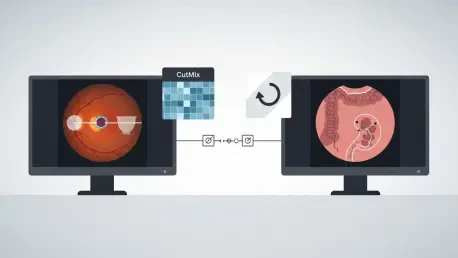

What if the key to transforming enterprise artificial intelligence lies not in colossal cloud servers, but in the unassuming devices already sitting on desks and in pockets? This provocative idea is at the heart of a groundbreaking shift led by Liquid AI, an MIT spin-off that has captured the

Imagine a scenario where millions of dollars are poured into cutting-edge technology—AI, cloud services, and advanced applications—yet a significant portion of that investment fails to deliver expected returns. This is not a hypothetical situation but a reality for many organizations grappling with

Setting the Stage for Transformation Imagine a business landscape where IT systems don't just follow commands but think, adapt, and act independently to drive revenue and innovation. This is the reality unfolding across North American enterprises as agentic AI—artificial intelligence capable of

Laurent Giraid has spent years at the intersection of AI systems and the guardrails that make them safe and useful. Today, he’s focused on helping enterprises move beyond proofs of concept to production, where resilience, security, and governance determine real outcomes. In this conversation, we

When a disease target offers nothing but a flat, slippery surface that laughs at small molecules and shrugs off antibodies, discovery teams usually back away or burn years on expensive guesswork that seldom pays off. BoltzGen, an open-source model from MIT’s Jameel Clinic, steps directly into that

Imagine a world where advanced AI operates directly on a personal computer, eliminating the need to send sensitive data to distant servers while still delivering top-tier performance, and Microsoft has turned this vision into reality with Fara-7B, a groundbreaking 7-billion parameter model designed