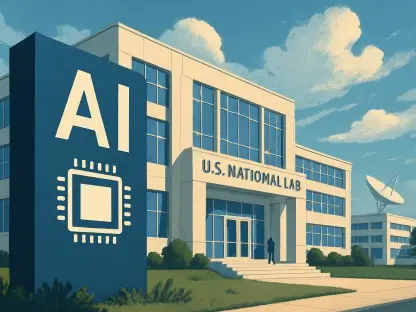

As the year 2025 begins, a significant shift is occurring in the realm of employment practices, driven by the increasing use and reliance on Artificial Intelligence (AI) technology. Recognizing the potential of AI to revolutionize the job market while also presenting risks of bias and

The Federal Trade Commission (FTC) has initiated an investigation into AI chatbots, particularly scrutinizing those on the Character.ai platform, following a lawsuit from concerned parents. These parents have alleged that their teenagers were exposed to hypersexualized and misleading content

Artificial intelligence (AI) is rapidly advancing, bringing both excitement and concern. As AI technologies like ChatGPT, Gemini, and Dall-E become household names, the debate over how to regulate these innovations intensifies. Policymakers at both federal and state levels are grappling with the

The Vatican City State has taken a significant step in the field of artificial intelligence (AI) governance by introducing its first decree titled "Guidelines on Artificial Intelligence," which took effect on January 1. This decree, established by the Pontifical Commission of Vatican City State,

Artificial intelligence (AI) is rapidly transforming industries and societies, offering unprecedented opportunities and presenting significant challenges. As we look ahead to 2025, the governance of AI is expected to evolve in response to technological advancements, ethical considerations, and

Generative AI is poised to revolutionize numerous industries in 2025, ushering in a new era of productivity, creativity, and operational efficiency. The anticipated impact of this technology spans various sectors, including media, education, business, and cybersecurity. Drawing insights from