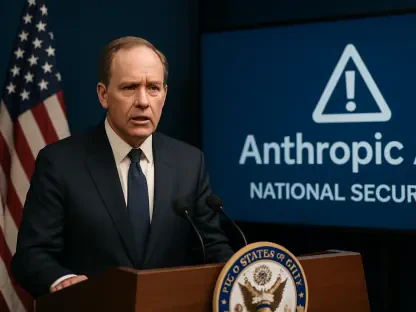

In today's rapidly evolving landscape of artificial intelligence and international trade policies, Laurent Giraid stands as a seasoned technologist with a keen eye on the ethical implications and strategic applications of AI. His insights into the recent withdrawal of the "AI Diffusion Rule" by the

In an era dominated by digital innovation, one critical question emerges: How can society shield voters from the digital illusions created by advanced artificial intelligence? As technology continues to evolve, it becomes crucial to understand its potential to influence political discourse. With AI

The integration of artificial intelligence (AI) has transformed various sectors across the UK, from finance to healthcare, revolutionizing how businesses operate. However, as AI's importance grows, so does the complexity of complying with a myriad of regulations. With AI technologies becoming

The EU AI Act, which came into effect on August 1, 2024, marks a significant turning point in the regulation of artificial intelligence (AI). Designed to govern the use and development of AI, the Act introduces rigorous standards for organizations operating within the EU or providing AI-driven

A survey by the Ada Lovelace Institute and the Alan Turing Institute reveals a significant demand for AI regulation in the UK. The research indicates that 72% of the British public would be more comfortable with AI if new laws were enacted, an increase from 62% just two years ago. This contrasts

As the urgency for environmental sustainability intensifies, technology, particularly Artificial Intelligence (AI), plays a pivotal role in ensuring adherence to environmental laws and regulations. This transformation in environmental law compliance is not only creating a significant impact on