
Surgical care in the United States stands at a critical juncture, grappling with costs that soar between $500 billion and $1 trillion annually, making it the largest expense in the healthcare system, and imagining a scenario where routine procedures, once tied to exorbitant hospital bills, could be

In a nation where heart disease stands as the second leading cause of death, claiming 65.7 lives per 100,000 people according to the latest 2024 National Statistical Office data, the urgency for innovative solutions has never been clearer, especially as World Heart Day on September 29 highlights
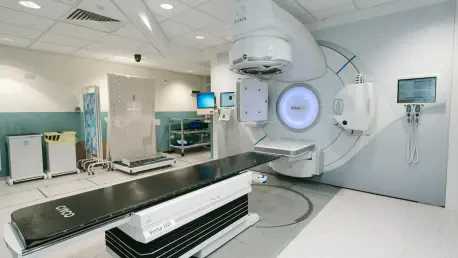
Imagine a world where cancer treatment is so precise that every radiation beam targets only the tumor, sparing healthy tissue with pinpoint accuracy, while clinicians manage heavy caseloads with ease, thanks to groundbreaking advancements in radiation oncology technology. This scenario is becoming

Fixed version: Imagine a bustling emergency room where every second counts, and a single missed detail on an X-ray could mean the difference between a swift recovery and prolonged suffering for a patient with a subtle fracture. St. Luke’s University Health Network is tackling this high-stakes
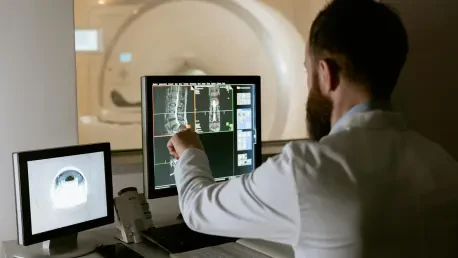
As a pioneer in the intersection of artificial intelligence and biomedical imaging, Laurent Giraid has dedicated his career to harnessing machine learning and innovative technologies to revolutionize clinical research. Today, we dive into his insights on MultiverSeg, a groundbreaking AI system

In the intricate world of pediatric medicine, bone age assessment stands as a vital tool for gauging children’s growth and uncovering potential developmental or hormonal issues that could shape their journey to adulthood. This diagnostic process traditionally relies on manual techniques such as the