
The relentless pursuit of operational efficiency has pushed the boundaries of what modern machinery can achieve, leading to a sophisticated era where robots no longer just follow instructions but truly interact with their surroundings. A transformative alliance between ADLINK Technology and Under Control Robotics, the parent organization of Noble Machines, marks a significant departure from traditional automated systems. This partnership focuses on synthesizing high-performance edge AI hardware with sophisticated autonomy software to engineer a new class of humanoid robots. By prioritizing bi-pedal and bi-manual designs, these organizations are addressing the urgent need for mobile, intelligent labor in environments that were previously considered too complex or dangerous for mechanical intervention.
The Evolution of Motion Control and Edge Computing
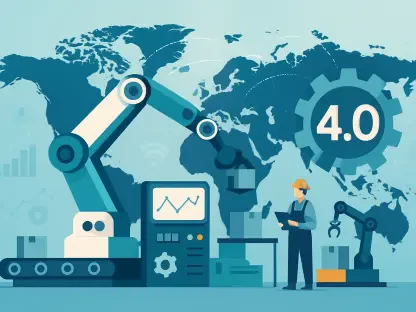
For decades, the industrial sector relied on stationary robotic arms bolted to factory floors, limited by rigid programming and structured environments. The rapid maturation of Industry 4.0 has exposed the limitations of these older systems, particularly their inability to navigate uneven surfaces or manage unpredictable physical variables. ADLINK’s established leadership in ruggedized computing provides the necessary foundation to overcome these hurdles. When combined with Under Control’s focus on robotic autonomy, the result is a shift toward flexible, general-purpose machines that can bridge the gap between human dexterity and mechanical endurance. This evolution is vital for industries that require a high degree of mobility across varied and unmapped terrains.
Engineering Human-Like Dexterity and Reasoning
Integrating Edge AI Hardware with Autonomy Software
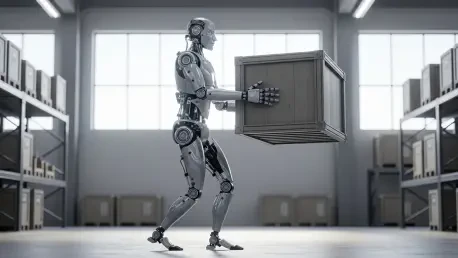
At the heart of this technical breakthrough is the integration of ADLINK’s DLAP edge AI platform—driven by the NVIDIA Jetson Thor architecture—with the whole-body control software developed by Noble Machines. This combination allows for a level of real-time sensory processing that mimics biological reasoning, enabling the robot to adjust its gait or grip instantly based on environmental feedback. Instead of following a pre-set path, the machine analyzes its surroundings to maintain balance while carrying heavy loads. This synergy between high-compute hardware and fluid algorithms represents a move toward “physical intelligence,” where the robot perceives and acts with a grace similar to human biomechanics.
Durability Standards for High-Risk Industrial Environments
Deploying electronics into sectors like mining or petrochemicals requires more than just processing power; it demands extreme physical resilience. The robots emerging from this collaboration are built to satisfy IEC 60068 standards, which guarantee performance under intense vibration, shock, and thermal stress. To ensure constant situational awareness, the hardware includes GMSL camera interfaces and integrated 5G modules, allowing for high-bandwidth data transmission even in remote or dusty zones. This focus on industrial-grade durability ensures that these humanoid units are not mere laboratory experiments but practical tools capable of surviving the most grueling shifts on a construction site or an offshore rig.
Navigating Edge Cases and Labor Shortage Challenges
The traditional “edge case”—an unexpected event that breaks standard software logic—has long been the primary obstacle to full robotic autonomy. By utilizing AI-driven adaptation rather than static, hard-coded routines, the ADLINK and Under Control robots can negotiate obstacles that would immobilize older models. This capability is particularly relevant as global industries face a dwindling supply of manual laborers willing to work in high-risk conditions. Because these machines are designed to operate within existing infrastructures meant for humans, they can be deployed without the need for expensive facility overhauls, providing a scalable answer to the ongoing labor crisis.
The Future of General-Purpose Robotics in Global Markets
As the adoption of these autonomous systems accelerates from 2026 toward 2030, the market is likely to see a standardizing of “turnkey” humanoid solutions. This shift will allow companies in public utilities and energy to integrate advanced robotics without needing to develop their own proprietary AI stacks. Future improvements in battery energy density and the expansion of 5G infrastructure will likely extend the operational range and remote monitoring capabilities of these units. Furthermore, as regulatory bodies establish clearer frameworks for autonomous workers, the sight of a humanoid robot performing maintenance on a power grid or managing hazardous waste will transition from a technological curiosity to a standard operational practice.
Strategic Implementation and Best Practices for Industry Leaders
For executives and project managers, the successful integration of this technology depends on a balanced strategy that favors both software agility and hardware reliability. It is recommended that firms begin by identifying specific high-risk tasks where human exposure is currently a liability, such as chemical handling or high-heat inspections. Phased deployments are essential, as they allow the AI models to calibrate to the unique lighting, acoustics, and terrain of a specific job site. Maintaining a robust 5G network is another critical best practice, ensuring that the robots can relay diagnostic data and receive remote updates without latency, thereby maximizing the return on investment in autonomous labor.
Redefining the Boundaries of Industrial Productivity
The collaboration between ADLINK and Under Control Robotics established a definitive blueprint for the next decade of industrial growth by proving that humanoid forms are often the most efficient for human-centric workspaces. These robots demonstrated that the convergence of rugged edge computing and whole-body control could finally move general-purpose machines out of the research phase and into active duty. Moving forward, the priority shifted toward refining the interaction between humans and autonomous agents to ensure seamless coordination. Organizations that embraced these sophisticated systems discovered new ways to protect their workforce while simultaneously hitting production targets that were previously unattainable. The emergence of these intelligent machines ultimately served as a catalyst for a more resilient and versatile global industrial economy.