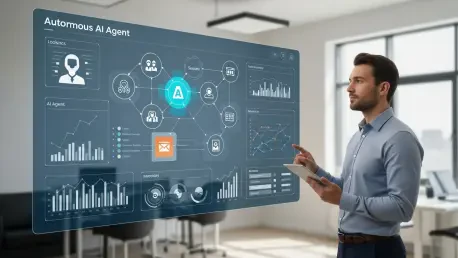

A profound evolution in corporate artificial intelligence is currently underway, quietly moving the technology from the periphery of business operations to its very core. For years, enterprise AI has been synonymous with assistive tools that perform narrow, isolated tasks like summarizing documents or drafting email responses for a human to review and approve. A new paradigm is now taking shape with the emergence of sophisticated, autonomous AI “agents” that are designed to be deeply woven into the fabric of business workflows, where they can execute complex, practical work directly. The gravity of this transformation is highlighted by the recent trials of new agent-based platforms by heavily regulated, industry-leading corporations such as Intuit, Uber, and State Farm. Their involvement strongly suggests that AI is on the verge of graduating from experimental pilot programs to becoming a fundamental, operational component of the modern enterprise, capable of acting rather than just assisting.
The Rise of the AI Coworker
The fundamental distinction driving this new era lies between AI “tools” and AI “agents,” a difference that redefines the technology’s role within an organization. While tools have traditionally acted as helpers that augment human workers, the emerging generation of AI agents is conceptualized more as “AI coworkers”—active and capable participants in complex business processes. This shift pivots the primary challenge for enterprise AI away from simply increasing the raw power of the underlying models. The more pressing concern now is the ability to effectively integrate, manage, and govern these autonomous agents at scale within the intricate environments of large corporations. The focus has moved toward ensuring these AI coworkers can be trusted to perform their duties reliably, with a deep and persistent understanding of a company’s operational context and procedural rules, thereby becoming a dependable part of the workforce. This requires a new layer of infrastructure designed not just for performance, but for safety, control, and seamless collaboration.
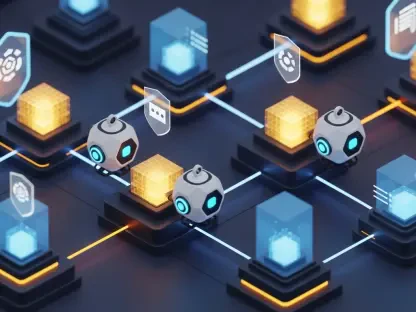
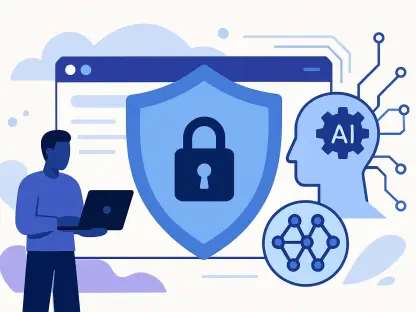
To address these complex integration challenges, dedicated platforms are being engineered to function as a kind of operating system for AI agents, providing them with the foundational capabilities a human employee would need to function effectively. One such platform, OpenAI’s Frontier, serves as a layer that gives agents a shared and persistent understanding of an organization’s systems, processes, and business context, allowing them to perform meaningful work consistently rather than executing tasks in isolation. This system facilitates an onboarding process similar to that of a new hire, establishing permissions, setting operational boundaries, and creating a mechanism for the agent to learn and improve from feedback over time. Critically, these platforms are being built with enterprise-grade governance and security at their core. They incorporate a comprehensive suite of tools for robust security protocols, detailed auditing of agent actions, and continuous performance evaluation, which allows companies to maintain essential human oversight and ensure that all agent activities adhere to corporate policies and regulatory requirements.
From Pilot Programs to Mission Critical Operations
The credibility of this technological leap from theory to practice is being solidified by the high caliber of the companies serving as its earliest adopters. A diverse group of industry leaders, including Intuit in finance, Uber in mobility, State Farm in insurance, and Thermo Fisher Scientific in life sciences, are among the first to test and implement solutions built on these new agent platforms. Furthermore, significant pilot initiatives are also underway at other major enterprises such as Cisco, T-Mobile, and the global bank BBVA. These corporations do not operate in simple environments; they function within sectors characterized by intricate operational logistics, stringent regulatory oversight, and massive customer bases where technological solutions must be exceptionally reliable, secure, and safe. Their willingness to trial autonomous AI agents within these high-stakes contexts demonstrates a growing confidence that the technology is maturing beyond experimental sandboxes and is ready for deployment in live, mission-critical business operations.
This strategic pivot is perfectly encapsulated by a senior executive at Intuit, who recently stated, “AI is moving from ‘tools that help’ to ‘agents that do.’” This single phrase captures the new, more ambitious value proposition for enterprise AI. The goal is no longer centered on achieving incremental efficiency gains, such as saving an employee a few minutes drafting an email. Instead, the focus is on empowering software to take ownership of entire segments of a workflow, thereby removing significant operational friction and unlocking new avenues for growth and innovation. The difference is stark when illustrated with a practical example. An older AI tool might draft a suggested reply to a customer complaint, which a human agent would then need to review, edit, and send. In contrast, a modern AI agent can autonomously manage the entire process by opening the service ticket, gathering relevant customer data from multiple, disconnected systems like the CRM and billing databases, proposing a concrete resolution based on that data, and updating the customer record accordingly, all while keeping a human in the loop for final approval.
Navigating Integration and the Future Workforce
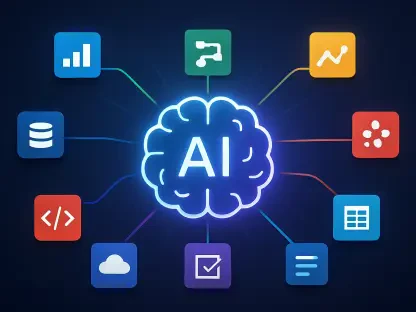
This transition toward autonomous agents is not without its significant practical hurdles, as these systems cannot function effectively in a vacuum. To deliver on their promise, AI agents must be deeply and securely integrated into a company’s existing technology stack, which often consists of a complex and fragmented web of disconnected systems, including CRM, ERP, data warehouses, and other proprietary software. The long-standing enterprise challenge of making these disparate systems communicate effectively is now central to the success of AI agents. The promise of platforms like Frontier is that these agents can act as an intelligent, cohesive layer that bridges these internal silos through a shared understanding of process and context. However, achieving this in practice will be heavily dependent on a company’s ability to implement robust governance frameworks and continuous monitoring to ensure the agents operate as intended, respect data access rules, and maintain compliance with all relevant regulations.
If these initial trials proved successful and the adoption of AI agents became widespread, the landscape of enterprise AI and the very nature of work itself could have been fundamentally reshaped. Companies would have begun to rely on AI to directly carry out a wide range of operational tasks, governed by a clear set of defined rules and human oversight, rather than simply using AI to generate outputs for people to act on. This evolution likely spurred the creation of new professional roles focused specifically on managing this burgeoning AI workforce. Beyond data scientists and AI engineers, organizations would have needed “governance specialists” to set and enforce the operational rules for agents and “execution leads” to take ultimate responsibility for their performance and outcomes. The vision that took shape was one where AI agents became a seamlessly integrated and essential component of the daily workflow within large organizations, working alongside human employees to drive business forward.