
The evolution of artificial intelligence has fundamentally altered the creative landscape, moving it from a back-office function for logistical and analytical tasks to a powerful and widely accessible collaborator in digital production. This significant paradigm shift signifies that AI is no longer a futuristic concept within the creative realm but an integrated and influential force actively reshaping the processes, speed, and economics of content creation. Across a multitude of sectors, including marketing, 3D design, video production, and user experience design, AI is now a direct partner, redefining how ideas are conceived, developed, and brought to life with unprecedented efficiency and scale. The central thesis of this new era is clear: AI has become an indispensable element in the modern creative toolkit, driving innovation and challenging traditional workflows.
The New Creative Paradigm
One of the most profound outcomes of the AI revolution is the widespread democratization of creativity, which has dismantled longstanding barriers to entry for digital production. Historically, creating high-quality digital assets required specialized technical skills, expensive software, and significant time investment, limiting the field to trained professionals and well-funded organizations. However, the rise of intuitive, user-friendly AI tools has changed this dynamic entirely. These platforms empower solo creators, small teams, and entrepreneurs to generate sophisticated visuals, polished copy, and complex models without needing a background in machine learning or data science. This newfound accessibility fosters a more inclusive and vibrant creative environment, where the ability to execute a compelling idea is no longer constrained by technical limitations but is instead driven by vision and ingenuity, leveling the playing field and accelerating the pace of innovation across the board.
Contrary to prevalent anxieties about technological replacement, artificial intelligence is primarily functioning as a creative augment, a collaborative partner that enhances rather than supplants human ingenuity. The most effective applications of these tools involve offloading the repetitive, time-intensive, and often tedious aspects of the production process. This strategic delegation of “heavy lifting” frees human creatives from monotonous tasks, allowing them to dedicate their cognitive resources to higher-level strategic thinking, complex problem-solving, nuanced storytelling, and the kind of emotional intelligence that machines cannot replicate. In this capacity, AI acts as a powerful force multiplier for creativity. It enables professionals to explore a greater volume of ideas, iterate on concepts with remarkable speed, and ultimately focus their efforts on the core elements of their work that require genuine inspiration, critical judgment, and a deep understanding of human connection.
Revolutionizing Key Industries
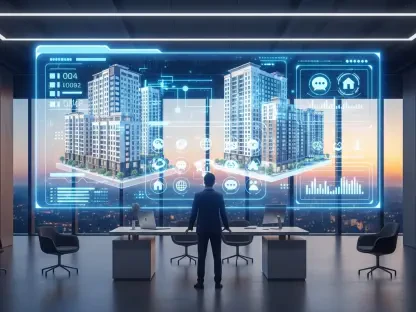
In the relentlessly fast-paced marketing and advertising sector, where the demand for a high volume of diverse content is constant, AI has become an indispensable asset for both strategy and execution. AI-powered writing platforms are now capable of generating numerous variations of ad copy, social media posts, and email campaigns in a fraction of the time it would take a human writer, allowing teams to test and optimize messaging with greater agility. Simultaneously, text-to-image models enable marketers to rapidly visualize abstract concepts for campaigns and ad creatives, bypassing lengthy traditional design cycles. This automation allows marketing teams to reallocate their time from tedious execution and format translations to overarching strategy, brand storytelling, and in-depth performance analysis, improving both efficiency and the quality of the creative output. Similarly, the world of 3D design is experiencing a fundamental transformation, as AI tools can now generate detailed, high-quality 3D assets from simple text prompts or 2D sketches. This has radically accelerated the prototyping phase in industries like gaming, architecture, and e-commerce, fostering a culture of experimentation and innovation by lowering the cost and effort associated with visual exploration.
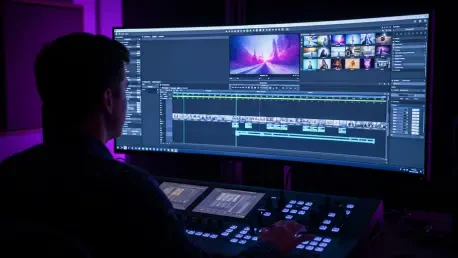
The dominance of video content, particularly in short-form formats, has created a significant production challenge that AI is uniquely positioned to address, enabling teams to produce more content faster without compromising on quality. The role of AI in video production is multifaceted, supporting the entire lifecycle from pre-production to post-production. Platforms now exist that can convert text scripts into fully narrated videos, complete with stock visuals and synthetic voiceovers, making video creation accessible for corporate training, explainer content, and social media campaigns without the need for filming. Furthermore, AI is being integrated directly into advanced editing software to automate complex tasks such as analyzing raw footage to identify key moments, synchronizing cuts to the rhythm of background music, and streamlining color correction processes. Beyond asset creation, AI is also enhancing the interactivity and personalization of digital user experiences. AI engines can dynamically adapt digital content in real-time based on user data and behavior, creating more immersive, engaging, and tailored user journeys that increase retention and satisfaction without requiring constant manual intervention from development teams.
Navigating the Future of Creativity
The true potential of these transformative tools is ultimately unlocked when their incredible speed and scale are guided by deep human domain expertise and creative insight. The effectiveness of any AI model is directly proportional to the clarity, context, and thoughtfulness of the prompts and direction provided by a human user. This symbiotic relationship reinforces the concept of AI as a powerful “creative collaborator” that pushes human potential rather than rendering it obsolete. For businesses, this means that the greatest value is realized not by simply adopting the technology but by integrating it in a way that amplifies the skills of their existing teams. An architect can use AI to visualize dozens of structural variations in an afternoon, but it is their professional judgment that selects the most viable and aesthetically pleasing option. A writer can use AI to generate outlines, but it is their narrative sense that crafts a compelling story. In this new landscape, the ability to effectively communicate with and direct AI systems has become a critical skill for creative professionals.
The maturation of the AI tool market led to an acceleration of the trend toward highly specialized, industry-specific solutions that offered greater control and integration capabilities than their general-purpose predecessors. The primary challenge for individuals and organizations became the strategic integration of these tools into existing workflows in a way that added tangible value and avoided introducing unnecessary complexity. Success in this evolving landscape required a balanced approach of embracing the technological shift while remaining selective and goal-oriented. The key to leveraging this revolution lay in active, critical exploration. Creatives and business leaders who experimented with new platforms, rigorously evaluated the results against their specific objectives, and maintained a state of intellectual curiosity were the ones who thrived. The ultimate lesson was that true innovation emerged from the thoughtful and strategic blending of uniquely human creativity with the powerful computational capabilities of artificial intelligence, a synthesis that demanded a proactive and discerning mindset to navigate the edge of what was familiar and discover what had been made newly possible.