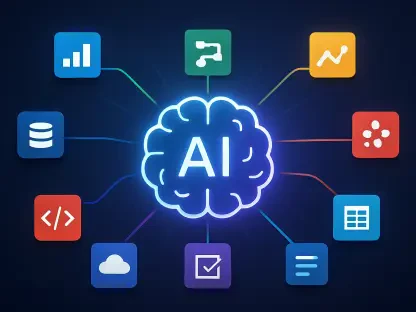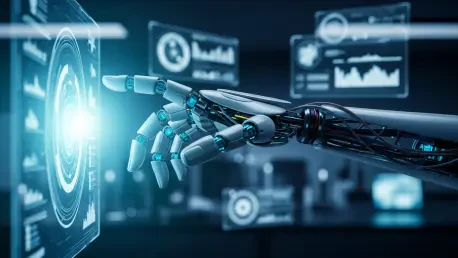

A mechanical arm reaching for a bruised apple now processes the world with the same fluidity that a linguist applies to a complex sentence, signaling a permanent departure from the rigid automation of the past decade. The era of artificial intelligence confined to flickering chatbots and digital assistants is rapidly fading, replaced by machines that do not just talk but actually do. Alibaba’s unveiling of RynnBrain marks a definitive shift toward Physical AI, where silicon intelligence meets mechanical muscle in a bid to revolutionize global industry. While generative models spent years mastering human language, RynnBrain is designed to master the physical world, turning the silent, rigid robots of the previous generation into perceptive, reasoning agents capable of navigating the chaos of reality.
This transition reflects a fundamental change in how humanity conceptualizes the utility of artificial intelligence. For years, the primary focus of development remained on the synthesis of text and imagery, yet the most pressing global challenges exist in the physical realm. The introduction of RynnBrain suggests that the peak of digital-only intelligence has passed, giving way to an age of embodied cognition. These systems no longer rely on specific lines of code for every unique gesture; instead, they utilize vast neural networks to understand the physics of their surroundings. This shift allows for a level of versatility that was once considered science fiction, enabling a single robotic unit to switch from sorting delicate electronics to managing heavy construction materials without human intervention.
From Digital Scripts to Physical Autonomy
The transition from traditional automation to Physical AI represents the most significant leap in robotics since the invention of the assembly line. At the heart of this change is the architecture of action, specifically the Vision-Language-Action (VLA) models that allow RynnBrain to see, interpret, and move simultaneously. Unlike their predecessors, which followed fixed paths, VLA-driven machines process visual data and linguistic commands into real-time physical maneuvers. This integration ensures that if a human colleague places an unexpected obstacle in a robot’s path, the machine perceives the change and recalculates its movement instantly, rather than pausing for a manual reset.
Overcoming the challenge of the sim-to-real gap has been a primary hurdle for developers, but Alibaba’s approach utilizes massive datasets to teach AI how to handle unpredictable physical variables. Factors such as shifting lighting, varied surface textures, and complex spatial depth are no longer barriers to performance. The intelligence of touch has also evolved, moving beyond pre-programmed paths toward adaptive motor control and real-time learning. By simulating billions of physical interactions in virtual environments before applying them to hardware, RynnBrain has achieved a level of dexterity that mimics biological intuition, allowing for a more seamless integration of machines into human-centric environments.
The Trillion-Dollar Race for Robotic Sovereignty
As global workforces shrink and economic pressures mount, the development of Physical AI has shifted from a corporate luxury to a national necessity. The demographic cliff is no longer a distant threat; aging populations in both the East and the West are making autonomous labor a survival requirement for modern economies. With fewer workers entering the manufacturing and logistics sectors, the demand for machines that can operate with minimal supervision has reached a fever pitch. This labor vacuum is driving a massive influx of capital into the sector, as nations realize that economic sovereignty in the coming decades will depend on their ability to deploy autonomous physical systems at scale.
Sizing the market reveals the staggering stakes of this competition, with analysts projecting a shift toward 300 million humanoid robots by 2050, creating a $1.7 trillion industry. Alibaba’s decision to release RynnBrain as an open-source model represents a strategic gambit intended to challenge the proprietary dominance of Western giants like Nvidia and Tesla. By democratizing access to high-level physical intelligence, Alibaba is positioning itself as the foundational infrastructure for a global ecosystem of robotics. This strategy relies heavily on the semiconductor backbone, where specialized AI chips are required to handle the immense computational load of real-time physical reasoning, sparking a worldwide race to secure the hardware that powers these intelligent forms.
Physical AI in the Wild: Current Deployments and Expert Perspectives
Industry leaders and real-world applications are already demonstrating that the physical AI revolution is no longer a future concept but a present reality. Industrial case studies provide clear evidence of this progress, such as BMW’s use of dexterous humanoid testers in South Carolina to perform complex assembly tasks that require human-like precision. Similarly, Amazon has expanded its massive robotic logistics fleets, utilizing systems that can coordinate with one another to optimize the flow of goods through fulfillment centers with zero downtime. These deployments show that the technology is maturing beyond the pilot phase and entering the core of the global supply chain.
The expert consensus among researchers and tech executives, including figures like Jensen Huang, points toward a definitive shift toward General Purpose Robotics. The goal is no longer to build a machine for a single task but to create an adaptable agent that can learn any role it is assigned. This evolution is also visible in public service and urban infrastructure, where autonomous systems are being used for high-risk bridge inspections and AI-driven transit solutions. These applications reduce the physical strain on human workers while increasing the frequency and accuracy of essential maintenance, proving that Physical AI can enhance public safety and efficiency in ways that digital-only systems never could.
Navigating the Governance Gap: A Framework for Safe Integration
The primary obstacle to the widespread adoption of Physical AI is not a lack of intelligence but a lack of established safety and liability frameworks. The risk of physical failure carries much higher stakes than a digital error, as a robotic hallucination in a factory setting can lead to property damage or personal injury. To address these concerns, a three-layer governance strategy is being implemented by industry leaders, focusing on executive risk standards, hardwired system stop rules, and human-in-the-loop overrides. These safeguards are designed to ensure that even as machines become more autonomous, they remain under the ultimate control of human operators who can intervene in an emergency.
Addressing the legal and ethical boundaries of this technology is essential for maintaining public trust as autonomous machines move from secluded factories to public city streets. The liability vacuum remains a significant challenge, as current laws are often ill-equipped to handle accidents involving autonomous physical agents. Developing clear protocols for insurance and responsibility will be the final step in the full-scale integration of Physical AI into daily life. By establishing these frameworks now, the industry can ensure that the transition to an automated world is both safe and sustainable, paving the way for a future where humans and machines work side-by-side in a secure environment.
The emergence of RynnBrain provided the blueprint for a coordinated effort to standardize the communication protocols between disparate robotic platforms. Global stakeholders recognized that the next phase of development required the creation of unified safety certifications that functioned across international borders. Organizations began prioritizing the deployment of edge computing clusters to reduce the latency of physical decision-making, ensuring that machines reacted to hazards in milliseconds. These collective actions laid the groundwork for a more resilient industrial base that relied on the seamless interplay of human oversight and mechanical precision. Policymakers eventually shifted their focus toward retraining programs that prepared the workforce to manage and maintain these sophisticated systems rather than competing with them. This transition proved that the successful integration of Physical AI depended as much on social adaptation as it did on technical innovation.