
As the global energy landscape grapples with the dual pressures of decarbonization mandates and the unprecedented power demands of a world driven by artificial intelligence, the stability of traditional power grids is being tested like never before. Against this backdrop of growing urgency, Panasonic is moving beyond theoretical discussions about hydrogen’s potential and into the realm of tangible application with its next-generation energy solution, “Panasonic HX.” The company’s pioneering demonstration project at its campus in Munich, Germany, represents a significant leap from concept to a fully operational system, offering a practical response to the critical challenges of grid instability, renewable energy integration, and stringent corporate sustainability goals. This initiative arrives at a pivotal moment, as Europe’s ambitious Green Deal targets collide with the escalating strain on existing infrastructure, creating a compelling business case for the decentralized, resilient, and independent energy systems that companies increasingly need to ensure their operational and environmental viability.
The Technology Behind the Vision
The Panasonic HX system is a sophisticated, decentralized energy solution engineered for innovative onsite power generation, built upon the seamless integration of three primary components. At its core are Panasonic’s proprietary pure hydrogen fuel cells, which serve as the system’s anchor for reliability. These advanced generators convert green hydrogen into electricity with remarkable efficiency, producing only water as a byproduct and thus resulting in zero carbon emissions at the point of use. This clean power source is designed to work in tandem with renewable energy installations, most commonly photovoltaic solar generators, creating a robust hybrid power supply that leverages the strengths of both technologies. The entire ecosystem is orchestrated by a central intelligence platform: an advanced, AI-driven Energy Management System (EMS). Functioning as the brain of the operation, this cloud-based system optimizes the entire energy flow by using weather data to forecast power generation from renewables, monitoring a facility’s electricity demand in real-time, and precisely controlling the output of the pure hydrogen fuel cells to ensure a stable and uninterrupted supply of power, day or night.
This intelligent architecture provides three defining features that address the most pressing energy concerns of modern enterprises: stability, efficiency, and resilience. Stability is achieved as the AI-based EMS uses the hydrogen fuel cells to instantaneously fill the gaps left by the fluctuating output of renewable sources, guaranteeing a reliable power supply that is crucial for mission-critical operations. The system also maximizes efficiency beyond simple power generation; the high-precision EMS is capable of capturing waste heat produced during the fuel cell’s electrochemical process and distributing it for other uses within the facility, such as heating, thereby maximizing the overall energy value. Finally, as a fully independent energy system, Panasonic HX grants facilities a profound level of resilience. It reduces dependence on the conventional power grid, effectively shielding a business from the risks of blackouts, brownouts, or the price volatility caused by external market factors. The name “Panasonic HX” itself encapsulates this mission, with “H” representing hydrogen and “X” symbolizing both the societal transformation toward decarbonization and the vital collaboration with partners required to achieve it.
The Munich Project a Real World Test Case
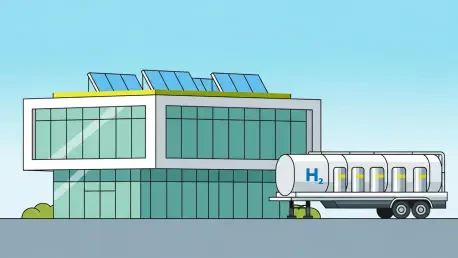
The third demonstration project for Panasonic HX, launched in March at the Panasonic Campus Munich, serves as a landmark test of the system’s capabilities in a real-world commercial environment. Unlike previous demonstrations at manufacturing plants, the Munich site is an office building and showroom known as the Customer Experience Center. The ambitious goal is to supply 100% of the center’s electricity using a combination of renewable energy and hydrogen. The technical setup integrates 60 kW of power from the campus’s existing solar panels with 50 kW generated by five units of Panasonic’s latest 10 kW pure hydrogen fuel cell model, the P###. This provides a total of 110 kW of clean power, all managed by the intelligent EMS to respond dynamically to real-time demand and fluctuations in solar output. The P### model itself represents a significant advancement, offering double the maximum output of previous models, fine-tuned output control in precise 1 kW increments, and a compact, quiet design that makes it suitable for deployment in dense urban environments. The system is fueled by green hydrogen sourced from Germany and Austria, which is stored conveniently onsite in a 40-foot tank trailer, completing the self-contained energy ecosystem.
Perhaps the most distinctive and insightful feature of the Munich project was the deliberate strategic decision to exclude storage batteries from the system’s design. While batteries are highly effective for short-term energy storage and managing peak demand, a thorough analysis of the site’s energy profile revealed they were unnecessary for this specific application. The Customer Experience Center exhibits a relatively low and predictable power demand, and its solar power generation capacity is modest. Consequently, the stable and responsive power supplied by the hydrogen fuel cells was deemed perfectly sufficient to balance the energy flow without the need for an intermediate battery storage step. This calculated omission resulted in a significant reduction in the project’s initial capital costs and allowed the entire system to be installed within a limited physical footprint. This battery-free approach powerfully demonstrates the flexibility and adaptability of the Panasonic HX solution, proving that it is not a rigid, one-size-fits-all product but rather a customizable platform that can be tailored to the unique operational needs and financial constraints of each customer.
Overcoming Hurdles and Charting the Future
The successful deployment in Munich yielded insights that extended far beyond technological validation. One of the primary findings, as emphasized by company leadership, was that the greatest hurdles encountered were not in engineering but in navigating the complex web of licensing and approval processes with various authorities. By undertaking this journey as both the system provider and the owner-operator, Panasonic gained invaluable firsthand experience in managing the intricate requirements for system design, fuel cell operation, hydrogen storage, and grid connection. This hard-won knowledge became a powerful asset, allowing the company to strengthen its value proposition by offering comprehensive guidance to future customers and streamlining the adoption process for others. This experience revealed the necessity for enhanced early-stage customer support, particularly in the critical phases of planning and specification. Looking forward, the Panasonic HX initiative was positioned as a critical component of the company’s long-term environmental vision, specifically contributing to the goal of reducing CO2 emissions through new technologies. With the success of its demonstrations, Panasonic began leveraging its momentum to penetrate key markets, including data centers facing power constraints, public institutions like hospitals and universities seeking enhanced resilience, and any corporation aiming to achieve 100% renewable energy targets. The Munich project ultimately stood as a foundational step toward a future where hydrogen solutions became as commonplace and cost-effective as solar power is today. As European green hydrogen infrastructure developed and costs decreased, fuel cells were expected to become an essential and economically viable piece of the clean energy puzzle, contributing to the creation of a truly sustainable society.