
As a technologist with a deep interest in the intersection of artificial intelligence and practical infrastructure, I’ve seen firsthand how healthcare’s most pressing operational challenges can often be solved not by futuristic moonshots, but by cleverly reimagining proven technologies. The current crisis in medical imaging—with growing patient backlogs and a critical shortage of trained technologists—is a perfect example. We’re seeing how IT solutions, born in data centers, are now being deployed to extend the reach of human expertise, streamline workflows, and ultimately get patients the timely diagnoses they deserve.
With imaging backlogs growing, many hospitals report technologists wasting significant time moving between scanners. How does a remote “hub-and-spoke” model change this daily workflow, and what specific metrics have you seen that demonstrate the resulting increase in equipment use and patient throughput?
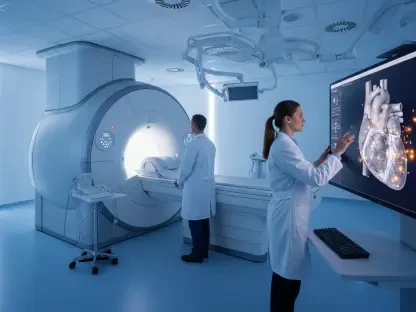
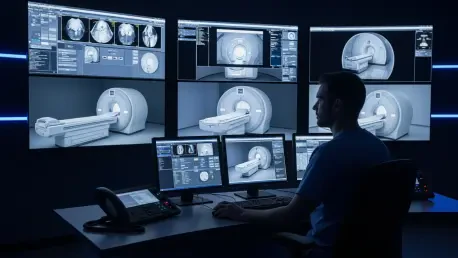
It completely transforms the day-to-day reality for a technologist. The old model was incredibly inefficient; you’d have highly skilled professionals spending a significant portion of their shift just walking—down long hallways, between different hospital wings, or even driving to an outpatient clinic. All that travel time is time a scanner sits idle and a patient waits. The hub-and-spoke model eliminates that dead time. From a single, centralized control room, one technologist can seamlessly switch between operating an MRI in one building and a CT scanner in another. The impact is immediate and profound. We see equipment utilization skyrocket because the transition time between scans on different machines drops from minutes to mere seconds. While every facility is different, the financial justification is often straightforward; hospitals have found that the technology can pay for itself after just a few additional scans that were previously lost to downtime.
Hospitals often struggle with a patchwork of devices from different manufacturers, creating interoperability challenges. Can you describe how KVM technology acts as a “universal translator” at the hardware level? Please share a scenario where it connects older and newer systems without complex software integration.
That’s one of its most powerful and often overlooked benefits. The healthcare IT landscape is notoriously fragmented. You’ll have a mix of devices from different vendors, each with its own proprietary software and closed ecosystem. Trying to get them to talk to each other through software is a Herculean task. KVM technology completely sidesteps this problem because it operates at the physical hardware level. It doesn’t care about the software; it simply extends the keyboard, video, and mouse signals over a network. Imagine a hospital system that acquires a smaller, rural clinic. The main hospital might have a brand-new GE MRI, while the clinic has a 10-year-old Siemens CT. Instead of a costly and complex software integration project, you can use KVM to give a central technologist direct, high-definition control of both machines from one console. It creates a seamless bridge, turning a fragmented collection of assets into a unified, remotely-managed fleet.
Patient data security is a top concern for healthcare providers. How do KVM-over-IP systems address HIPAA compliance, especially compared to cloud-based solutions? Could you explain the technical difference between a “pass-through” device and one that stores patient information, and why that matters?
This is a critical point, and it’s where KVM architecture offers a fundamental security advantage. The key difference is that KVM switches are “pass-through” devices. Think of them as a secure, encrypted conduit. When a technologist is remotely operating a scanner, the patient data—the images, the console information—flows through the KVM system, but it is never stored on it. Contrast this with many cloud solutions where data might be temporarily cached or stored on third-party servers. From a HIPAA compliance perspective, this is a night-and-day difference. Because no patient information ever resides on the KVM hardware, you eliminate it as a potential point of data breach. Modern KVM-over-IP systems add another layer of security by encrypting all that data in transit, ensuring the connection from the control room to the scanner is completely private and secure.
Implementing remote operations can seem daunting. For a hospital looking to start, what are the first practical steps in setting up a centralized control room? Please detail the key considerations for hardware, network security, and staff training to ensure a smooth transition.
The first step is always to start with a defined scope. Don’t try to connect every scanner on day one. A great starting point is to identify one or two high-demand scanners that are geographically separated from the main imaging department. Once you’ve chosen your “spokes,” you need to establish the “hub”—your centralized control room. For hardware, this means setting up workstations with high-definition monitors and the KVM transmitter/receiver units that connect over your standard Ethernet network. Network security is paramount; this involves ensuring your network is properly firewalled and that the KVM system’s encryption protocols are fully enabled. But technology is only half the battle. The most crucial part is staff training. You need to create clear protocols for remote operation, communication with on-site staff, and troubleshooting. A smooth transition is all about empowering the technologists, making them feel comfortable and confident with the new workflow.
This technology seems to empower technologists rather than replace them. How does it facilitate new training and mentorship models, particularly for connecting junior staff in rural clinics with senior experts at a central hub? Please provide an anecdote that illustrates this collaborative dynamic in action.
It absolutely empowers them. This technology is a force multiplier for expertise, not a replacement for people. The mentorship possibilities are incredible. Previously, if a junior technologist at a rural clinic encountered a complex scan or a difficult patient positioning, they were on their own. Now, with a KVM connection, a senior technologist at the central hub can see exactly what the junior tech sees, in real-time. I recall a situation where a new technologist at a mobile scanning unit was struggling with a specialized contrast protocol. Instead of canceling the scan, they simply patched in their supervisor from the main hospital fifty miles away. The supervisor was able to remotely take control of the console, guide the junior tech through the procedure, and ensure the scan was completed perfectly. The patient got their diagnosis without delay, and the junior tech received invaluable, hands-on training they would have never gotten otherwise.
What is your forecast for remote medical imaging operations?
I believe we are at the very beginning of a widespread transformation. The current model of tethering one technologist to one machine is no longer sustainable given the staffing shortages and rising demand for imaging. The “hub-and-spoke” model will become the standard of care, not the exception. Looking forward, I foresee this technology integrating more deeply with AI-driven diagnostic tools, allowing a remote expert to not only operate the scanner but also receive real-time, intelligent feedback. Ultimately, this leads to a more resilient, efficient, and equitable healthcare system where a patient’s access to the best imaging expertise isn’t limited by their zip code.