
Tuberculosis continues its devastating march across the globe, claiming approximately 3,500 lives every single day, a staggering toll largely driven by a profound and persistent obstacle: the severe shortage of trained radiologists needed to interpret diagnostic X-rays. In many low-income nations and underserved communities, the wait for a specialist’s review can stretch into weeks, a delay that often proves fatal for those suffering from this highly contagious respiratory disease. This critical gap in medical infrastructure means that for millions, a treatable illness becomes a death sentence simply due to their geographic location or economic status. The challenge is not merely about providing medicine but about delivering a timely and accurate diagnosis, the very first step in a long journey to recovery. It is within this desperate landscape that a new technological frontier is emerging, one that promises to bring expert-level diagnostics to the most remote corners of the world, untethered from the physical presence of a physician.
Bridging the Diagnostic Divide with Technology
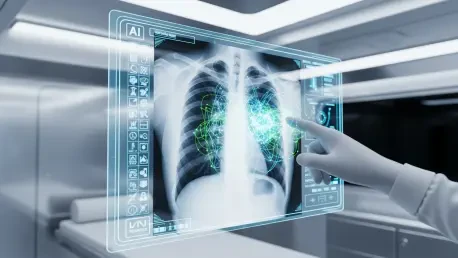
The cornerstone of this healthcare revolution is an advanced AI-powered software designed to meticulously analyze digital chest X-rays for the subtle yet tell-tale signs of tuberculosis. This algorithm, trained on vast datasets of medical images, can accomplish in mere seconds what might take a human expert much longer, and it does so with remarkable accuracy. By automating the initial screening process, the technology effectively circumvents the bottleneck created by the radiologist shortage. Patients no longer need to endure the agonizing wait for lab cultures or for their X-rays to be sent to a distant specialist. Instead, a preliminary diagnosis can be generated almost instantaneously on-site, allowing healthcare workers to immediately identify high-risk individuals and initiate the appropriate follow-up protocols. This fusion of speed and precision dramatically accelerates the entire diagnostic pipeline, transforming a process once defined by delay into one characterized by swift, decisive action that saves both time and lives.
This innovative diagnostic capability is not confined to traditional hospitals or clinics; its true power is realized through its deployment in mobile vans that travel directly to communities most in need. These vehicles, equipped with digital X-ray machines and the AI software, can reach isolated rural villages, refugee camps, and correctional facilities—places where healthcare infrastructure is often minimal or non-existent. A powerful illustration of this impact can be seen in places like rural Mali, where entire families can be screened and diagnosed in a single visit, enabling them to begin the necessary six-month antibiotic regimen without delay. By bringing the solution to the problem, this model breaks down the geographic and economic barriers that have long prevented vulnerable populations from accessing essential medical care. It represents a fundamental shift from a centralized, facility-based healthcare model to a decentralized, community-focused approach that prioritizes equity and accessibility.
The Expanding Horizon of AI in Healthcare
While the initial focus has been on combating tuberculosis, the utility of this AI extends far beyond a single disease, making it a versatile and powerful tool for public health. The same algorithm that identifies the characteristic lung scarring of TB can also detect evidence of other serious respiratory conditions, such as pneumonia and whooping cough. This multi-faceted capability is particularly valuable in resource-constrained environments, where a single diagnostic system must serve a wide range of needs. A patient presenting with a persistent cough can be screened for multiple potential ailments simultaneously, providing a more comprehensive and efficient diagnostic outcome. This broadens the technology’s impact, allowing it to function as a frontline defense against a spectrum of pulmonary threats. Consequently, the investment in this AI-driven platform yields returns across various public health initiatives, strengthening the overall resilience of healthcare systems against infectious diseases.
The successful deployment of this AI technology marked a pivotal moment in global health, fundamentally altering the approach to medical diagnostics in underserved regions. It demonstrated that advanced, expert-level care could be delivered effectively even in the absence of on-site specialists, a breakthrough that addressed one of the most enduring challenges in healthcare equity. The system did more than just diagnose an illness; it reshaped the very infrastructure of care delivery, proving that intelligent systems could augment human capacity on an unprecedented scale. This innovation moved the conversation beyond merely managing the scarcity of doctors and toward a new paradigm of leveraging technology to build more robust, responsive, and equitable health systems for communities everywhere. The impact was clear: lives were saved, outbreaks were contained, and a new standard for accessible medical screening was set for the future.