
The vast, challenging expanse of the open ocean has long been the domain of large, heavily crewed vessels, but a fundamental shift is underway, driven by the integration of sophisticated robotics and advanced remote operations. A strategic vision conceived in 2020 has now culminated in the full operational launch of a groundbreaking fourteen-vessel Armada fleet, marking a pivotal moment in maritime history. This initiative successfully reimagined the core principles of offshore fleet management by seamlessly blending digital design, onshore command centers, and lean crewing models. The completion of this fleet is more than just a technological milestone; it represents a deliberate and strategic departure from reliance on conventional offshore tonnage. By prioritizing software, robotics, and cutting-edge technology as the primary drivers of vessel capability, this new approach is actively redefining the economics and logistics of maritime work, proving that smaller, smarter platforms can outperform their larger, more resource-intensive predecessors in a variety of complex tasks.
A New Paradigm in Naval Architecture
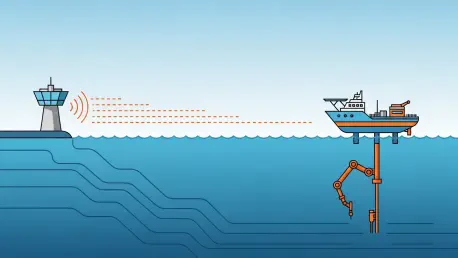
This innovative operating model is centered around a deliberate pivot from traditional ship design, where hardware dictates function, to a new paradigm where software is the star. Each purpose-built vessel in the fleet is engineered to be a node in a larger, interconnected network, managed from a centralized onshore control center. This hub facilitates real-time monitoring and allows highly skilled operators to remotely pilot the ships and their onboard robotic systems with precision from thousands of miles away. This radical change in operational philosophy yields significant, measurable benefits. Most notably, it drastically reduces the number of personnel required at sea, enhancing safety and lowering operational costs. Furthermore, the smaller, more efficient design leads to a substantial decrease in fuel consumption compared to legacy ships of similar capability. Consequently, this transformation reshapes fundamental aspects of ship management, from predictive maintenance and dynamic crewing models to the streamlined methods for delivering high-quality data to clients.
From Concept to Commercial Reality
The overarching achievement of this program was its successful transition from a bold conceptual design to a proven, practical application on a global scale. This fleet was never an experimental project confined to controlled trials; it was deployed for continuous commercial use across the demanding maritime environments of Europe, the United States, and the Asia Pacific region. The vessels consistently performed data-intensive tasks such as complex geophysical and geotechnical surveys, which are critical for industries ranging from offshore energy to telecommunications. With the entire fleet built and operational, the Armada program served as a powerful, working example for the entire maritime industry. It offered a tangible and replicable blueprint that demonstrated how offshore operations could be run more safely, efficiently, and sustainably. The initiative provided definitive proof that an integrated system of robotics, remote control, and lean infrastructure was not a future aspiration but a present-day reality that redefined industry standards.